YouTube Officially Beats Netflix in Daily Watch Time, and the Data Reveals a Bigger Story


For years, the streaming conversation revolved around which subscription service earned the most screen time from viewers. Netflix built an empire on prestige originals and appointment television, yet YouTube, free and fueled by creator content, has been quietly closing the gap in a way that few in the industry fully anticipated.
YouTube’s transformation from a destination for viral clips and amateur uploads into a full-scale entertainment hub has been one of the more gradual yet consequential shifts in the modern media landscape. What once felt like a secondary viewing habit has evolved into something far more deliberate, with audiences increasingly carving out serious, dedicated hours for the platform from the comfort of their living rooms.
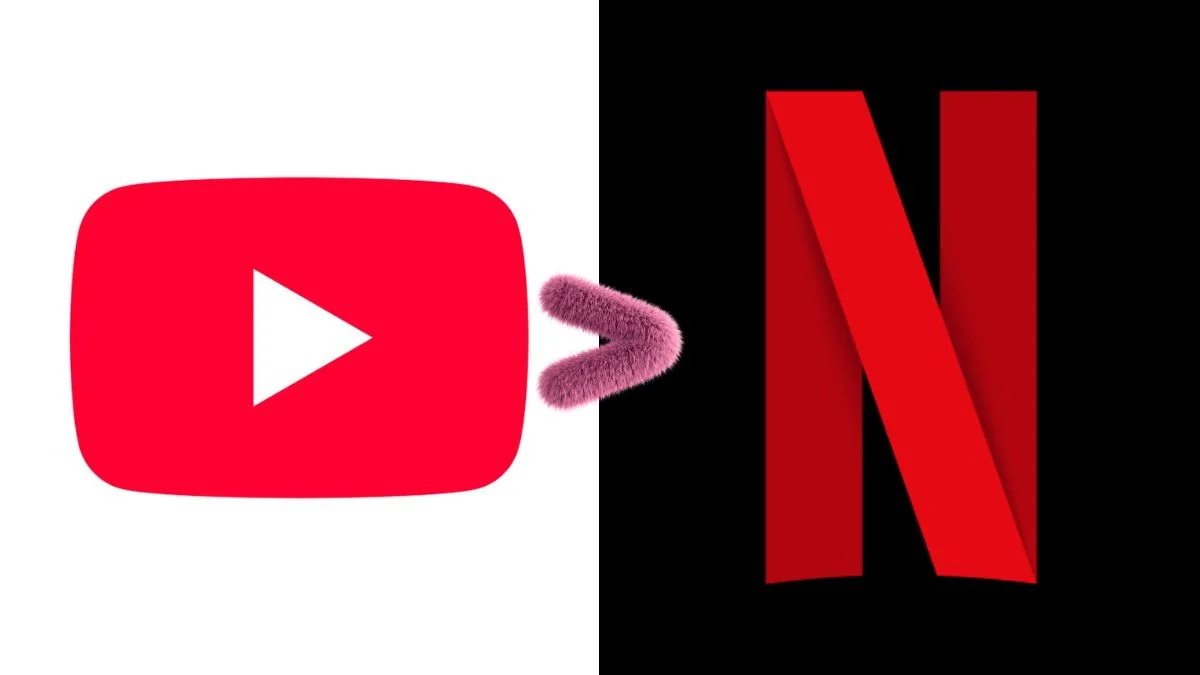
The extent of that shift is now backed by hard numbers. According to Digital i’s report “The YouTube Era: 2025 in Review,” which draws on viewing data from 18 countries, YouTube overtook Netflix in average daily minutes per user in 2025, reaching 99.1 minutes per day globally compared to Netflix’s 93.4 minutes. That marks a notable reversal, as Netflix had been averaging 100.5 daily minutes per user in 2024 while YouTube sat at just 87.2 minutes. In twelve months, the two platforms had fully swapped positions in that key metric.
A structural change in where and how people consume YouTube is central to that story. The TV screen’s share of YouTube viewing time rose from 28 percent to 35 percent between January 2024 and December 2025, while mobile’s share fell over the same period. Audiences are no longer scrolling through the platform on their phones between tasks. They are settling into the sofa and engaging with it in sessions that look increasingly similar to traditional broadcast television.
The demographics driving that growth round out the picture. Gen Z is YouTube’s most engaged age group, averaging 111 minutes per day, but the sharpest growth has come from men aged 55 to 64, whose daily viewing increased 15 percent year-on-year. Women across all age groups also increased their daily average YouTube usage, pointing to an audience that has become genuinely cross-generational in its reach.
Matt Ross, Digital i’s chief analytics officer, described the moment as “one of the defining media shifts of the decade” in his analysis, adding that audiences are increasingly treating the platform not as social media but as a primary entertainment destination, as reported by Mediaweek. Even Netflix’s own co-CEO Ted Sarandos has openly acknowledged the new reality, arguing before the US Senate Judiciary Committee that YouTube had become television in every meaningful sense and telling senators that “YouTube is not just cat videos anymore. YouTube is TV.”
There is a sharp irony built into all of this. Netflix’s own official YouTube channel achieved the highest global reach of any channel on the platform in 2025, with 78.2 million unique accounts, making the streaming giant simultaneously one of YouTube’s biggest rivals and one of its most powerful contributors. The platform Netflix once comfortably sat above has not only caught up but is actively reshaping what the word “television” means.
Whether this represents a permanent shift in the streaming hierarchy or simply the opening move in a longer battle for the living room, the data is hard to dismiss. Given how dramatically viewing habits are tilting in YouTube’s direction even among older audiences who once seemed firmly loyal to traditional streaming, do you think this marks the moment Netflix permanently lost its grip on being the automatic first name in modern entertainment?