Russell Crowe Had One Word for Why ‘Gladiator II’ Failed Where the Original Didn’t

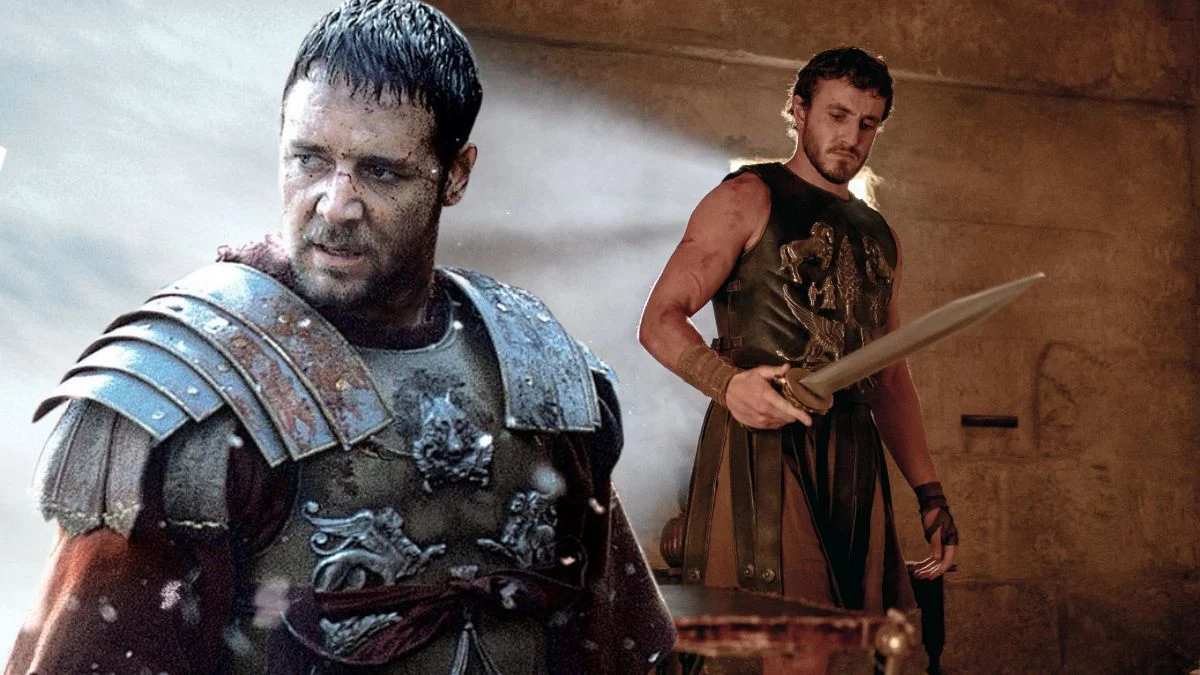

More than two decades after ‘Gladiator’ swept the Academy Awards and cemented itself as one of the defining epics of its era, the conversation around its legacy has been reignited by the man who made it matter. Russell Crowe, the Oscar-winning actor behind the unforgettable Maximus Decimus Meridius, has stepped forward with a pointed and surprisingly personal diagnosis of why Ridley Scott’s long-awaited sequel fell flat with audiences.
The actor made his remarks during an appearance at the Taormina Film Festival in Sicily, where he reflected at length on his behind-the-scenes battles during production of the original film. What emerged was a candid portrait of an actor who fought hard to protect the emotional integrity of a character that would go on to define his career, and who believes those same principles were abandoned when it came time to make a follow-up.
At the heart of Crowe’s argument is a single phrase that he returned to repeatedly: “moral core.” Speaking at the festival, Crowe said the sequel’s relative underperformance was telling, noting that the second film barely matched the original’s box office take despite being released two decades later, and that when adjusted for inflation, the numbers revealed a clear failure. In his own words, the film fell short because those behind it simply did not understand what made the original work in the first place.
To explain that core, Crowe reached back into the battles fought on the original production. He revealed that studios and producers repeatedly pushed for romantic and sexual scenes between Maximus and the film’s female characters, pressure he consistently refused. Crowe recalled his argument against those scenes, saying it made no sense for a man consumed by grief over the murders of his wife and child to pause that journey for a romantic encounter, as doing so would destroy the emotional through-line entirely. Director Ridley Scott ultimately sided with Crowe, and that decision held.
Crowe also pushed back against the conventional wisdom that ‘Gladiator’ was primarily a film for men, pointing out that from the second week of release globally, more women were in theaters than men. He framed the distinction as one between revenge and vengeance, arguing the former is a simpler masculine impulse while the latter carries emotional weight that resonated deeply with female audiences. He elaborated that Maximus’s unwavering devotion spoke to something universal, with men wanting to aspire to that kind of strength and women wanting to be loved with that kind of loyalty.
For context, the original ‘Gladiator’ earned roughly $465.5 million worldwide against a reported budget of around $103 million, while ‘Gladiator II’, starring Pedro Pascal and Denzel Washington, grossed approximately $462.2 million worldwide but against a reported production budget of $250 million. Critical reception for the sequel was broadly positive but soft, and its awards recognition was largely limited to technical categories and Washington’s supporting performance.
Crowe was not always opposed to a continuation of the story, having previously revealed he once hired musician Nick Cave to develop a follow-up centered on Maximus in limbo following his death, though that project never moved forward. His vision, it seems, was always rooted in the same emotional fidelity that made the original resonate. Whether you agree with his read on ‘Gladiator II’ or think the sequel deserved a fairer reception, Crowe’s argument raises a question worth sitting with: when it comes to beloved epics, does replacing the moral anchor of a story doom a sequel from the very first page of the script?