‘House of the Dragon’ Season 3 Episode 4 Slows Down to Give Lord Ormund Hightower His Moment


The fourth episode of ‘House of the Dragon’ season 3 arrived this week with a noticeably different rhythm than the three installments that preceded it. The season has been dominating HBO Max’s streaming charts and has thus far proven skeptics wrong after a long wait between seasons, largely thanks to three consecutive strong episodes that opened the run. Episode four, titled by some outlets as centering on Tumbleton, shifts gears considerably.
Overall, the episode is described as much slower compared to the first three, with critics noting it does not move the needle greatly. Still, the hour spends real time fleshing out several characters and storylines that had been left simmering, particularly one nobleman who has been lurking at the edges of the plot since the season began.
Lord Ormund Hightower Takes Center Stage
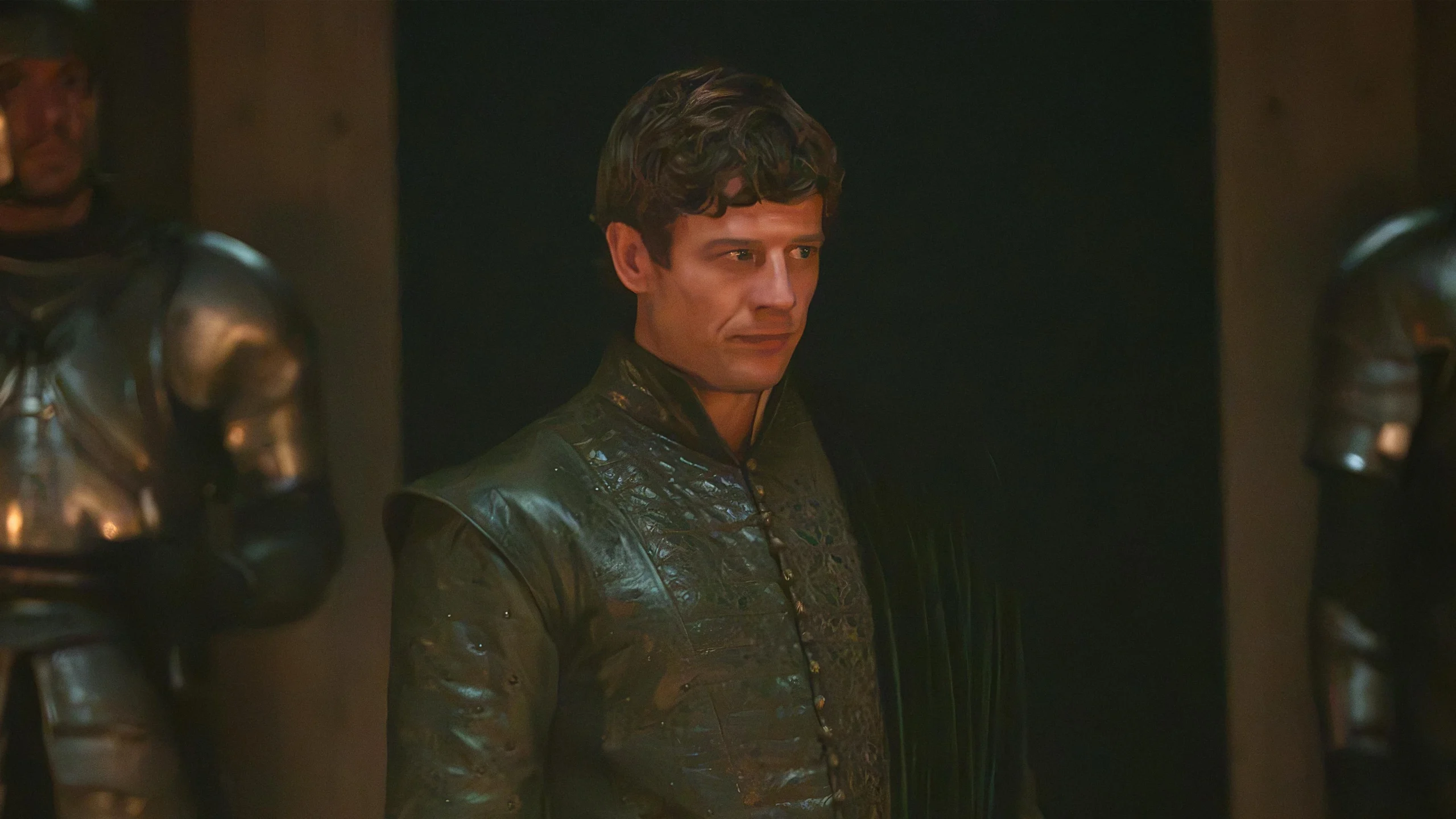
This week’s episode is largely framed through the eyes of Lord Ormund Hightower, played by James Norton, with the hour both beginning and ending on his perspective. Unlike the previous installment, which stayed almost entirely within Queen Rhaenyra’s point of view, episode four spreads its attention across several fronts, following Larys and Aegon in the Crownlands, Daemon in the Vale, and Criston and Gwayne in the Riverlands.
Sunday’s episode marks the full introduction of one of the most powerful men in the Seven Kingdoms, and critics have called him a singular figure who is shaping up to be one of the more compelling villains in the series. The Hightowers are described as one of the most powerful Houses in the Reach, historically less inclined toward war and more focused on trade, in part due to their devotion to the Faith of the Seven.
James Norton has been singled out as the standout performer of the episode, playing Ormund with a specificity and cold calculation that stands out against the rest of the ensemble. His full plan is revealed in the episode’s closing moments, as he wants Daeron to become king because the boy is fully under his influence.
Ormund is described as a devout follower of the Faith of the Seven who views the Targaryens as dangerous, dragon loving figures, and he has raised Daeron with the intention that the boy will one day reject his family and claim the throne for himself. That framing gives the character a colder, more calculated edge than viewers may have expected.
Daeron Targaryen’s True Identity Revealed
The episode delivers a reveal the show has apparently been sitting on for some time, confirming that the red haired squire who has been standing at Ormund’s side since the start of the season is actually Daeron, the youngest son of Alicent and brother to Aegon, Aemond and Helaena, and the rider of the dragon Tessarion.
The episode also digs into Ormund’s relationship with young Daeron, presenting him less as a stand in father figure and more as a controlling patriarch working through the boy to get what he wants. One reviewer noted the casting choice for the role, pointing out how closely the young actor resembles Alicent on screen.
How did you feel about Ormund in this episode?
Ormund gives Daeron a final test late in the episode, forcing him to execute a civilian he had previously appeared to pardon, a moment that signals a major shift in the ongoing power struggle across Westeros. Following some feeble protests, Daeron carries out the act, and Ormund declares that things can now truly begin.
Elsewhere in the episode, the dragons themselves play a quiet but important role, with scenes showing Daemon and Daeron each communicating with their respective dragons in ways that highlight the contrast between the two riders. The younger boy is affectionate with his dragon, while the older, more experienced rider initially resists what his creature is telling him.
Aegon and Larys Navigate the Crownlands
One of the episode’s more unexpected subplots follows Aegon and Larys, who find themselves forced to work with their hands among common people after their earlier misadventures. Critics have praised Tom Glynn-Carney’s performance, noting that he imbues Aegon with genuine heart in these scenes, even as the character struggles with humility and patience.
The pair make their way back to the battle site at Rook’s Rest, where Aegon discovers the corpse of his dragon Sunfyre being used as a tourist attraction by local scavengers. While mourning his dragon, Aegon insists that Sunfyre is somehow still alive and pockets one of the creature’s scales before moving on.
Matthew Needham’s portrayal of the perpetually scheming Larys continues to draw praise for its understated quality, with reviewers noting that the character’s calculating nature never tips into anything overplayed. The dynamic between the two men has been described as a kind of grim buddy story playing out against the backdrop of a kingdom at war.
Daemon and Rhaena’s Long Awaited Reunion
In the Vale, Daemon tracks down his daughter Rhaena almost entirely by accident while attempting to extract gold and support from Lady Arryn, who reminds him that no dragons were sent to aid Rhaenyra’s cause. As he loads the gold onto Caraxes, the dragon suddenly catches a scent and, for the first time, Daemon finds himself unable to control his own mount.
Caraxes carries Daemon to a rocky perch against his rider’s commands, leading him to a cave where a shadowy figure appears silhouetted by flame. When Daemon realizes the figure is Rhaena, he is visibly shocked, and he pleads with her to leave Sheepstealer and return with him to explain herself to Rhaenyra.
Reviewers have noted that the long delayed father daughter scene between Rhaena and Daemon, once it finally arrives, feels shorter than the buildup suggested, which for some detracted slightly from its emotional payoff. Even so, the moment stands out as one of the more grounded character beats in an episode otherwise focused on political maneuvering.
Critics have also pointed out that this episode breaks almost entirely from George R.R. Martin’s novel Fire and Blood, making it arguably the least faithful hour of the entire series to the source material, with only occasional nods to the book scattered throughout. That divergence extends to reframing Ormund rather than Daeron as the true architect pulling the strings behind Team Green’s push against Rhaenyra.
Reception to the episode has been mixed. Some critics felt it lacked the momentum of the season’s first three episodes, even while acknowledging that Aegon’s return to Rook’s Rest stood out as an emotional highlight. Others gave it a more middling score, citing the sheer number of storylines competing for attention across the hour.
With Daeron’s identity confirmed and Ormund’s ambitions now out in the open, ‘House of the Dragon’ appears to be setting up a new front in the war for the Iron Throne. How do you think Ormund’s manipulation of Daeron will play out for the rest of the season, and is he playing a longer game than either side of the conflict realizes.