Were the Trojan War and Trojan Horse Ever Real, According to the Archaeologists Who Have Actually Dug at Troy

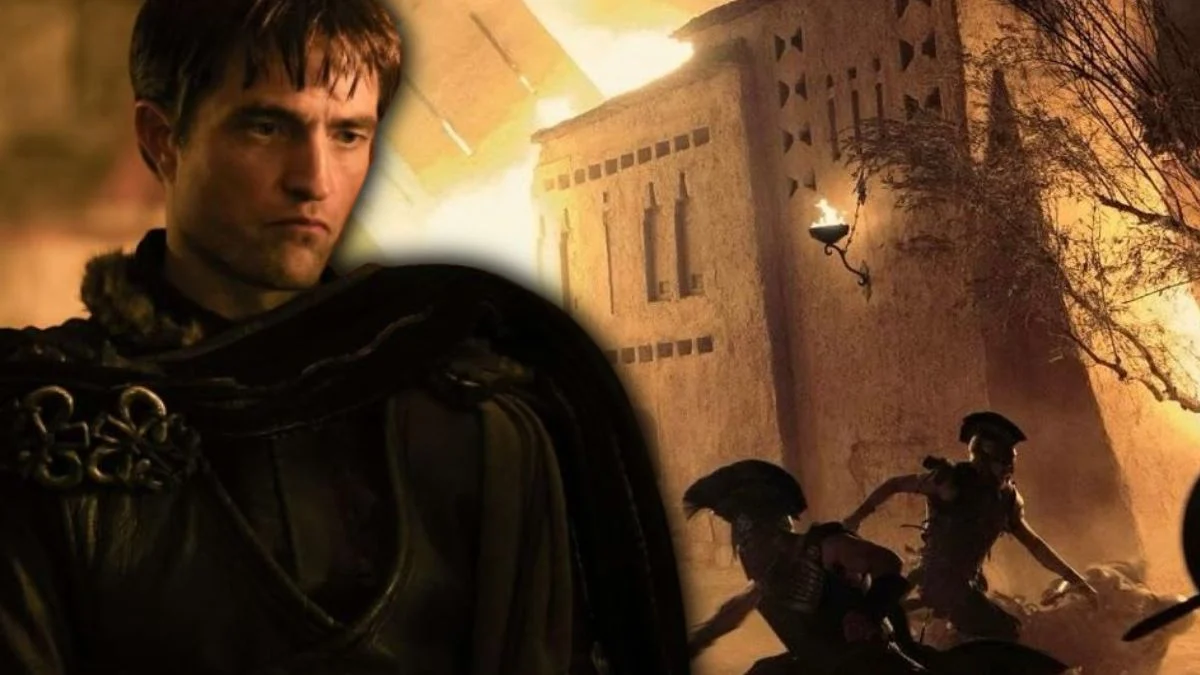

For as long as people have read ‘The Iliad’ and ‘The Odyssey,’ they have asked the same question, whether the ten year siege that ends with a burning city ever actually took place. Historians and archaeologists have largely agreed that the Trojan Horse itself belongs to myth rather than history, since no physical trace of it has ever turned up and no Bronze Age source from the Hittites, Egyptians, or Greeks mentions it at all.
That does not mean the underlying war has been dismissed outright. In 1870, the businessman turned archaeologist Heinrich Schliemann began excavating a mound called Hisarlik in Turkey, a site identified as the probable location of ancient Troy, and his digging exposed layers of settlement that had been built and rebuilt over roughly four thousand years. That single discovery reshaped how seriously scholars have treated ‘The Odyssey’ and the war that precedes it ever since.
What Archaeologists Have Actually Found At Troy
The mound at Hisarlik has kept producing evidence long after Schliemann’s original dig. This past season alone, researchers working at Hisarlik Hill in Turkey’s Çanakkale province uncovered several artifacts dating to the Late Bronze Age, the period most scholars associate with the Trojan War, including a cluster of 3,500 year old sling stones found in front of a palace structure.
That kind of find matters because it points to organized violence rather than simple settlement decay. Modern archaeology has shown that Troy VIIa, the settlement layer most likely connected to Homer’s city, was destroyed around 1180 BCE, though researchers caution that a violent end does not automatically confirm it was the specific conflict described in Greek epic.
Other physical traces support the idea that something brutal happened at the site around that time. Excavators have pointed to a natural spring beneath Troy along with large storage jars for stockpiling food, both signs the city could have withstood a long siege, while charred bones and arrowheads found in the same layer suggest a violent showdown near 1200 BC.
None of this proves Homer’s version is accurate down to the detail, but it does explain why Troy has never been dismissed as pure invention. The city existed, it was destroyed by something, and the timing lines up closely enough with tradition to keep the debate alive.
The Trojan Horse Still Belongs Mostly To Myth
Even scholars who take the war seriously tend to draw a sharp line at the horse itself. Many historians consider the Trojan Horse a legendary embellishment rather than a historical event, noting that it is not mentioned in Homer’s ‘Iliad’ at all and only comes up briefly in ‘The Odyssey’ through Menelaus, without ever being told in full there.
The fuller version of the story actually comes from elsewhere in the ancient world. ‘The Odyssey’ references the trick only twice, once in Book 4 when Menelaus recounts it after Helen’s return, and again in Book 11 when Odysseus tells the ghost of Achilles that his son Neoptolemus had been among those hidden inside, while the fuller narrative survives mainly through the now lost poems of the Greek Epic Cycle and through Virgil’s later ‘Aeneid.’
Because a literal wooden horse full of soldiers strains credulity for many researchers, alternate explanations have circulated for years. Some scholars have argued the horse may represent a literal siege engine rather than the storybook version, a reading that tries to keep some kernel of military plausibility inside an otherwise fantastical image.
Speaking with HISTORY, Oxford classicist Armand D’Angour has suggested there may still be some truth folded into the story even without a literal counterpart, framing the invention of such a device as its own remarkable feat regardless of whether it physically existed. That view does not prove the horse was real, but it does explain why serious classicists keep returning to the question instead of closing the book on it.
How The Odyssey Fits Into The Larger Puzzle
‘The Odyssey’ was never meant to function as a history book, and its own internal details reflect that. Helen, whose elopement with Paris is traditionally blamed for starting the war, is generally regarded by scholars as belonging to fiction rather than fact, even though she may have been loosely based on a historical queen or noblewoman.
That mix of invented detail and possible historical residue runs through the whole epic tradition. The gods intervene constantly, heroes survive wounds no mortal could, and yet the geography of Troy itself, sitting above trade routes between the Aegean and the Black Sea, matches what archaeologists have actually mapped on the ground.
Documentary researchers have approached the question with the same caution. Edith Hall, professor of classics at King’s College London, has said she wanted to determine whether there was any real history behind the myth, and in particular whether there was any real history behind the Trojan Horse specifically, in the PBS production ‘Secrets of the Dead: The Real Trojan Horse.’
That kind of careful phrasing, real history behind a myth rather than proof of a myth, sums up where most serious scholarship on ‘The Odyssey’ currently sits.
Why The Debate Over Troy Refuses To Close
Part of the reason this question never fully resolves is that the standard of proof required is genuinely high. Lesley Fitton, exhibition curator and honorary research fellow in the British Museum’s Department of Greece and Rome, has argued through World Archaeology that Homer was a poet rather than a historian, and that comparing ‘The Iliad’ and ‘The Odyssey’ directly to verifiable events is closer to comparing apples to pears.
Her point is that the epics sit in a space between myth and documented history, and that matching a centuries old oral tradition against modern archaeological standards was always going to be difficult. That does not make the exercise pointless, it just means certainty is unlikely to ever arrive.
For now, the honest answer stays somewhere in the middle. The city was real, a destructive event around the right period was real, and the horse remains an unproven flourish layered onto a war that may have had far more mundane origins than divine intervention and wooden ruses.
Given how much of ‘The Odyssey’ still can’t be confirmed or ruled out, which part of the story do you find more convincing, the archaeology pointing to a real war at Troy or the wooden horse that supposedly ended it.