‘Digger’ Ending Explained: The Play Within the Film and Its Bleak Final Scenes

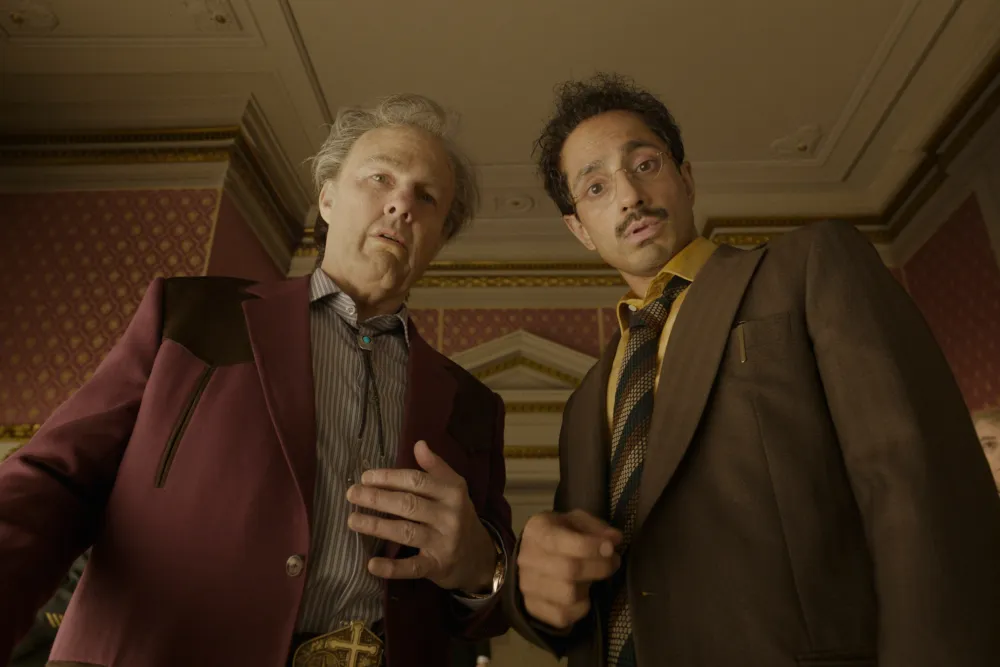

The ‘Digger’ ending explained comes down to a reveal that the marketing was widely suspected of hiding, one that critics confirmed without spoiling. Alejandro G. Iñárritu’s film opened in theaters on Oct. 2 with Tom Cruise as oil tycoon Digger Rockwell. It is not the straightforward disaster story the trailers suggested.
First reactions to the film were very mixed. That split makes the final stretch worth unpacking, since the last scenes recast almost everything that came before. What follows contains full spoilers.
The ‘Digger’ Twist That Reframes the Story
The film opens with Digger’s team at a drilling platform near Greenland discovering a crack in a glacier that is rapidly expanding. Digger bullies his employees into continuing, and the platform soon explodes and kills everyone aboard. The blast dislodges a massive chunk of ice nicknamed Judy, which heads toward Europe and threatens thousands of lives.
About thirty minutes in, the film reveals that everything so far is a stage play, with Digger played by an actor named Curtis Markson. The clue arrives when a tree slowly topples in the background and someone leaps in to correct it. Cruise drops Digger’s exaggerated accent from that point on and returns to his natural voice.
Cruise therefore plays both men, and the opening half hour turns out to be the final dress rehearsal of a play called ‘Fossil Fools’. One recap summarizes the shift as the Digger story being revealed as part of a stage production.
How the ‘Fossil Fools’ Play Shapes the Final Scenes
‘Fossil Fools’ is a revival of a show that premiered in London’s West End twenty five years earlier. The director describes it as cathartic for its audience. That catharsis arrives when the crowd cheers as Digger takes his own life on stage.
In the play’s penultimate scene, Digger and his family are exiled to another of his company’s oil rigs after his role in the disaster is exposed. The president dies and his vice president cuts off support, leaving them to live on whatever remains in the refrigerator. Digger scatters the ashes of his cat Maggie into the rising water before leaping to his death.
As the audience leaves, an alarm sounds and everyone puts on gas masks before stepping into a world that is mostly submerged and patrolled by soldiers. Surveillance drones and robots fill the streets, and graffiti reminds citizens that compliance is freedom. The theater was the one sheltered place, and the real consequences of Digger’s choices sit just outside it.
Kenny Rockwell and the Producer Reveal
Throughout the backstage scenes, Curtis keeps meeting a mysterious man described as a producer of the show. Near the climax he identifies himself as Kenny, the adult version of the red haired boy seen in scenes with Digger’s family. Kenny is Digger’s nephew and the son of Emma Rockwell, played by Sandra Hüller.
In a monologue, Kenny tells the cast their work is funny and truthful, and says he backed the production out of familial guilt over his uncle’s role in destroying the world’s ecosystem. He saw the original as a teenager, cheering with the crowd, and is now the billionaire owner of a private security company.
Those details complicate the apparent honesty. In its analysis, Looper argues that owning the rights lets Kenny control how his family history is remembered, and that the crossed out script pages and last minute changes point to a play reworked into propaganda. The film never states that reading outright, which is part of why it lingers.
Curtis Markson’s Daughter and the Film’s Larger Meaning
Backstage, Curtis grows frantic over his missing daughter while a severe storm disrupts flights worldwide. In the final scenes his wife arrives and says the daughter is safe, thanks partly to Kenny. The subplot seems small beside a drowned world, yet it carries a real argument.
Writing for ScreenCrush, Matt Singer suggests it echoes Digger’s tribunal speech, in which he admits his company’s fault while blaming a public that demanded cheap oil. People focused on daily comfort and immediate worries, in that reading, rarely look to distant consequences.
The ending withholds the heroic victory a Tom Cruise film usually promises and turns attention to storytelling and who controls the narrative. Digger wanted credit for fixing a catastrophe he helped cause, and the future he leaves behind lets Kenny do something similar with the play. Do you read Kenny’s version of ‘Fossil Fools’ as honest satire or as a rehabilitation of the Rockwell name, and did the audience cheering Digger’s fall unsettle you more than the fall itself?