Best Way to Top Up Last War: Survival Through Third-Party Platforms



Last War: Survival has built one of the most engaged strategy game communities in the mobile space, and the game’s Diamond and resource pack economy creates consistent purchase activity among players who want to maintain competitive progression alongside their alliance members. The top-up options available to Last War players span official in-game channels, web portals, and third-party platforms with varying profiles of pricing, security, payment coverage, and processing reliability. For players who top up regularly, understanding which channel genuinely serves their needs best produces better spending outcomes than defaulting to the first available option.
The Last War Premium Currency Landscape
Last War: Survival uses Diamonds as its primary premium currency alongside various resource package types that accelerate construction, research, and troop training. Diamonds fund the speed-up items and special bundles that create the most meaningful progression acceleration in the game, while resource packs address the material scarcity that limits development pace at every tier of base advancement. Understanding which currency type is the binding constraint on current progression shapes how any top-up is allocated after purchase and therefore how much development value it produces.
The game’s event structure creates predictable purchase timing windows that informed players use to maximize the value extracted from each top-up. Version launch events, alliance war seasons, and server milestone events each carry promotional purchase bonuses that make spending during those windows significantly more efficient than spending between events at standard rates. A player who purchases consistently around these windows extracts more development value from the same annual budget than one who purchases without event awareness.
Official Top-Up Routes and Their Limitations
Last War’s official top-up pathways include the in-game shop accessible during active sessions and a web-based top-up portal that allows purchases outside the game client. The in-game shop routes through platform billing with immediate delivery, while the web portal provides an alternative that bypasses some of the platform fee overhead while maintaining official delivery infrastructure.
Both official routes share limitations in payment method coverage and regional pricing variation. Players in markets where preferred local payment methods fall outside what official channels support encounter accessibility barriers that third-party platforms with broader payment coverage resolve. Official pricing also reflects the developer’s set market rates without the regional sourcing advantages that established third-party platforms can access through their distribution relationships.
Evaluating Third-Party Platforms for Last War
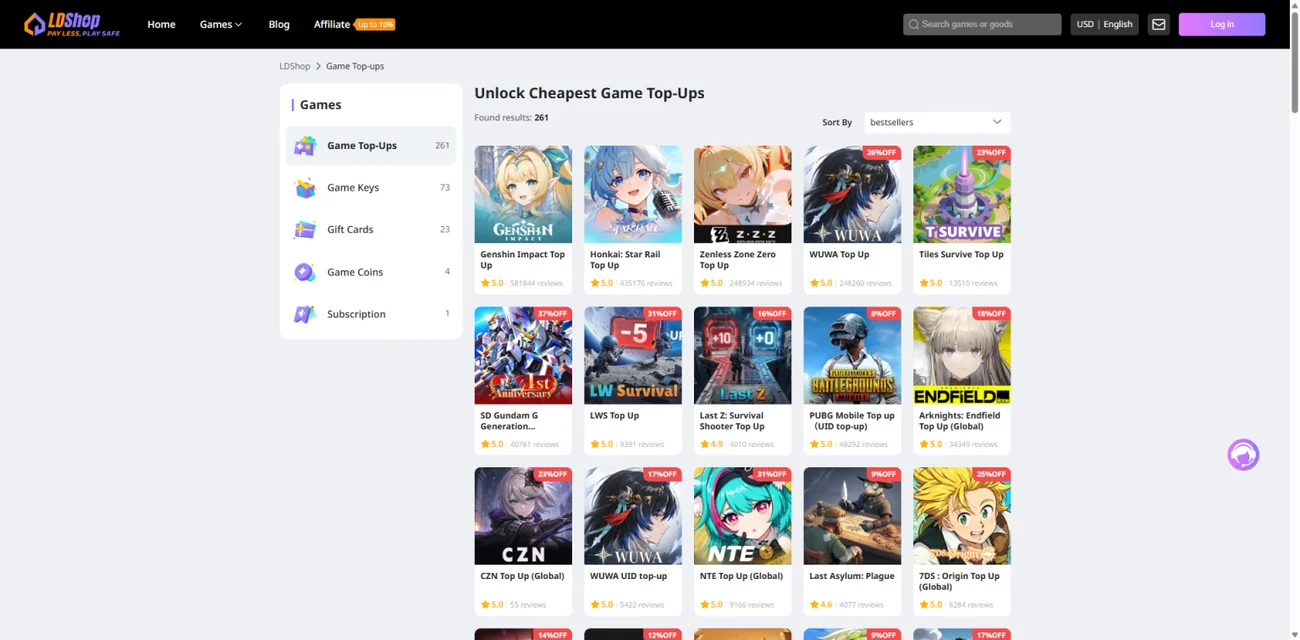
Third-party platforms for Last War Top up vary considerably in their reliability profiles, and the evaluation criteria that identify trustworthy options are consistent regardless of which platform is being considered. A formal storefront with published policies, verifiable independent reviews from actual buyers on external platforms, payment processing through recognized infrastructure, and a transaction model that does not require Last War account credential sharing are the characteristics every reliable platform demonstrates.
How the Main Platforms Compare
Rather than naming one “winner” outright, here’s how the platforms players actually consider for Last War stack up against each other, including where each one falls short.
LDShop
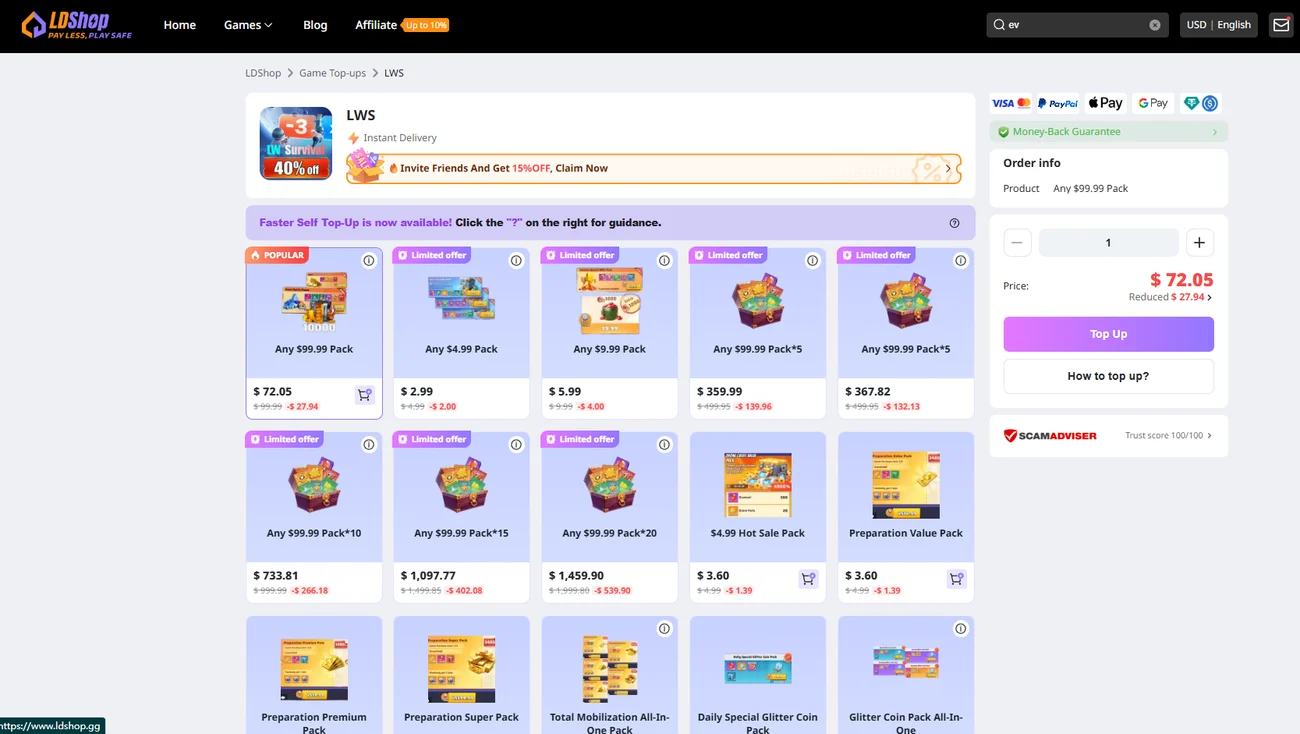
Offers Last War Top up through a “Self Top-Up” flow: after payment, the player logs into their own game account through LDShop’s interface (email login) rather than handing credentials to staff, and is automatically logged out once the top-up completes, with login records cleared afterward. That’s a meaningfully different exposure profile than Packsify’s staff-operated model, though it still involves entering account credentials into a third-party interface, which is worth being clear-eyed about rather than describing as “no login at all.” LDShop Trustpilot record (roughly 3,000 reviews, 4.3–4.5/5) skews positive on speed and pricing, but real complaints exist too: a portion of reviewers describe delivery delays or failed orders that required working through customer support, a few mention per-game purchase limits that weren’t clearly disclosed before purchase, and occasional site performance issues during the self top-up flow. None of this is unusual for the category, but it’s worth setting expectations accurately rather than presenting any self-service platform, LDShop included, as frictionless every time.
LootBar
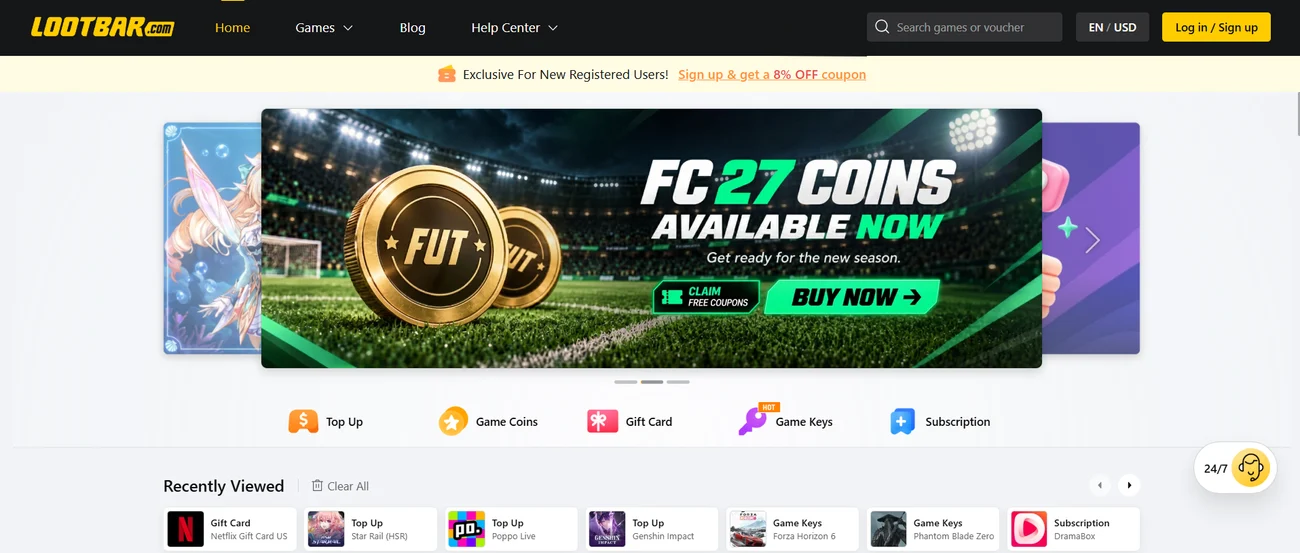
Supports Last War alongside a very broad catalog and has built a large review base (4.8/5 across 30,000+ reviews), with users frequently citing fast delivery and competitive pricing. The caveats worth knowing: some Reddit discussion questions whether LootBar appears on every publisher’s official authorized-reseller list, a review-site sample turned up scattered delivery-delay reports, and LootBar’s “delivery by login” option — offered for some titles — means credential sharing is part of the model for those specific purchase paths, not something LootBar avoids across the board.
Packsify
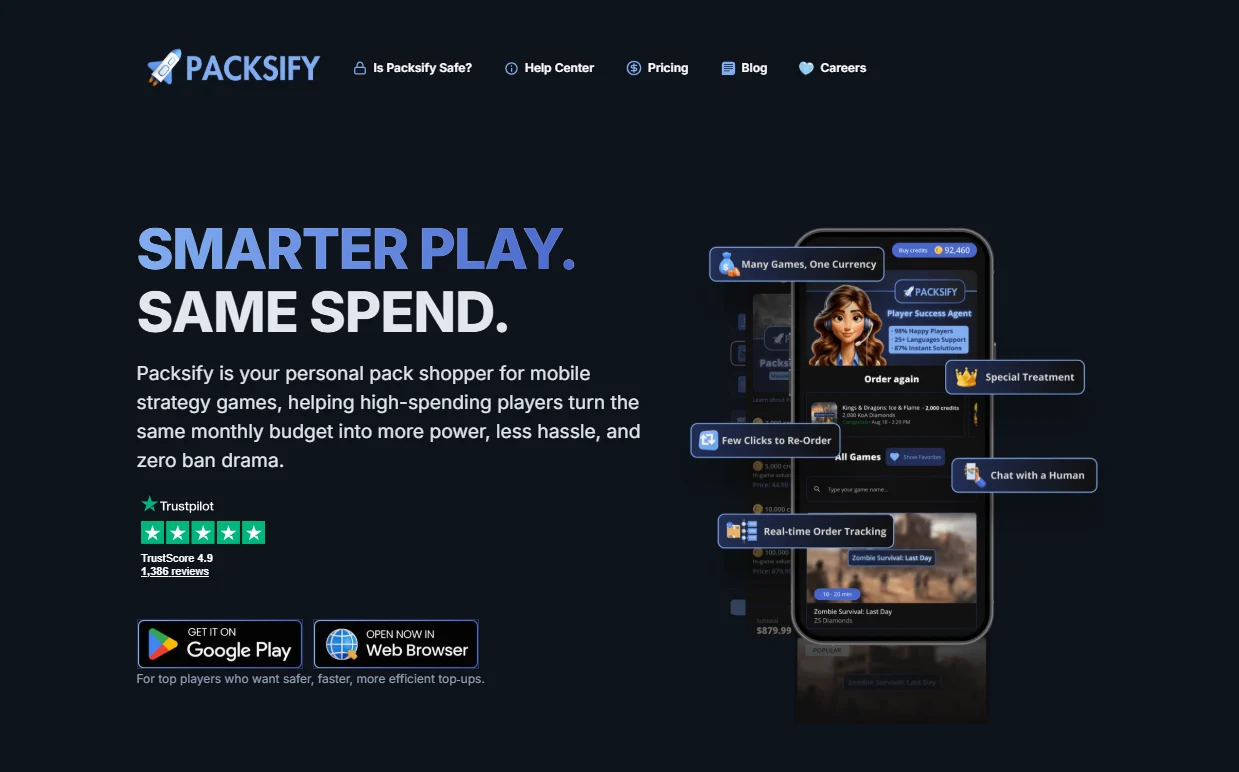
Uses a fundamentally different model: a human operator logs into the player’s account and completes the purchase through the official app store using purchased gift cards, then logs out. This is by design, not an oversight — Packsify’s own documentation states plainly that its purchase model requires account access because that’s structurally how the purchase happens. The upside it advertises is official-store pricing integrity and no chargeback exposure; the trade-off is that it asks for exactly the kind of account access that credential-sharing-averse players are typically told to avoid. Whether that’s acceptable depends entirely on how comfortable a given player is with that access model — it isn’t inherently fraudulent, but it is a different risk profile than a self-service platform.
Moo-topup
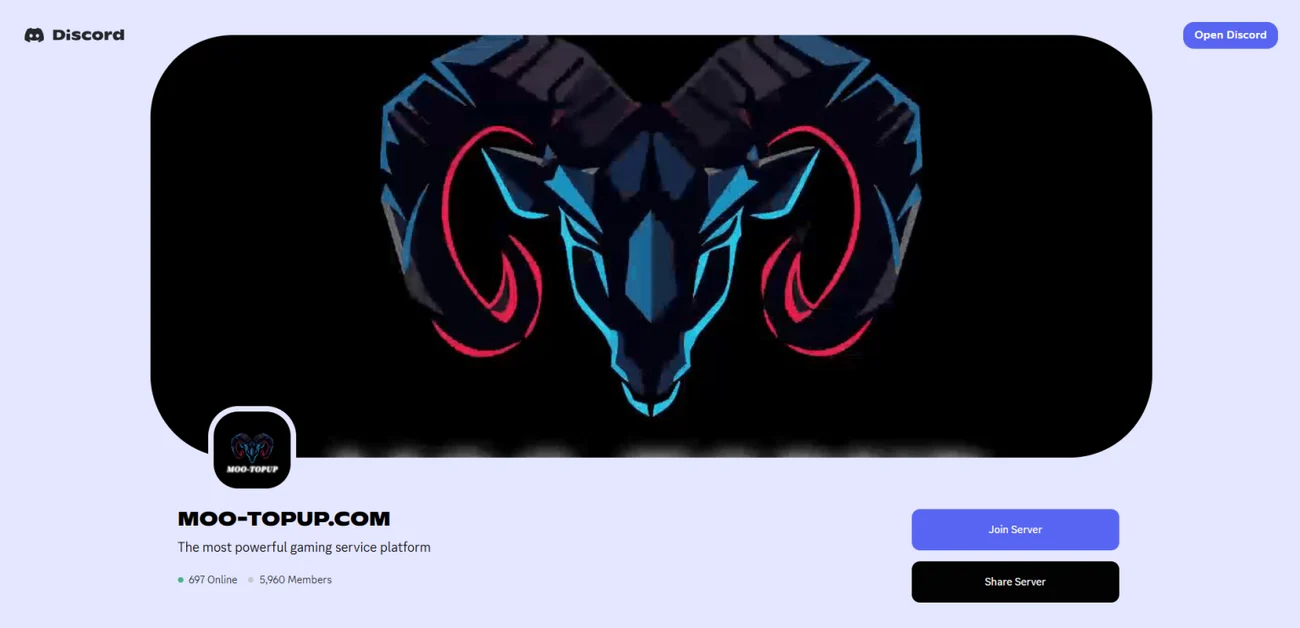
Operates differently from the other platforms on this list: it runs primarily through a Discord server (created September 2025, several thousand members) rather than a standalone storefront, with orders placed by opening a support ticket rather than checking out through a website. That’s not automatically disqualifying — plenty of legitimate small sellers start on Discord — but it does mean Moo-topup is missing the accountability layer the other platforms here have: no Trustpilot or independent review history we could find, no published refund policy to check against, and no payment-dispute infrastructure visible outside whatever the ticket conversation itself covers. In practice, that means less transparency about how a failed order gets resolved and less external verification that payment methods are handled securely, compared to a platform with a formal storefront and a public review trail. It may work fine for many buyers — we just can’t independently confirm that either way, which is itself the point: it’s a harder platform to vet than the others on this list.
| Factor | LootBar | Packsify | LDShop |
| Model | Self top-up or login-based (varies by game) | Login-based by design | Self top-up via LDShop’s own login interface |
| Coverage | Very broad | Strategy/4X-game focused | Medium, multi-region payment support |
| Independent reputation | Strong overall, some Reddit account-risk concerns | Company-published claims, not independently verified | Mostly positive, some delivery/limit complaints |
| Best fit | Broad catalog, price-focused shoppers | Players comfortable with account access | Players who want to avoid credential sharing |
Security Considerations for External Top-Ups
Account security for Last War is particularly important given the investment that serious players make in base development, research progression, and alliance standing over months of play. No legitimate self-service Last War top-up service requires the player’s game account password to deliver Diamonds; platforms that do request login access (like Packsify, by explicit design) should be evaluated on that basis specifically, not treated as automatically fraudulent — the distinction is whether the request is disclosed upfront as part of a transparent model or hidden as a “verification” pretext.
Implausible pricing remains the most reliable fraud signal in the Last War top-up space. Diamonds offered at 50 to 70 percent below any legitimate market rate cannot be produced by operational efficiency or regional sourcing advantages and instead reflect either stolen payment infrastructure or an operation that collects payment without delivering. Players who apply this filter to every top-up channel evaluation, regardless of how attractive the pricing or interface appears, eliminate the fraud exposure category that uninformed buyers regularly encounter.
Maximizing Each Top-Up’s Development Return
The players who get the most development value from Last War spending consistently connect each top-up to a specific, pre-identified progression target rather than purchasing currency without a clear deployment plan. Calculating the exact Diamond amount needed for a defined upgrade sequence, selecting the package tier that covers that requirement most efficiently, and executing the purchase during an active event window that applies bonus value to the transaction produces better outcomes than the reactive purchasing that most players default to when a specific need arises.
Fast processing matters most for purchases timed around active event windows, where the Diamonds need to arrive quickly enough to be used before the event period closes — a factor worth weighing alongside price when choosing between platforms above.
Alliance Coordination and Group Spending
One dimension of Last War top-up strategy that individual purchase guides often overlook is the alliance coordination element. Many of the game’s most valuable events require coordinated spending across alliance members to reach milestone thresholds that unlock enhanced rewards. Individual top-ups that align with alliance-wide spending pushes produce better collective outcomes than those made outside the alliance’s coordinated event windows.
Players who maintain communication with alliance leadership about upcoming events and coordinate their top-up timing around alliance spending windows extract additional value from the same individual purchases through the collective milestone rewards that coordinated spending enables. This group dimension of spending strategy is unique to strategy games like Last War and represents an additional layer of optimization that distinguishes players who progress most efficiently from those who spend equivalent amounts with less collective return.