‘The Diplomat’ Season 4 Recap and Ending Explained: Why Kate Wyler Resigns

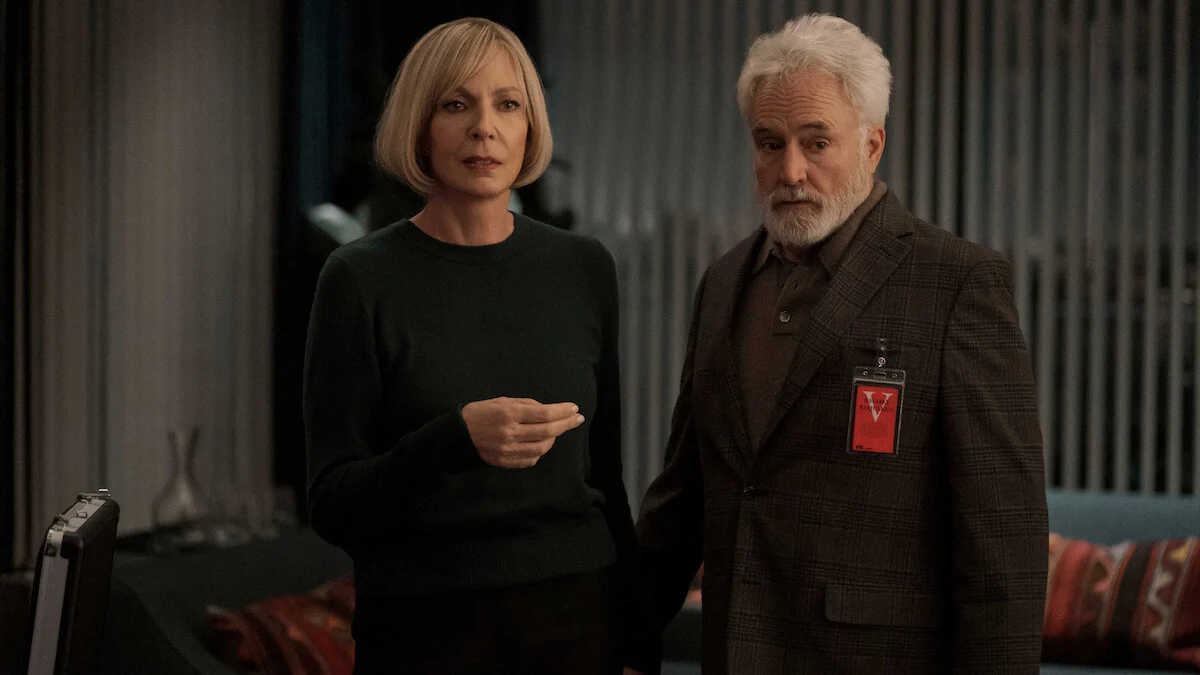

Netflix released all eight episodes of the fourth season of ‘The Diplomat’ on October 15, so viewers can move through the whole story in one sitting. The season picks up after Kate Wyler learns that President Grace Penn and Vice President Hal secretly took Poseidon, a Russian weapon recovered from a submarine off the British coast.
This ‘The Diplomat’ recap and ending explained guide traces how that theft grows into a full diplomatic crisis. It also looks at why Kate walks away from her post and what the unresolved final scene leaves hanging.
Season Recap and the Poseidon Fallout
The previous season ended with Grace Penn assuming the presidency after the sudden death of President William Rayburn, which pushed Kate into a role she never wanted. The new episodes begin with that uneasy arrangement already straining. Kate understands that the theft will carry heavy consequences, yet she decides to help contain the situation rather than go public right away.
She wants to tell British intelligence officer Callum Ellis the truth, but Hal and Grace refuse, and she eventually agrees to lie to him. She has also ended her relationship with Callum and hopes to repair her marriage with Hal. The choice shows how much she is willing to compromise early on.
A visit to Windsor Castle ends with Grace being shot, which temporarily hands presidential powers to Hal. Grace recovers, but people close to her, especially her husband Todd, notice that she is no longer the same. From that point her decisions become harder for anyone around her to question.
Hal then reveals the truth about Poseidon to Prime Minister Nicol Trowbridge at a particularly sensitive moment, and the death of Foreign Secretary Austin Dennison leaves Kate without an important ally in the British government. Meanwhile Hal works to protect his influence over the president, and Kate’s relationship with Grace keeps deteriorating.
Bethan Vaughan Becomes the New Prime Minister
Kate subsequently blackmails Trowbridge, which contributes to his resignation, and Bethan Vaughan, played by Jodie Whittaker, takes over as Britain’s prime minister. It is a pragmatic move that clears one obstacle while creating a far less predictable one. The new leader does not arrive as a pushover.
Vaughan learns about the Poseidon operation and allows Russia to retrieve its dead from the submarine, a decision Grace strongly opposes. Grace then instructs Kate to threaten Vaughan with American warships if Britain does not reverse course. Kate is visibly uncomfortable with the demand, and the exchange marks a turning point in how she sees her employer.
Another thread follows Stuart. He uses the official dissent channel to record his disagreement with Grace’s policies, and Kate encourages him because the complaint will create a record of opposition inside the administration.
Secretary of State Miguel Ganon tells Grace about the complaint, and she identifies Stuart and orders him back to Washington. He is not formally fired, but the recall leaves his future uncertain and signals that opposing the president can damage a career.
Why Kate Wyler Resigns at the G7 Summit
The major confrontation takes place at the G7 summit in Italy, where Vaughan is prepared to expose the Poseidon theft and the deployment of American warships near Britain. The stakes are clear. A public accusation from an ally could badly damage American standing.
Before Vaughan can fully make her case, Grace speaks to the gathering herself. She acknowledges the American actions, defends them as necessary to protect British citizens and NATO territory, and criticises Vaughan for letting Russia retrieve its dead. That explanation helps her avoid immediate consequences from the other leaders.
Kate realises that the president’s increasingly aggressive decisions will continue unless someone challenges her, and the treatment of Stuart has convinced her that Grace will not tolerate dissent. When Grace threatens her position as ambassador, Kate resigns publicly, which frees her to speak to reporters without the limits of her official role.
The ending presents Kate as choosing principle over position. It is a fitting turn for a diplomat who spends the season trying to manage a president she cannot restrain. Walking away becomes her most forceful form of negotiation.
What Hal’s Final Move Means for Grace Penn
Chief of Staff Billie Appiah and Secretary of State Miguel Ganon follow Kate out the door, and Hal walks out as well. The image of Grace’s closest officials leaving together in front of the G7 is the finale’s most striking moment.
The finale does not confirm whether Hal has formally resigned. He approaches reporters, but the season ends before viewers hear what he says. The ambiguity carries weight because Hal has relished being Vice President throughout the season. He could be standing with Kate or still trying to protect his own position.
The ending does not resolve the international crisis neatly, and the president is not held accountable, though her authority is left considerably weakened. With Kate, Billie and Ganon gone, Grace faces a visible divide among her most senior officials.
Netflix has not announced a renewal beyond this season, so any word on the future will likely follow viewership. Until then, the lingering question is whether Hal stepped toward those reporters to stand with Kate or to shield his place beside Grace, and readers who have reached the finale can share in the comments which choice they think he made.