Best Game Scenes in Movies and TV Shows Ranked

Without anybody getting up from the table, a casino scenario might escalate a casual chat into a fight. While some directors use a concealed card to create tension, others find humor in individuals who mistake good fortune for fate. Even when the games themselves defy believability, the best instances tell something about the players. This rating evaluates six sequences based on their significance to the plot, suspense, and performances. Here are some spoilers.
What Screen Winnings Leave Out
Films usually make casino money easy to understand: chips accumulate, the music rises and someone leaves richer. Online promotional balances require a different reading, and AussCasinosAnalyzer’s guide to $200 bonus terms discusses conditions behind those advertised amounts. Wagering requirements, eligible games and expiry dates can separate a headline figure from money available for withdrawal. Those distinctions matter because a bonus isn’t the same as cash won at a film’s blackjack table. While the scenarios below take place in fictitious settings with their own laws and dramatic shortcuts, the linked site is intended for an Australian audience. A comparative listing or a movie triumph do not prove that a certain athlete is eligible for an offer. The ranking concerns storytelling, not gambling advice.
| Rank | Movie or show | Standout sequence |
| 6 | Friends | Monica and Chandler’s craps-table decision |
| 5 | The Hangover | Alan’s blackjack transformation |
| 4 | Rain Man | The brothers at the blackjack table |
| 3 | Casino | The casino surveillance hierarchy |
| 2 | Twin Peaks: The Return | Cooper’s slot-machine jackpots |
| 1 | Casino Royale | Bond’s final poker showdown |
6. Friends: A Marriage Riding on the Dice
In “The One in Vegas,” Monica’s winning streak becomes the setting for a much bigger gamble. Chandler suggests marriage if she rolls another eight, turning a crowded craps table into an unlikely testing ground for their relationship. The joke works because both characters have already let the evening carry them further than intended. Courteney Cox gives Monica the fierce concentration of someone treating a casual game as a championship, while Matthew Perry makes Chandler’s escalating promises sound almost reasonable. It ranks sixth because the relationship supplies more tension than the game. Still, few sitcom casino scenes give a roll of the dice such an effective second meaning.
5. The Hangover: Alan Suddenly Becomes Useful
Alan’s blackjack sequence briefly reorganises the group’s entire hierarchy. The man who normally creates problems becomes the person everyone depends on, arriving at the table with an unexpected air of purpose. The styling and musical cues deliberately echo Rain Man, making the scene both a rescue attempt and a film reference. Zach Galifianakis keeps Alan’s expression stubbornly serious, which makes the transformation funnier than a stream of jokes would have. Its weakness is also part of its appeal: the sequence makes a difficult task look conveniently manageable. As comedy, though, it earns its place by allowing the least dependable character a moment of apparent control.
4. Rain Man: Charlie Recognises an Opportunity
The blackjack sequence in Rain Man places the brothers’ conflicting priorities in plain sight. Charlie sees Raymond’s ability with numbers as a way out of his financial trouble and takes him to the tables. Tom Cruise supplies the impatience. Dustin Hoffman gives Raymond a separate rhythm, largely untouched by the excitement Charlie attaches to the money. That mismatch keeps the sequence interesting beyond the cards. There’s an uncomfortable edge beneath the polished clothes and casino glamour. Charlie’s enthusiasm doesn’t erase the fact that he is using his brother’s abilities for personal gain. The scene’s strongest quality is that the apparent victory doesn’t settle the relationship.
3. Casino: Everyone Watches Everyone Else
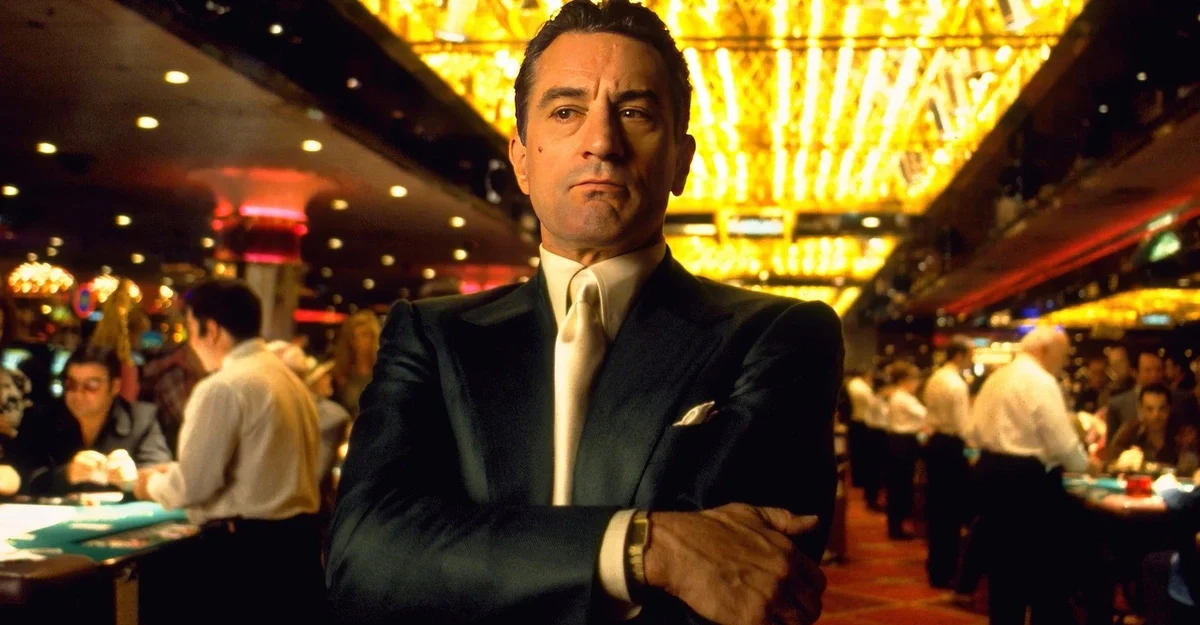
Casino oversight is transformed into a tiny thriller by Martin Scorsese. According to Ace Rothstein’s explanation of the chain of observation, focus shifts from players and dealers to surveillance cameras via successive tiers of management. A fantastic winning hand is not necessary. The tension comes from discovering how thoroughly the room is monitored. Robert De Niro’s matter-of-fact delivery makes the arrangement sound routine, while the editing reveals an institution organised around suspicion. It deserves third place because the casino itself becomes the subject: every smiling employee and apparently casual glance belongs to a larger operation.
2. Twin Peaks: The Return: Cooper Follows the Signs
Dale Cooper’s jackpot run at the Silver Mustang Casino replaces strategy with supernatural guidance. Glowing visions draw the dazed agent towards particular slot machines, producing a succession of wins that he barely seems to understand. Kyle MacLachlan plays the sequence with extraordinary restraint. Cooper doesn’t become triumphant or calculating; his bewilderment survives every payout. David Lynch lets the repetition become funny, then strange, then oddly touching. A setting normally associated with appetite and ambition contains a man almost entirely without either. That contradiction makes the sequence linger.
1. Casino Royale: The Final Hand
Bond’s final confrontation with Le Chiffre gives the table the pressure of an action scene. Daniel Craig’s stillness meets Mads Mikkelsen’s increasingly strained composure, until the showdown ends with Bond’s straight flush. The extraordinary cards invite scepticism, but the performances keep the emotional stakes clear. Bond’s confidence has already proved costly; another failure would carry consequences beyond wounded pride. It takes first place because every pause serves the confrontation. The cards resolve the hand, but the faces make it memorable.
What Makes These Scenes Last
The best casino scenes give the money a secondary purpose. It exposes Charlie’s selfishness, encourages Chandler’s impulsiveness or threatens Le Chiffre’s composure. The result matters because something about the character is already at stake.