‘Chompoo: Lost & Forgotten’ Review: Netflix’s First Thai True Crime Documentary Turns the Camera on Its Own Audience


Netflix has spent the last several years training viewers to expect true crime documentaries built around one central mystery, waiting to be cracked open in a satisfying final act. ‘Chompoo: Lost & Forgotten’ arrives with a different agenda entirely.
This is Netflix Thailand’s first original true crime feature, and it revisits the 2020 disappearance and death of three year old Orawan Wongsricha, known across Thailand as Nong Chompoo, from her family’s village in Mukdahan province. Director Nontawat Numbenchapol builds the film not as a whodunit but as an autopsy of how a grieving community became a live broadcast, complete with a breakout celebrity nobody asked for.
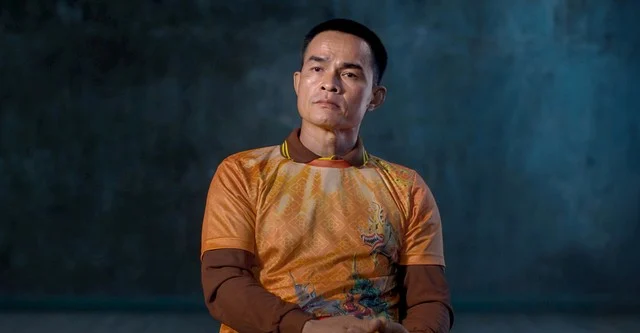
That celebrity is Chaiphol Wipha, the child’s uncle by marriage, who became known nationwide as Uncle Phol. What makes this documentary genuinely unnerving is watching a man under suspicion build a devoted online following in real time, singing for cameras and fielding blessings from strangers who traveled to his village like it was a shrine. I found myself less gripped by the eventual verdict than by the sheer speed with which a tragedy curdled into content.
Numbenchapol clearly has instincts for tracing the gap between the version of events that gets broadcast and the version actually lived by the people caught inside it, and those instincts carry this film. He resists the urge to editorialize with dramatic narration or manipulative scoring, instead letting the footage of amulet sellers, livestreamers, and busloads of tourists arriving at a crime scene speak for itself. It is one of the more pointed pieces of media criticism disguised as a true crime documentary that I have come across, closer in spirit to a piece of long form investigative journalism than to the glossy reenactment driven docs that usually fill this Netflix category.
Where the film stumbles a bit is in the forensic details of the actual case. The hair evidence that reportedly tied Wipha to the crime gets mentioned without much scientific grounding, and I finished the film wanting a clearer sense of exactly what convinced the courts of his guilt beyond his erratic public behavior after the body was found. Whether that thinness comes from legal caution around an appeals process or simply a directorial choice to keep the focus on spectacle rather than procedure, it leaves a gap that a more traditional true crime approach would have filled in.
The inclusion of criminologist Trynh Phoraksa helps ground some of that missing context, offering outside perspective on how public sympathy can shift so violently over the course of an investigation. Still, the film’s real subject is never really the crime itself, it is the audience that turned it into entertainment, myself included by the time the credits rolled. There is something almost queasy about how easily the documentary implicates its own viewers in the exact dynamic it is critiquing, and that discomfort feels intentional rather than accidental.
What lingers most is the film’s insistence that the girl at the center of it all became the least discussed part of her own story. Numbenchapol never turns her into a symbol or forces a tidy emotional close, he simply lets the imbalance between her fading memory and Wipha’s growing fame sit there, unresolved and a little sickening. It is a smarter and sadder film than its true crime packaging suggests, and it earns comparisons to the more thoughtful strain of media ethics documentaries rather than the pulpier end of the genre.
I walked away from ‘Chompoo: Lost & Forgotten’ more shaken by what it says about all of us watching than by anything that happened in that Mukdahan forest. It is not a perfect documentary, the case details could use more rigor, but its central argument about fame, grief, and the manufacturing of a villain hits with real force. This one earns a strong 8 out of 10 from me, a rare true crime entry that actually has something to say about the genre it belongs to.
Have you watched ‘Chompoo: Lost & Forgotten’ yet, and did it sit with you the same way it sat with me? Drop your take in the comments below.