Netflix’s ‘Chompoo: Lost & Forgotten’ Recap and Ending Explained

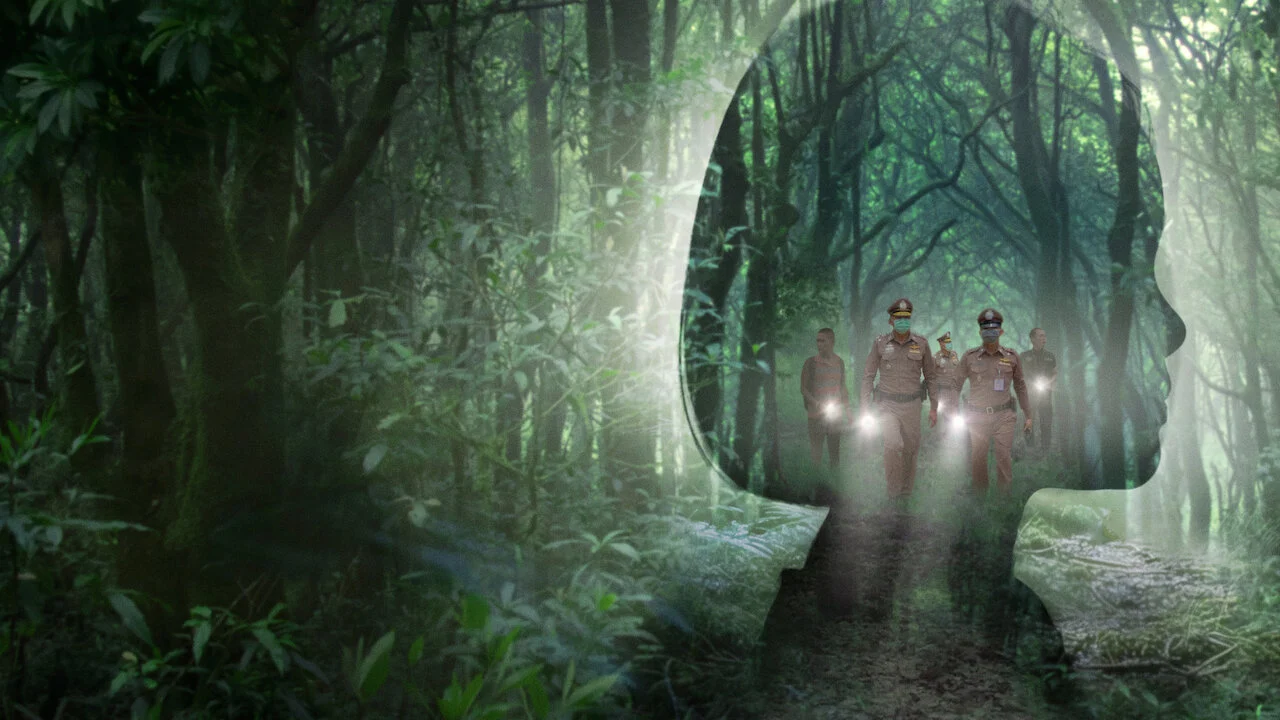

‘Chompoo: Lost & Forgotten’ has arrived on Netflix as the platform’s first Thai true crime documentary feature, and the film has quickly become a talking point for how it frames a case that many viewers may not have followed in real time. The documentary was directed by Nontawat Numbenchapol and co-produced by Singapore’s Beach House Pictures alongside Thai Film Works, marking a notable step for Netflix’s Thailand slate.
The film revisits the 2020 disappearance and death of three year old Orawan Wongsricha, known publicly as Nong Chompoo, and the strange media aftermath that turned a suspect into a minor celebrity. Below is a breakdown of what happens in ‘Chompoo: Lost & Forgotten’, how the case unfolded, and what the documentary’s ending actually resolves and leaves open.
What Happens in the Chompoo Case
Three year old Orawan Wongsricha disappeared from her family’s village in Mukdahan province in northeastern Thailand while her parents, Anamai and Sawittree Wongsricha, were out doing chores and had left her in the care of her siblings. Her body was later found in Phu Pha Yon National Park, roughly a mile and a half from her home, three days after she vanished.
The scale of media attention around the search was immediate and intense, with local and national channels covering the case daily and effectively turning the small village into a center of national attention. Forensic details became central to how the public understood the case, and hair found at the scene proved unusually significant, since several strands appeared to have been cut with a sharp object rather than pulled or naturally shed.
An autopsy found no evidence of sexual assault, though injuries beneath the scalp were recorded, including bruising at the forehead and the back of the head. The estimated timeline left a substantial gap between the disappearance and the likely time of death, and that gap became one of the case’s more persistent difficulties for investigators and the public trying to follow along.
What began as a missing persons case had, within days, shifted into something closer to a live television event, according to reporting on the film. The documentary frames this shift as its actual subject rather than a side detail, choosing to track the story’s virality alongside the criminal timeline.
Uncle Phol and the Media Frenzy
The man at the center of the public fixation is Chompoo’s uncle, Chaiphol Wipha, widely known by the nickname Uncle Phol. As the investigation progressed, he went from grieving family member to a minor Thai celebrity within days, with news crews stationed in the village for months and his daily life effectively becoming programming.
Uncle Phol consistently maintained his innocence throughout the process, and many members of the public reportedly believed him, particularly after his tearful television appearances. That sympathy is described as having snowballed into something resembling genuine fan attention, with reports noting he drew hundreds of thousands of followers on social media while the investigation was still active.
The documentary includes on camera interviews with Uncle Phol, reportedly filmed while he was out on bail and still maintaining elements of his media persona. His continued presence in front of cameras, even after formal charges, is part of what critics have pointed to as the strangest element of the entire case.
Reviewers covering ‘Chompoo: Lost & Forgotten’ have described the situation as difficult to process precisely because the public fascination with Uncle Phol ran in parallel with a slow moving forensic case working against him behind the scenes. The film uses that contrast, rather than a traditional whodunit structure, to carry its narrative tension.
How the Documentary Handles the True Crime Genre
Unlike many true crime documentaries built around uncovering a killer, ‘Chompoo: Lost & Forgotten’ does not function as a mystery in the conventional sense, since the legal outcome was already settled well before the film’s release. Instead, the documentary is structured around how public sympathy, television ratings, and social media attention intersected with an ongoing criminal case.
The film reportedly features criminologist Trynh Phoraksa, who specializes in psychology and criminal behavior, offering expert context on how public perception shifted so dramatically over the course of the investigation. This structure positions the documentary closer to media criticism than pure procedural storytelling.
Coverage of the film has noted that its title carries a specific meaning, since Chompoo herself was never forgotten by her family, investigators, or the courts. What repeatedly got lost, according to analysis of the documentary, was her position at the center of a story that increasingly revolved around the man accused of causing her death.
That imbalance, between a national audience that came to know an accused man’s mannerisms, home, and singing voice in detail while the three year old victim became reduced to a launching point for someone else’s brief fame, is treated by the film as its actual subject rather than background context.
The Court of Appeal Ruling and Ending Explained
The legal resolution to the case came well before the documentary’s release. According to reporting on the case, the Court of Appeal increased Chaiphol Wipha’s sentence to 26 years in 2025, finding him guilty of intentional murder, child abduction, and offenses involving the handling of the body.
Because the film was shot with Uncle Phol appearing while still on bail and pursuing appeals, its ending does not offer a dramatic reveal so much as a reckoning with what has already been legally decided. The tension in the closing chapters comes from watching a man who spent years cultivating a sympathetic public image address that image on camera, even as the court’s findings stood against him.
Following the conclusion of the legal process, Chompoo’s parents, Sawittree and Anamai Wongsricha, are reported to continue living in their local community, largely out of the spotlight that once surrounded their daughter’s case. The documentary’s closing stretch leans into that contrast, spending time with the people the media circus pushed to the margins rather than closing on the man who once dominated the coverage.
‘Chompoo: Lost & Forgotten’ is now streaming on Netflix, and given how divisive early reactions to the film’s structure and pacing have already been, it feels like exactly the kind of documentary worth discussing once you’ve sat with its ending.