Christopher Nolan’s ‘The Odyssey’ Turns Homer’s Homecoming Into a Reckoning With War

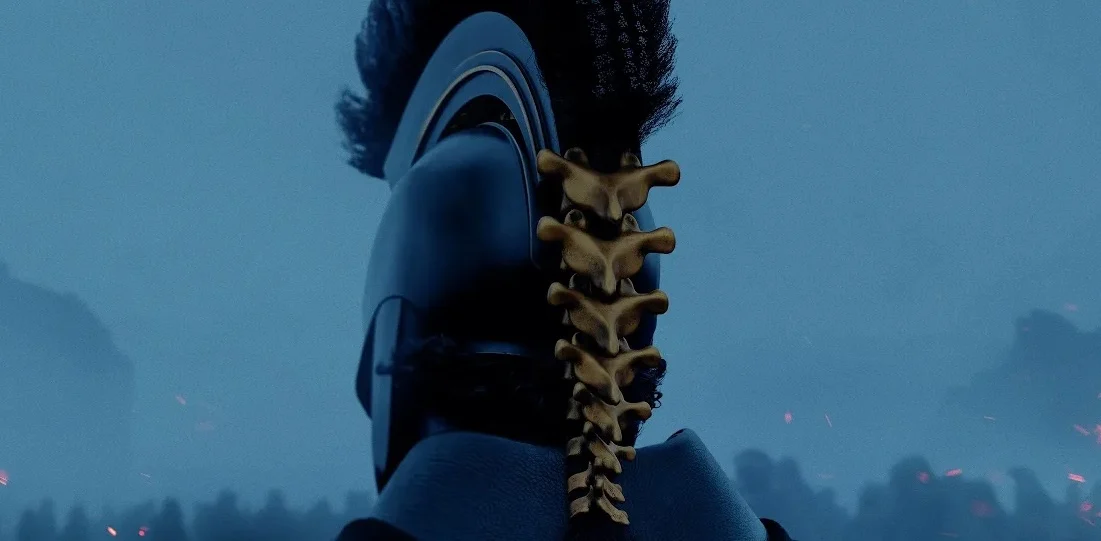

Christopher Nolan has never been a filmmaker who hands audiences easy answers, and his adaptation of ‘The Odyssey’ proves that even a story as old as Western literature itself can carry his signature ambiguity. The film adapts the Greek poem attributed to Homer, a staple of high school syllabi, following Odysseus’ long-delayed return home from the Trojan War. For a director coming off the Oscar-winning ‘Oppenheimer,’ the choice to tackle Homer’s epic is less of a detour than it first appears.
Audiences searching for clarity on how the film resolves Odysseus’ journey and what its final act is actually saying will find that Nolan’s version leans heavily on consequence rather than spectacle for its meaning. The narrative unfolds through flashbacks and storytelling rather than strict chronology, beginning eight years into Odysseus’ disappearance while Agamemnon has already made it home safely. That structural choice shapes everything about how the ending lands.
What Happens At The End Of The Odyssey
Before the film’s climax, Odysseus and his surviving men travel to Hades, where the wise man Tiresias gives instructions for the remainder of the voyage. There, Odysseus encounters the dead Agamemnon, who warns him to be cautious during his homecoming, and Sinon, a soldier killed because Odysseus needed to keep the Trojan horse plan secret from him. Sinon confronts Odysseus for failing to properly honor the dead, and Odysseus vows to make amends for his fallen comrades.
After leaving Calypso, Odysseus arrives on an Ithacan beach disguised as a beggar and learns from his old friend Eumaeus, who does not recognize him, that Telemachus is about to be attacked by Antinuous and the other suitors. Odysseus saves his son, and the two arrange a banquet where Penelope asks the suitors to string Odysseus’ hunting bow. Odysseus strings it himself, he and Telemachus kill the suitors, and Odysseus and Penelope ultimately set sail for the unknown west, leaving Telemachus to rule Ithaca.
Penelope initially remains skeptical of the beggar’s true identity, but she accepts that he is truly Odysseus once he correctly describes how their marriage bed was built around a living tree trunk. That detail, drawn straight from Homer, gives the reunion its emotional anchor even as Nolan reshapes the surrounding material.
How The Odyssey Ending Connects To Oppenheimer
As the film closes and Odysseus regains his full memory, he reflects on watching Troy burn, aware that the destruction only happened because he and his men deceived their way inside using the Trojan horse. Nolan stages a comparable moment in ‘Oppenheimer,’ where the physicist gives a victorious speech about the atomic bombings while imagining everyone in the room being consumed by the very weapon he built.
When Odysseus tells Penelope that breaking the god Zeus’ law of hospitality made it acceptable for everyone to abandon basic decency, the moment echoes Oppenheimer’s fear, voiced to Albert Einstein at the end of his own film, that the destruction he feared might now exist purely because he invented it. Both films ask a version of the same question, whether a man who wins a war can ever fully separate himself from what winning required.
Nolan has directly acknowledged the link between the two projects, describing the period after finishing ‘Oppenheimer’ in an interview with USA Today. He said, “Coming out of ‘Oppenheimer,’ I had a funny combination of despair and optimism. That film was almost a horror film for me. It was a very disturbing subject to live with for a couple of years, thinking nonstop about nuclear war and what humans bring to the table. I was quite glad to move out of that. But when you see ‘The Odyssey,’ you start to realize that I didn’t quite manage to escape it.”
Why Nolan Leaves His Endings Open To Interpretation
Nolan also pointed to his Batman trilogy as an unexpected influence, saying those three films were a continual experiment in trying to make a larger than life figure feel human, and that the same balance carried into ‘The Odyssey.’ He additionally cited Martin Scorsese’s ‘The Last Temptation of Christ’ as inspiration, noting the technical choices Scorsese made and how the film challenged its audience through its central figure.
Do you think 'The Odyssey' is Nolan's greatest work?
That approach to character sits alongside Nolan’s long-standing habit of refusing to spell out his endings. Fans have spent years dissecting the memory puzzle of ‘Memento,’ the layered mysteries of ‘The Prestige,’ the time mechanics of ‘Tenet,’ and the emotional final scene of ‘Interstellar,’ and ‘The Odyssey’ appears to continue that pattern by design.
‘The Odyssey’ arrives as Nolan’s most ambitious project in terms of scale, yet its narrative structure remains comparatively straightforward, following Penelope and Telemachus as they hold off Antinous and his suitors while Odysseus regains his memory across the voyage. The scale of the production has also drawn attention on its own terms, with the film’s presentation representing a technical milestone for Nolan.
Is A Sequel To The Odyssey Possible
Nolan is not, by nature, a filmmaker interested in sequels outside of his Dark Knight trilogy, which was always conceived as a three part story. There was never an ‘Inception 2’ or an ‘Interstellar 2,’ and Nolan appears to favor stories that close cleanly, which fits ‘The Odyssey’ well since the source material itself reaches a definitive conclusion.
A Telemachus-centered follow-up or a prequel built around Circe or the Cyclops both seem unlikely, since Nolan would have to depart from Homer’s text entirely to justify continuing the story. That does not rule out a future project set in Greek mythology, but nothing currently suggests Nolan sees this particular tale as unfinished business.
Critical reaction so far has been strongly favorable. One review called the film reinvigorating, describing how it imbues myth with primal human feeling through majestic sweep and a colossal ensemble cast. The Hollywood Reporter’s coverage centers the film around Matt Damon’s performance, alongside Tom Holland, Anne Hathaway and Robert Pattinson rounding out the ensemble.
For a filmmaker who built his reputation on puzzles without solutions, closing out Odysseus’ twenty-year journey with a reunion this direct feels almost like a departure, and it raises the question of whether audiences read the ending as resolution or as one more layer for Nolan to leave unexplained.