‘Citizen Vigilante’ Is the Unauthorized ‘Batman Meets The Punisher’ Movie Nobody Expected — and Everyone Is Arguing About

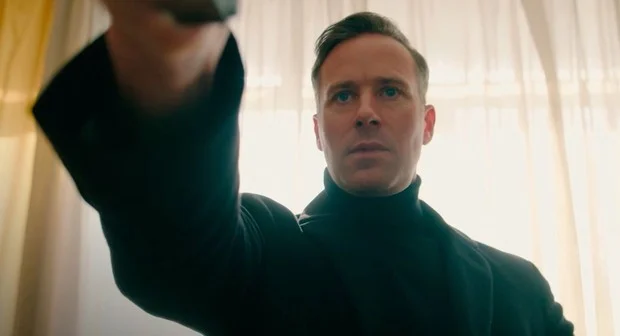

Nobody at DC Comics or Marvel approved it, but the film that critics are already calling a rogue mashup of Bruce Wayne’s wealth and Frank Castle’s lethality has arrived. ‘Citizen Vigilante,’ written, directed, and produced by Uwe Boll, stars Armie Hammer as Michael Sanders, a wealthy vigilante who takes the law into his own hands, mixing the resources of a billionaire with the kill-first philosophy of a street-level executioner. The result is one of the most talked-about and contentious releases of the year.
The film was released in select theaters and digitally on June 19, 2026, and has since attracted fierce debate involving critical panning, a German distribution ban, and an appearance on Elon Musk’s social media platform. What started as a low-budget vigilante thriller has transformed, almost overnight, into a cultural argument about justice, censorship, and the limits of provocative filmmaking.
The ‘Batman’ DNA Behind ‘Citizen Vigilante’
The project was announced in January 2025 under the working title ‘The Dark Knight,’ with Hammer already attached to star, and principal photography began on January 27, 2025, in Croatia, with Mathias Neumann serving as cinematographer. The Batman parallels were visible from the very beginning, and they were not lost on Warner Bros.
Warner Bros. sent Boll a cease-and-desist order regarding the use of the title ‘The Dark Knight,’ leading to the title being changed to ‘Citizen Vigilante.’ In February 2025, Costas Mandylor joined the cast, and filming wrapped on April 3, 2025. Quiver Distribution acquired the film rights in February 2026.
Boll framed the project as a corrective to the current state of Hollywood. “In times of only boring sequels and superhero movies in the theaters, we bring an uncompromising thriller to the cinemas and on demand,” he said in a statement. “It is a movie we need in our times.” That positioning, as a gritty antidote to franchise entertainment, has defined much of its marketing and reception.
The tension between these two vigilante philosophies has a documented comic book history, with DC and Marvel publishing a pair of official crossover issues in 1994 pitting the two characters against each other, with the central conflict being Batman’s refusal to let the Punisher execute criminals. ‘Citizen Vigilante’ resolves that philosophical standoff firmly in the Punisher’s favor.
Armie Hammer’s Comeback and the Casting Controversy
Just a few years ago, Armie Hammer was one of Hollywood’s most promising rising stars, having appeared in David Fincher’s ‘The Social Network’ and earning critical acclaim in ‘Call Me by Your Name’ alongside Timothée Chalamet. His trajectory reversed sharply in 2021 when public allegations changed everything.
Hammer’s public downfall began when leaked direct messages surfaced online containing sexual content and references to cannibalistic fantasies. The situation escalated when multiple women accused the actor of sexual assault and emotional abuse. While the allegations sparked intense public scrutiny, Hammer was never formally charged with any crimes.
Boll addressed the casting directly in an interview: “I cast Armie Hammer in the lead because he’s a great actor, and also because he was cancelled and wanted to work. He wasn’t charged with anything, there was no lawsuit.” For Boll, the decision was both pragmatic and pointed, a deliberate challenge to the industry’s cancel culture dynamics.
Hammer’s involvement aligns with a broader trend in which entertainers who have faced mainstream backlash have found new audiences through conservative platforms, a pattern also seen with Gina Carano after her removal from ‘The Mandalorian’ and Roseanne Barr following the cancellation of her sitcom revival.
Germany’s Ban and the Elon Musk Effect
In Germany, the country’s film classification authority declined to issue the certification required for public theatrical screenings. While the film has not been officially banned, the decision effectively prevents cinemas from showing it. The distinction is procedural, but the practical effect is the same.
Boll said of the decision: “The rating system refused to give us a rating, so now you can only watch it if you bring in a Blu-ray from Austria or Switzerland. And I think they did that on purpose. It was a deliberate censorship decision. I hired a lawyer to complain about it, but we lost in a 6-2 vote as I was told that the film was inciting violence against migrants.”
The film was released on X on June 25, 2026 for 48 hours and was reposted by Elon Musk, whose post garnered more than 10.5 million views before the link went dark. The exposure the ban generated arguably did more for the film’s reach than any conventional marketing campaign could have managed.
Following the surge in attention, Boll announced a sequel is scheduled for release in 2027. The Streisand Effect, the phenomenon in which attempts to suppress content only amplify its visibility, appears to be fully at work here.
Critical Divide and Audience Reception
The film received negative reviews from critics, with Variety’s Todd Gilchrist describing it as “astonishingly bad” and “a violent, incoherent, morally bankrupt slice of exploitation,” adding that Hammer’s character comes across as “xenophobic and entitled.” Professional reviewers have been near-unanimous in their disapproval.
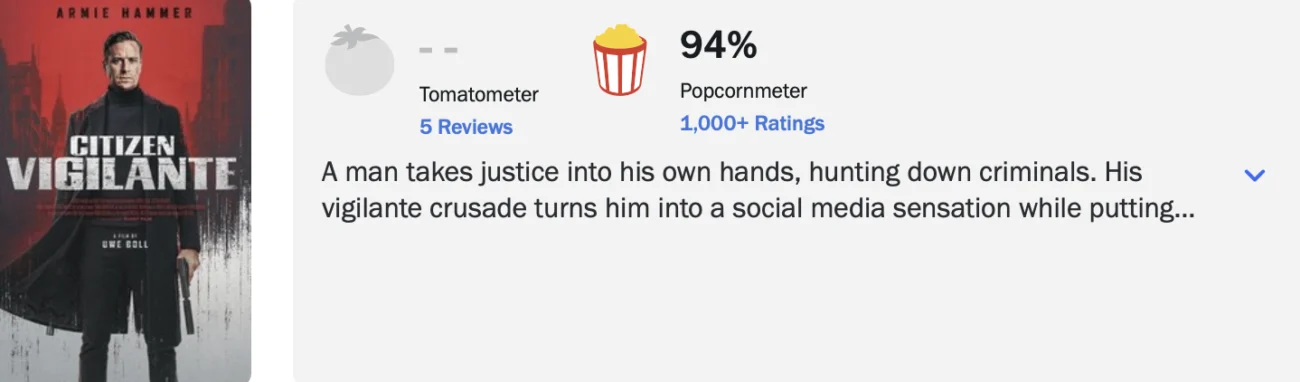
The film holds an audience score of 94% on Rotten Tomatoes as of late June 2026, a stark contrast to the critical consensus. That gap between press reception and viewer enthusiasm has become part of the film’s story, with supporters framing the divide as evidence of a disconnection between critics and the general public.
Variety’s Gilchrist also wrote that the film felt as though “the writer-director-producer is deliberately sabotaging his star Armie Hammer, whose intended comeback can only be harmed by this project.” Whether audiences ultimately agree with that assessment, or whether the film’s notoriety translates into a genuine second act for its leading man, is a question that ‘Citizen Vigilante’ has made impossible to ignore. If you’ve seen the film, or even just followed its chaotic journey from Croatian set to German ban to Elon Musk’s timeline, share your take on whether ‘Citizen Vigilante’ represents genuine countercultural cinema or simply controversy in search of a movie.