Criston Cole’s Death in ‘Fire and Blood’ Reveals Why ‘House of the Dragon’ Chose a Very Different Ending

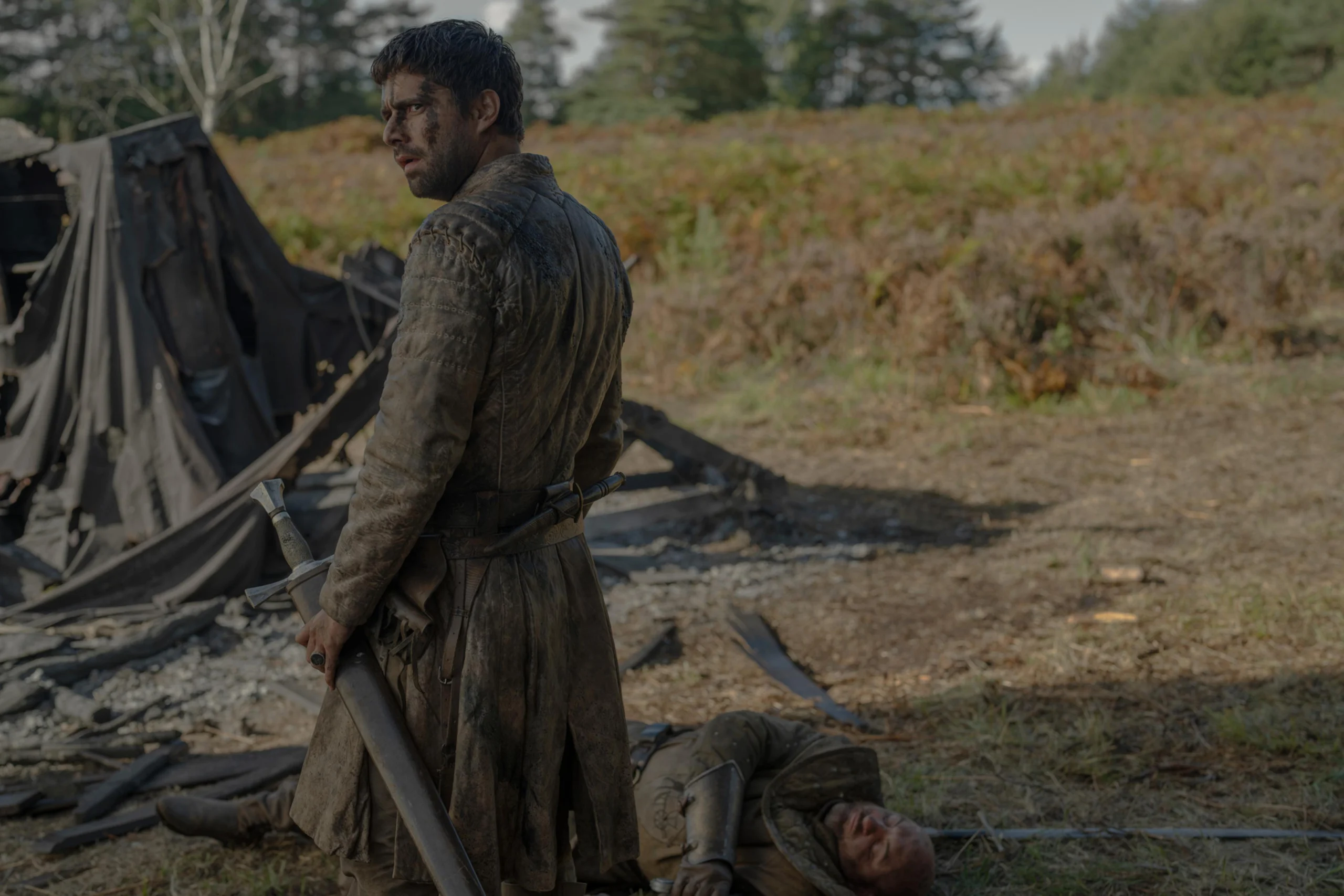

Ser Criston Cole has been one of the most polarizing figures in ‘House of the Dragon’ since the first season, and his exit in season three has fans comparing the show to George R.R. Martin’s source material. The character’s demise plays out very differently on screen than it does on the page, and the gap between the two versions says a lot about what each medium was trying to accomplish.
Fans who read ‘Fire and Blood’ already knew that Cole was never going to get the heroic ending he seemed to be chasing. Cole believed he was walking the path of righteousness even as his actions grew more deplorable, and after witnessing the devastating power of dragonfire at the Battle of Rook’s Rest, his view of the conflict spiraled toward nihilism.
Criston Cole’s Death in Fire and Blood
In Martin’s book, Ser Criston is killed unceremoniously by archers during a parley with three enemy lords, one of whom is Roderick Dustin. The confrontation leads into a battle that becomes known by a grim nickname among survivors.
Fire and Blood describes the ambush beginning with a surprise attack by the Myrish sellsword Black Trombo, whose men hide among piles of dead bodies before launching their assault, and Criston’s army is soon surrounded by some of Rhaenyra’s strongest fighters from the Riverlands and the North. When one of his squires asks who the approaching men are, Criston simply replies, “Our death.”
Ser Criston’s forces are already weakened when they encounter Roderick Dustin, Ser Garibald Grey, and Ser Pate of Longleaf near the Gods Eye in the Riverlands, and he calls for a meeting to try to negotiate safe passage, which the lords refuse. He then challenges them to a three-on-one fight on the spot, but the lords decline again because they do not want to hand the widely hated knight any chance at a heroic last stand.
One of the rivermen instead calls on nearby archers to fire on Cole without warning, and Fire and Blood makes clear the reasoning behind that choice through a line from Pate, who tells him, “I’ll have no songs about how brave you died, Kingmaker. There’s tens o’ thousands dead on your account.”
The Butcher’s Ball Explained
The one sided slaughter that follows becomes known as the Butcher’s Ball, in which Cole’s forces are utterly annihilated by the combined Riverlands and northern host. Ser Garibald later sums up the encounter bluntly, saying, “Today was butchery, not battle.”
The scale of the defeat in the book is part of what makes the moment land so hard for readers. Cole’s men are not simply beaten, they are wiped out almost entirely, and the humiliation of his death sets the tone for how the rest of the war is remembered by those who survive it.
That framing matters because Cole spends much of the book convinced his own legend will outlive him. The Butcher’s Ball denies him that legacy in the most literal sense, since there is no glory left for anyone to recount.
How the Show Changed Criston Cole’s Ending
On screen, Cole and his remaining Green soldiers march into what appears to be an abandoned camp of slaughtered Rivermen, only for the bodies to rise up in an ambush set by young Lord Oscar Tully and Lord Roderick Dustin. His men win that opening skirmish, only to realize they have been surrounded by the full strength of the Black army.
Cole asks the assembled enemy lords, “Will that be enough to make a fight of it?” before he is shot down by Alysanne Blackwood, who lands multiple arrows in his torso and ultimately his face. Her appearance on screen lasts only a few seconds, but it is enough to seal one of the show’s most consequential character deaths.
Which Criston death do you think is better?
The execution marks a clear change from the book, where Cole is shot by three Blackwood archers rather than a single one, with Alysanne standing in for the group in the televised version. Some book readers have also pointed out that Pate’s cutting line about Cole’s death was left out of the episode entirely, even though the rest of the moment tracks closely with the source material.
Alysanne Blackwood, known to readers as Black Aly, is a fierce archer from House Blackwood and aunt to the young Lord Benjicot Blackwood, and the books give her a far larger role in the war than the show had suggested up to that point. She survives the Dance of the Dragons, remains one of the conflict’s most prominent commanders for the Blacks, and later marries Lord Cregan Stark to become Lady of Winterfell.
Fan and Critic Reaction to Criston Cole’s Demise
Critics have noted that the show’s version differs only slightly from the book, since Cole is still shot down by arrows, but the shift from three anonymous archers to a single named character changes the emotional shape of the scene. The death has been described as a devastating turning point in the Dance of the Dragons, coming after Cole’s attempt to settle things through a traditional duel is rejected outright.
Fabien Frankel, who has played Cole since the first season, addressed the character’s exit directly. He said he felt relieved to a degree, adding that Cole went out in a way that felt true to what George R.R. Martin wrote, and that he loved how unceremonious the death ultimately was. He had previously told Variety that Cole had spent much of the season thinking about what legacy he wanted to leave behind and in what way he wanted to go out.
Reaction among longtime viewers has largely mirrored the book’s own verdict on the character. Many fans have made clear they were relieved to see Cole finally gone, given how thoroughly the show built him into one of Westeros’s most divisive figures over three seasons.
The debate over which version of Criston Cole’s death lands harder, the book’s cold group execution or the show’s single arrow from Alysanne Blackwood, feels fitting for a character whose entire arc was about the gap between how he saw himself and how everyone else saw him, and it is worth asking which ending you think he actually deserved.