Dreamfyre Explained, The Ancient Targaryen Dragon Whose Eggs Fuel A Long Running ‘Game of Thrones’ Theory

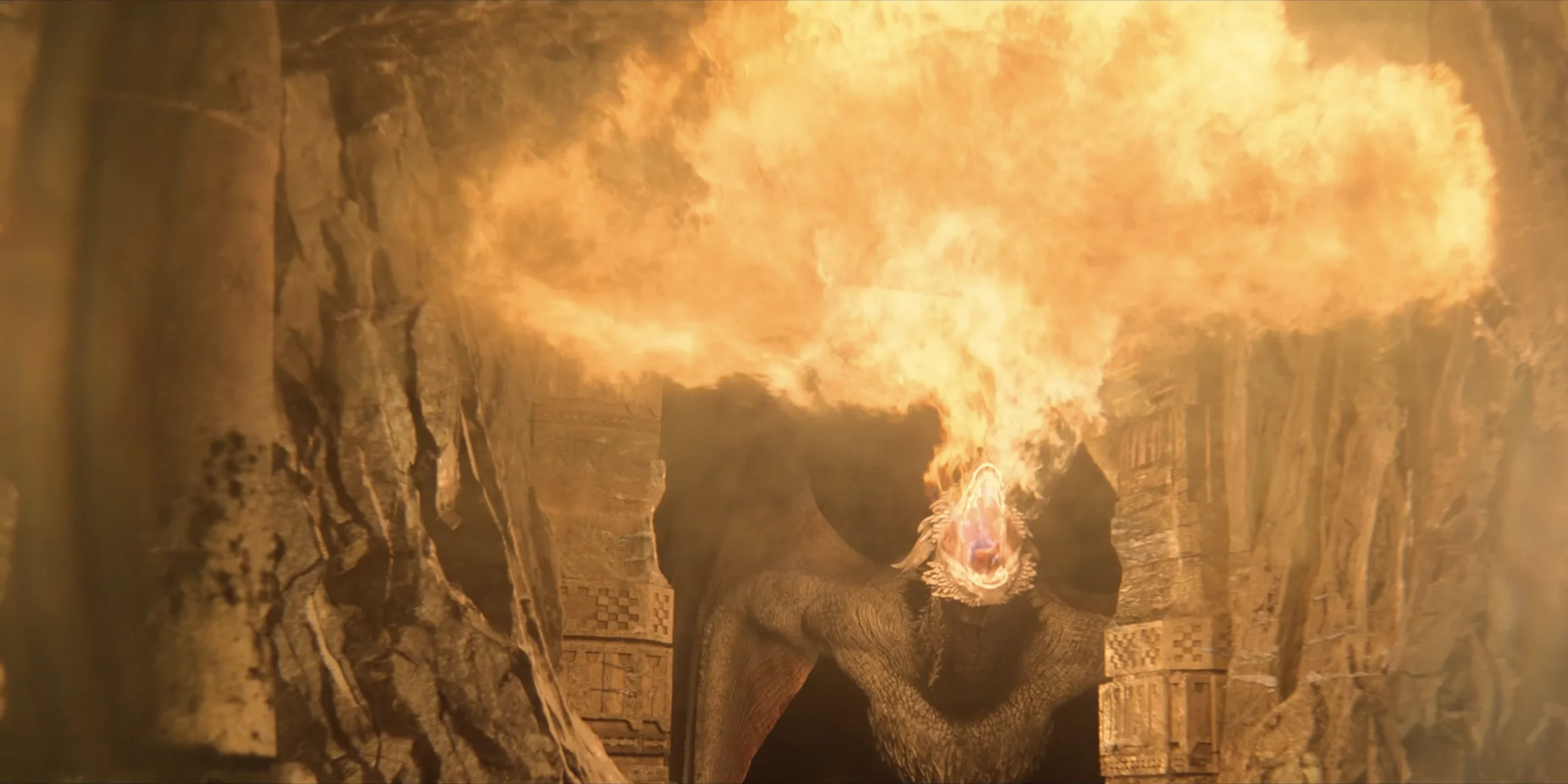

Dreamfyre may not spend much time on screen in ‘House of the Dragon,’ but few dragons in the Targaryen line carry as much narrative weight. She is one of Westeros’ oldest dragons, roughly a century old by the time the show’s events unfold, and her history stretches back to the earliest days of the Targaryen conquest.
What makes Dreamfyre especially significant to fans is not just her age or size, but the eggs she has laid throughout her long life. Those eggs sit at the center of one of the most debated theories in the entire ‘Game of Thrones’ universe, one that connects a centuries old Targaryen mystery directly to Daenerys Targaryen.
Who Is Dreamfyre In The Targaryen Dragon Line
Dreamfyre hatched during the reign of King Aegon I Targaryen, making her one of the earliest dragons bred by House Targaryen after the conquest of Westeros. She grew to become one of the larger and fiercer dragons in the Targaryen arsenal, despite rarely being used for combat.
By the time she was large enough to be ridden, Princess Rhaena Targaryen mounted her at twelve years old, beginning a bond that would define much of Dreamfyre’s early life. Dreamfyre was previously ridden by Rhaena Targaryen before she eventually passed to Helaena generations later.
In ‘House of the Dragon,’ Dreamfyre belongs to Queen Helaena Targaryen, played by Phia Saban. She is bonded to Helaena, though Helaena rarely rides her, which is part of why the dragon has remained largely offscreen compared to more active mounts like Vhagar or Caraxes.
Unlike fighting dragons such as Caraxes, Vhagar, or Seasmoke, Dreamfyre has primarily served as a breeder and has spent much of her time sheltered in the Dragonpit. That distinction matters, because it is precisely her fertility that has made her such a point of fascination for readers and viewers alike.
Why Dreamfyre’s Eggs Matter So Much To The Story
Dreamfyre was renowned for her fertility and laid several clutches of eggs over the years, a detail that would eventually tie her into one of the biggest mysteries in Targaryen history. By 43 AC, Dreamfyre had laid two clutches of dragon eggs, and she produced another clutch in 50 AC.
The situation turned into a genuine scandal a few years later. In 54 AC, Rhaena learned that her lover, Elissa Farman, had taken three of Dreamfyre’s eggs from the Dragonstone broods and fled to Pentos across the Narrow Sea. Elissa eventually traveled to Braavos, where she sold the eggs for gold to finance a ship she had long wanted to build.
What became of those eggs afterward is not confirmed in the source material, but fans have long theorized they are the same petrified eggs Illyrio Mopatis later gave to Daenerys Targaryen, the ones that eventually hatched into Drogon, Viserion, and Rhaegal. If true, that would make Daenerys’ three dragons descendants of Dreamfyre, a second generation Targaryen dragon, rather than an entirely separate bloodline.
The theory gained traction partly because of how ‘Fire & Blood’ was marketed before release. Promotional material for the book claimed it would reveal the origin of Daenerys’ dragon eggs, which fueled speculation that Dreamfyre was the answer. George R.R. Martin later pushed back on that framing directly. As the author explained on his Not A Blog, the marketing claim originated with the publisher rather than himself, and what appears in the book represents possible answers rather than a definitive one.
How ‘House of the Dragon’ Has Handled The Theory So Far
The show has already weighed in on part of this mystery, though not in Dreamfyre’s favor. Because the dragon eggs featured in ‘House of the Dragon’ come from Rhaenyra’s dragon Syrax rather than Dreamfyre, the series effectively rules out its own eggs as the ones tied to Daenerys. That distinction is separate from the older Elissa Farman theft, which remains unresolved on screen.
That has not stopped ‘House of the Dragon’ from leaning into dragon egg symbolism elsewhere. Season one built an early storyline around Daemon Targaryen stealing one of Dreamfyre’s eggs and bringing it to Dragonstone, intending it for a child that Mysaria was not actually carrying. Rhaenyra later tells Rhaena that the eggs will carry their hope for the future, a line that lands differently once viewers know how Daenerys eventually uses eggs to bring dragons back into the world.
Dreamfyre’s role in the present day story picks up again once Helaena inherits her. Helaena was largely absent for much of season two following the Blood and Cheese storyline, until her brother Aemond requested her aid in the season two finale and invoked Dreamfyre for the first time. The finale’s promotional material also suggested the Greens were preparing to bring Dreamfyre into the wider conflict, alongside another previously unseen dragon.
Whether the show ultimately revisits the Elissa Farman theft or leaves it as a piece of unresolved Targaryen history remains to be seen. Given how central dragon eggs have already been to the plot, it would not be surprising if Dreamfyre’s fertility becomes relevant again before the series reaches its end.
What Comes Next For Helaena’s Dragon
Dreamfyre’s eventual fate is tied closely to the Storming of the Dragonpit, where she meets a tragic end according to the source material. That outcome, combined with her age and history, positions her as one of the more consequential dragons still waiting to play a larger role on screen.
With larger dragons like Vermithor and Silverwing entering the war, Dreamfyre’s size is somewhat less intimidating than it once was, but she still represents a real threat given the stakes of the conflict. For a dragon defined more by motherhood than warfare, that shift in context makes her presence in the story even more interesting.
Given how much weight her eggs already carry in Targaryen lore, it is worth wondering how fans think ‘House of the Dragon’ should handle Dreamfyre and her connection to Daenerys’ dragons before the series concludes.