‘East of Eden’ Season 1 Review: What Happens When the Villain Gets the Spotlight

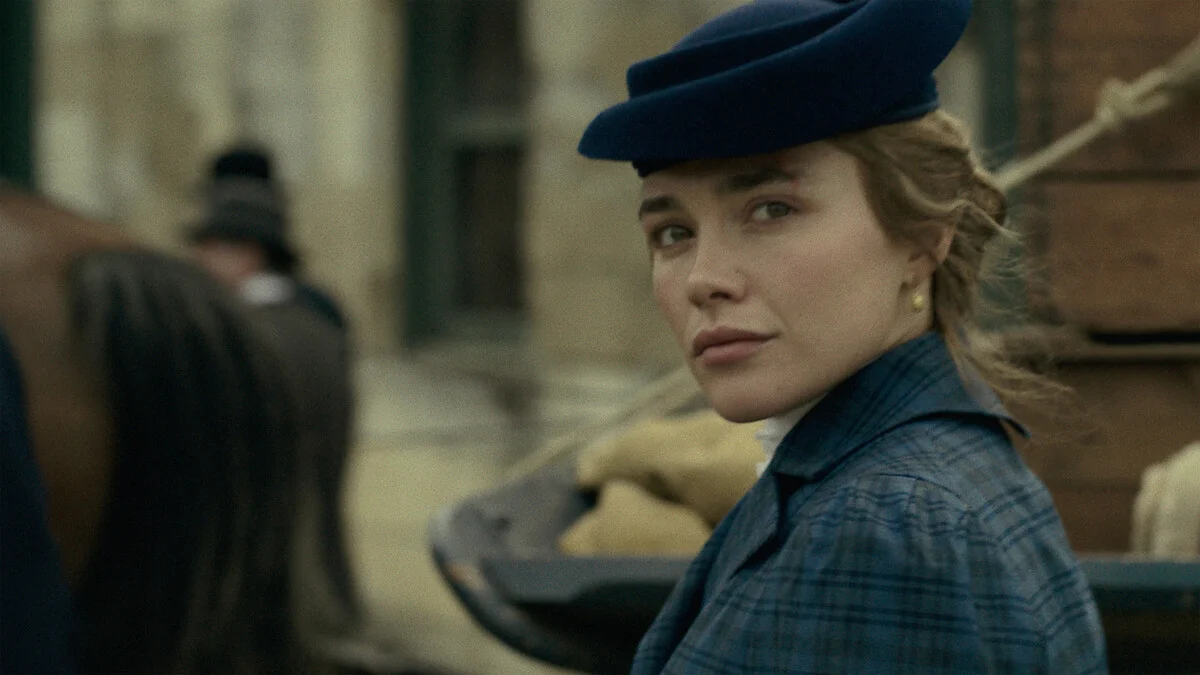

Netflix has finally put John Steinbeck’s sprawling family saga into a seven episode limited series, and it landed on October 1. ‘East of Eden’ follows the Trask and Hamilton families across generations in California’s Salinas Valley, with the old Cain and Abel story humming underneath every argument and betrayal. Zoe Kazan wrote the series and executive produced it, with Jeb Stuart serving as co-showrunner.
The cast is the kind that makes you sit up. Florence Pugh plays Cathy Ames, Christopher Abbott is Adam Trask, and Mike Faist plays Charles, with Joseph Zada, Joe Anders, Hoon Lee, Tracy Letts, Martha Plimpton and Ciarán Hinds filling out the world around them. Garth Davis directed the first four episodes, and Laure de Clermont-Tonnerre took over for the final three.
What makes this version feel different from the 1955 film is how much of the book it wants to cover. Instead of treating the story as a father and son tug of war, the show begins with Cathy’s view of the world and lets the rest of the family orbit around her. That choice changes the temperature of the whole series, and I found it bracing.
Pugh is the reason the thing burns. She plays Cathy as a person who sees other people as furniture to be rearranged, and she never begs for your sympathy or flinches from the cruelty. Pugh told Gold Derby the character was one she “wrestled with” throughout the shoot, and you can feel that struggle in every glance and every pause.
The men around her are strong too. Abbott gives Adam a gentle, almost fragile hopefulness that makes his blindness to Cathy both infuriating and heartbreaking. Faist brings a bruised, wary energy to Charles, a man who seems to believe the worst of himself before anyone else gets the chance.
The series is beautiful in a patient, serious way. The landscapes have real scale, and the production design makes the early twentieth century feel lived in rather than dusted off for display. It is also slow, and the opening episodes are relentlessly grim, so anyone expecting a breezy binge should adjust their expectations.
Compression is the other cost. Seven episodes is generous compared with a film, but Steinbeck wrote a mountain of a book, and a few secondary threads and supporting characters get less room than they deserve. Some of the later stretches move through years so quickly that the emotional payoffs arrive slightly ahead of the groundwork.
Even so, the show never loses its nerve about the big question at the center, whether we are bound to repeat the worst of our parents or free to choose something else. The final episodes grapple with that idea honestly, and they left me thinking about my own family long after the credits rolled. That is exactly what a Steinbeck adaptation ought to do.
For me, this is a handsome, brooding and often devastating piece of television that trusts its audience to sit with discomfort. Pugh’s performance is worth the price of admission on its own, and the surrounding ensemble and direction mostly rise to meet her. I give ‘East of Eden’ 9 out of 10.
Do you agree that Cathy Ames finally gets the screen version she deserves, or did ‘East of Eden’ lose something by putting her at the center, so tell me in the comments.