From Screen to Game: How Popular Franchises Expand Into Interactive Entertainment

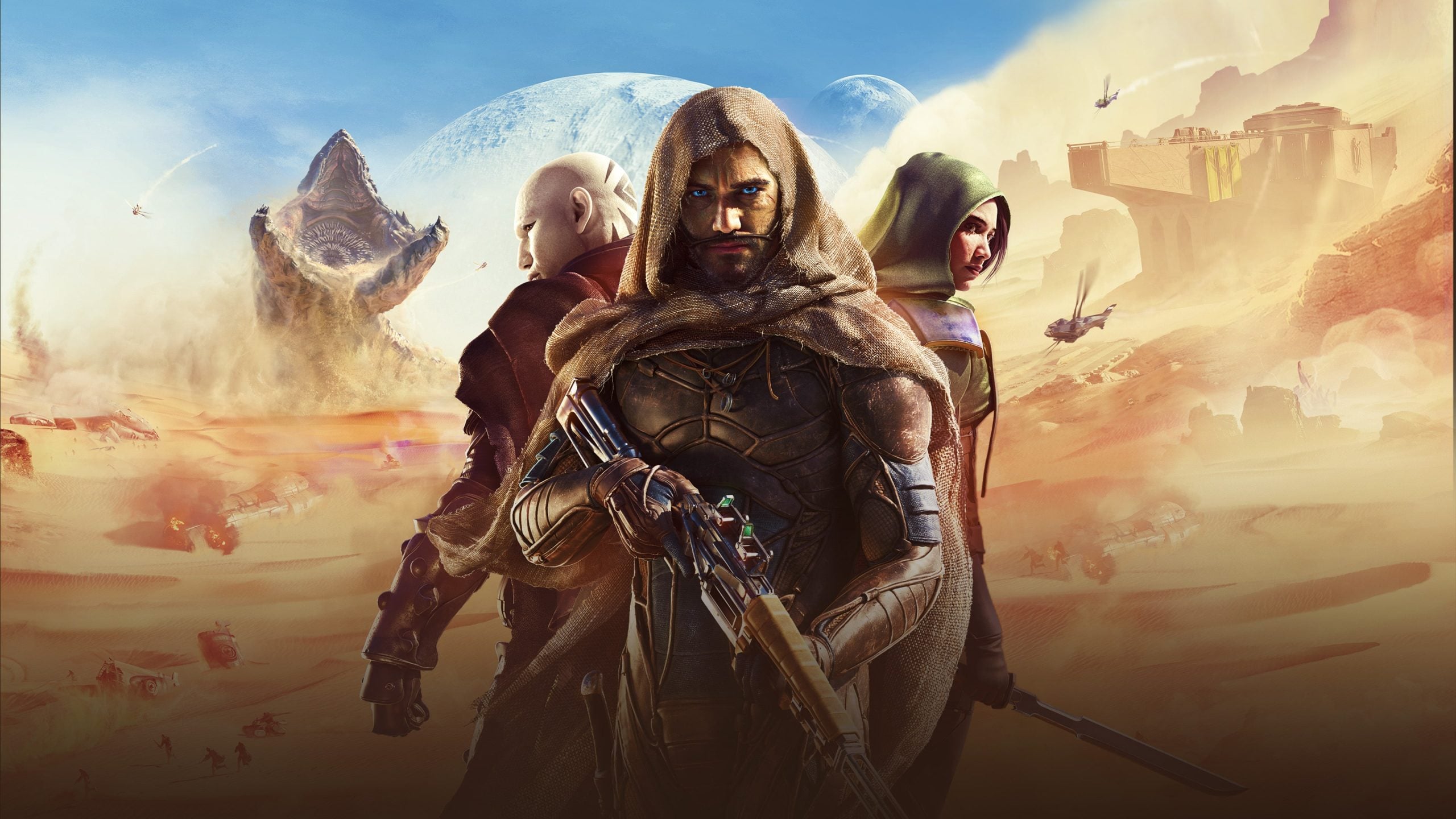
Popular films and video games rarely stay confined to their original formats. Successful franchises often expand into new forms of entertainment, allowing audiences to experience familiar characters, stories and fictional worlds in different ways.
From managing dinosaur attractions in Jurassic World Evolution to surviving the deserts of Arrakis in Dune: Awakening, developers have transformed recognisable entertainment properties into interactive experiences. Meanwhile, established gaming franchises such as Street Fighter and Tomb Raider continue to evolve through new releases and alternative adaptations.
These crossovers demonstrate how familiar entertainment properties can reach different audiences. However, adapting an established franchise involves more than reproducing its characters and visual identity. The challenge is creating gameplay that captures what made the original experience memorable.
How Popular Franchises Become Video Games
Adapting a film or established entertainment property into a video game requires developers to translate its defining elements into interactive mechanics.
Films primarily communicate through storytelling, cinematography and character development. Video games introduce another dimension by allowing players to influence events through exploration, combat, problem-solving or decision-making.
For example, a dinosaur film might inspire a survival adventure or a management simulation, while a science-fiction franchise could become a strategy game built around resource management and political conflict.
Recognisable characters, locations and soundtracks help establish a connection with the original property. However, successful adaptations also need gameplay systems that make sense within the fictional world.
Licensing arrangements influence these adaptations, determining how developers can use protected characters, imagery, music and other franchise elements. Different studios may therefore create very different gaming experiences from the same entertainment property.
Film and Literary Franchises That Became Video Games
Several major film and literary franchises have expanded into video games, with developers taking different approaches to translating their fictional worlds into playable environments.
Jurassic Park: From Dinosaur Films to Park Management
The Jurassic Park franchise has inspired numerous video games since the original film arrived in 1993. Early adaptations focused largely on action and survival, allowing players to encounter dinosaurs in environments inspired by the films.
More recent releases have explored another aspect of the franchise: managing a dinosaur theme park.
Frontier Developments introduced Jurassic World Evolution in 2018, giving players responsibility for building attractions, managing facilities and caring for prehistoric creatures.
Rather than simply escaping dinosaurs, players must balance visitor expectations, financial resources and animal welfare while dealing with unpredictable situations.
The series continued with Jurassic World Evolution 2 in 2021 and Jurassic World Evolution 3 in October 2025. The third instalment introduced dinosaur breeding, juvenile animals and expanded park-building tools.
These games demonstrate how developers can explore themes that films only briefly present. The challenge of managing a dinosaur attraction becomes the central experience rather than a background element.
The franchise has also appeared in other entertainment formats, including Microgaming’s 2014 Jurassic Park casino adaptation and the later Jurassic Park: Gold. Those versions use recognisable dinosaurs and imagery, but offer a different experience from the management-focused video games.
Dune: Exploring Arrakis Through Strategy and Survival
Frank Herbert’s Dune universe offers considerable opportunities for interactive storytelling. Its desert environments, competing political factions and valuable resources provide a foundation for several gaming genres.
Dune: Spice Wars, developed by Shiro Games, takes a strategy-based approach. Players control competing factions on Arrakis, balancing resource production, military decisions, diplomacy and territorial expansion.
This format reflects the political and economic conflicts central to the original novels.
Funcom’s Dune: Awakening, released for PC in June 2025, approaches the fictional universe differently. The multiplayer survival game places players on Arrakis, where they must endure environmental hazards, gather resources, construct equipment and navigate conflicts involving major factions.
The game incorporates familiar elements such as sandworms, ornithopters and the planet’s harsh desert conditions.
These adaptations illustrate how one franchise can support different gameplay experiences. Strategy games emphasise political decisions and resource management, while survival games focus on exploration, preparation and environmental challenges.
The franchise has also inspired a land-based Aristocrat Gaming casino machine based on Denis Villeneuve’s film adaptation. Featuring cinematic audiovisual elements and a specialised cabinet, it demonstrates another approach to translating Arrakis into interactive entertainment.
Ghostbusters: Turning Supernatural Comedy Into Cooperative Gaming
The Ghostbusters franchise combines supernatural encounters, comedy and distinctive equipment, making it particularly suited to interactive adaptations.
Ghostbusters: The Video Game, originally released in 2009, allowed players to become part of a ghost-hunting team. Its gameplay incorporated familiar equipment, including proton packs and ghost traps, while building an original adventure around recognisable characters.
The game also featured voice performances from several original cast members, strengthening its connection to the films.
Ghostbusters: Spirits Unleashed, released in 2022, introduced a different approach through asymmetric multiplayer gameplay.
Four players can cooperate as Ghostbusters, tracking paranormal activity and capturing ghosts. Another player can control a ghost, possessing objects and attempting to evade capture.
This structure translates the familiar conflict between ghost hunters and supernatural creatures into a competitive multiplayer experience.
The franchise has also appeared in land-based casino entertainment. IGT’s Ghostbusters 4D Video Slots, released in 2018, incorporated three-dimensional visuals, gesture recognition and mid-air haptic feedback into certain interactive sequences.
While these experiences use different gameplay systems, they demonstrate how the franchise’s recognisable equipment and supernatural themes can be adapted across formats.
Classic Video Game Franchises That Continue to Evolve
Film adaptations represent only one side of franchise expansion. Established video game properties also evolve through sequels, remasters, genre experiments and alternative entertainment formats.
Street Fighter: The Evolution of Competitive Fighting Games
Capcom’s Street Fighter II, released in 1991, helped establish many conventions associated with competitive fighting games.
Its diverse character roster, distinctive special moves and competitive combat mechanics contributed to its influence on arcade gaming.
Characters such as Ryu, Ken, Chun-Li and Guile became recognisable figures within gaming culture.
Over time, the franchise expanded through updated editions, new characters, improved graphics and increasingly sophisticated combat systems.
Street Fighter 6, released in June 2023, continued this evolution by introducing modernised gameplay systems alongside established competitive mechanics.
Its World Tour mode also introduced a character-driven single-player experience, allowing players to explore environments and interact with fighters beyond traditional matches.
The franchise has influenced entertainment beyond conventional fighting games. NetEnt released Street Fighter II: The World Warrior Slot in 2020, incorporating recognisable fighters and battle-themed features into a casino game.
Unlike the original arcade experience, however, winning outcomes in that casino adaptation are chance-based rather than determined by player reflexes or fighting-game tactics.
The distinction highlights why recognisable characters alone do not recreate the mechanics that made the original game influential.
Tomb Raider: From Classic Adventures to Modern Exploration
Since its debut in 1996, Tomb Raider has developed into one of gaming’s most recognisable action-adventure franchises.
The original games combined exploration, platforming, environmental puzzles and combat, establishing Lara Croft as a central character in interactive entertainment.
Later releases expanded these systems through improved movement, larger environments and more detailed storytelling.
The 2013 Tomb Raider reboot introduced a different interpretation of Lara Croft, placing greater emphasis on survival and character development.
Its follow-ups, Rise of the Tomb Raider and Shadow of the Tomb Raider, continued this direction while incorporating complex environments, exploration challenges and archaeological mysteries.
The franchise has also revisited its earlier history through remastered collections, including Tomb Raider I–III Remastered in 2024.
Outside the mainline series, Lara Croft has appeared in puzzle-oriented games such as Lara Croft GO, demonstrating how the same character can support a different style of interaction.
The franchise has also received several casino adaptations, beginning with Microgaming’s Lara Croft: Tomb Raider in 2004. Later releases, including Lara Croft Temples and Tombs, borrowed the series’ archaeological imagery and treasure-hunting themes.
These versions retain elements of Lara Croft’s fictional identity without reproducing the exploration and puzzle-solving mechanics central to the original games.
How Gaming Franchises Expand Beyond Traditional Video Games
Established entertainment franchises increasingly appear across different interactive platforms, from console releases and mobile applications to immersive attractions and specialised gaming machines.
Each format introduces different opportunities and limitations.
Console and PC games can offer extensive virtual environments, branching narratives and complex player-controlled systems. Mobile adaptations may emphasise shorter sessions and simplified controls, while location-based attractions can incorporate physical effects and specialised equipment.
Casino gaming represents another form of franchise licensing. Some developers create themed adaptations that use familiar characters, soundtracks and imagery within chance-based gameplay structures.
Digital catalogues of online slots, for example, can include games inspired by familiar entertainment themes alongside original concepts. Franchise-themed casino games use familiar imagery within chance-based rules, rather than recreating the skill-based combat, exploration or puzzle-solving of the video games discussed above.
A familiar franchise name does not mean that every adaptation offers the same gameplay experience. A recognisable brand also says nothing about a casino game’s odds or potential returns.
For developers, the challenge is selecting elements that suit the intended platform rather than attempting to reproduce the original experience exactly.
What Makes a Video Game Adaptation Successful?
Recognisable branding can attract interest, but a successful adaptation requires meaningful connections between the original franchise and its gameplay.
Gameplay relevance is particularly important. Jurassic World Evolution translates the challenges of running a dinosaur attraction into management systems, while Ghostbusters: Spirits Unleashed turns ghost hunting into cooperative multiplayer mechanics.
Visual and audio authenticity also matters. Familiar environments, character designs, music and sound effects help players recognise the fictional world.
Player interaction determines whether the adaptation becomes more than a visual recreation. Dune: Awakening allows players to navigate Arrakis directly, while Tomb Raider makes exploration and problem-solving central to the experience.
Creative interpretation can be equally valuable. Developers do not necessarily need to reproduce the source material scene by scene. A new gameplay approach can reveal aspects of a fictional universe that were less prominent in its original format.
Ultimately, an adaptation works best when its mechanics complement the franchise rather than relying entirely on its popularity.
Why Some Franchise Adaptations Fall Short
Not every familiar entertainment property translates naturally into another gaming format.
A film built around character relationships may struggle to support repetitive action gameplay. Similarly, a franchise known for competitive fighting mechanics may lose part of its appeal when adapted into a format without direct player-controlled combat.
Technical limitations, licensing restrictions and differences in audience expectations can also influence the result.
Developers must decide which elements deserve priority. Preserving the appearance of a fictional world may be relatively straightforward, but recreating its atmosphere, pacing or interactive complexity can be more difficult.
This explains why different adaptations of the same property can feel substantially different despite sharing characters, settings and branding.
Final Thoughts
From building dinosaur attractions in Jurassic World Evolution to navigating Arrakis in Dune: Awakening, popular franchises continue to provide opportunities for creative video game development.
Ghostbusters demonstrates how familiar film concepts can become cooperative gameplay, while Street Fighter and Tomb Raider show how established gaming franchises can evolve without abandoning their defining identities.
Alternative adaptations, including mobile games, immersive attractions and casino formats, further illustrate how familiar intellectual properties can move between entertainment categories.
The most effective adaptations do more than reproduce recognisable characters and settings. They give audiences meaningful new ways to interact with the worlds they already know.