Georgia Oakley’s ‘Sense and Sensibility’ Finds Its Own Footing


Georgia Oakley’s ‘Sense and Sensibility’ arrives in United States theaters on October 16, following a United Kingdom release on September 25. The film premiered at the Odeon Luxe Leicester Square on September 15, and it was directed by Oakley from a screenplay by Diana Reid. It is a period romantic drama that has already drawn a measured critical conversation.
For readers wondering what the new ‘Sense and Sensibility’ is drawn from, and how it separates itself from earlier screen versions, the answers sit in its source material, its cast and the choices made behind the camera. The picture that emerges is of a film that knows exactly how much weight its title carries.
What ‘Sense and Sensibility’ Is Based On
The film is an adaptation of Jane Austen’s first novel, published in 1811. The book was originally released anonymously under the byline “By a Lady,” and it went on to establish Austen as a literary force.
The story follows the sisters Elinor and Marianne Dashwood, who approach emotion in opposite ways as they navigate love, loss and financial uncertainty amid the expectations of 18th century England. The family’s struggles begin after the girls’ father dies, leaving the nineteen year old Elinor and seventeen year old Marianne facing an uncertain future.
Herbert Nordrum plays Colonel Brandon in the new film. His character develops feelings for Marianne, which adds a quieter romantic thread alongside the sisters’ own pursuits.
Cast and Production Behind the Adaptation
Daisy Edgar-Jones and Esmé Creed-Miles lead a cast that also includes Caitríona Balfe, Frank Dillane, George MacKay, Herbert Nordrum, Bodhi Rae Breathnach and Fiona Shaw. Edgar-Jones plays Elinor, Creed-Miles plays Marianne, and Balfe takes the role of the Dashwood matriarch. The project also marks Edgar-Jones’s first period drama, even though she has played romantic leads a number of times.
Oakley previously won a People’s Choice Award at Venice for her feature directorial debut, ‘Blue Jean.’ Reid is a novelist, and ‘Blue Jean’ explored homophobia in Thatcher’s Britain. That background suggests a filmmaker more interested in social pressure than in postcard romance.
Tim Bevan and Eric Fellner of Working Title Films produced the film alongside India Flint of November Pictures and Jo Wallett. Focus Features holds worldwide rights, while Universal Pictures International handles distribution outside the United States.
How the Film Differs From the 1995 Version
The 1995 film starred Emma Thompson and Kate Winslet as the Dashwood sisters and featured Alan Rickman and Hugh Grant. That earlier adaptation grossed more than $134 million at the global box office. Any new version has to reckon with that history.
Producer India Flint told TV Insider that because the earlier film is so loved, the team felt they had to do “something totally different.” That decision shapes the entire production.
Creed-Miles has explained that the film argues both sisters possess sense and sensibility. Elinor learns to connect with her sensibility, while Marianne learns to connect with her sense. It is a quiet but meaningful shift away from the familiar split between head and heart.
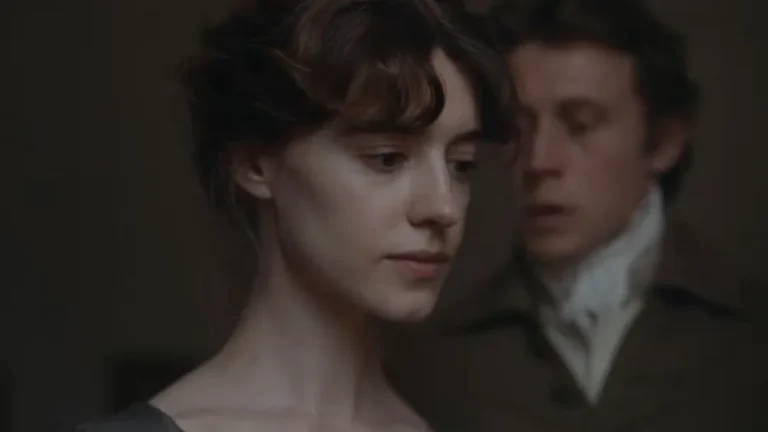
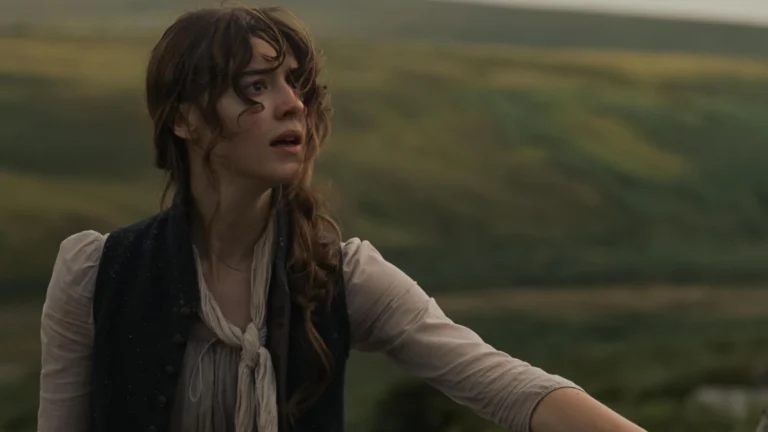
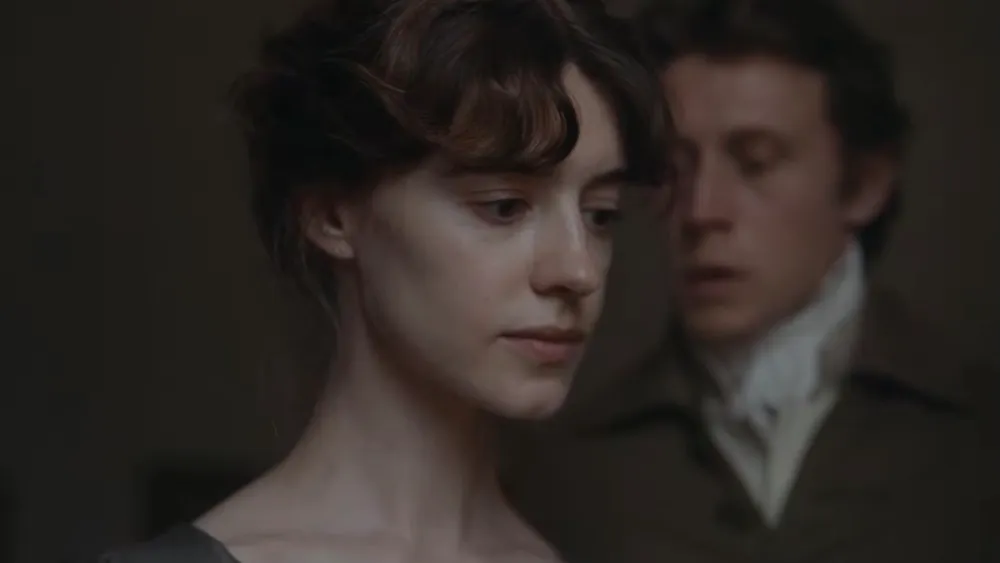
The tonal change is visible on screen. The AV Club noted that the film is steeped in earth tones and has a very different visual style from the sunny 1995 version. The Scotsman said Oakley swaps wit for grit, placing the story closer to recent Emily Brontë or Thomas Hardy adaptations.
Critic Reception and Release
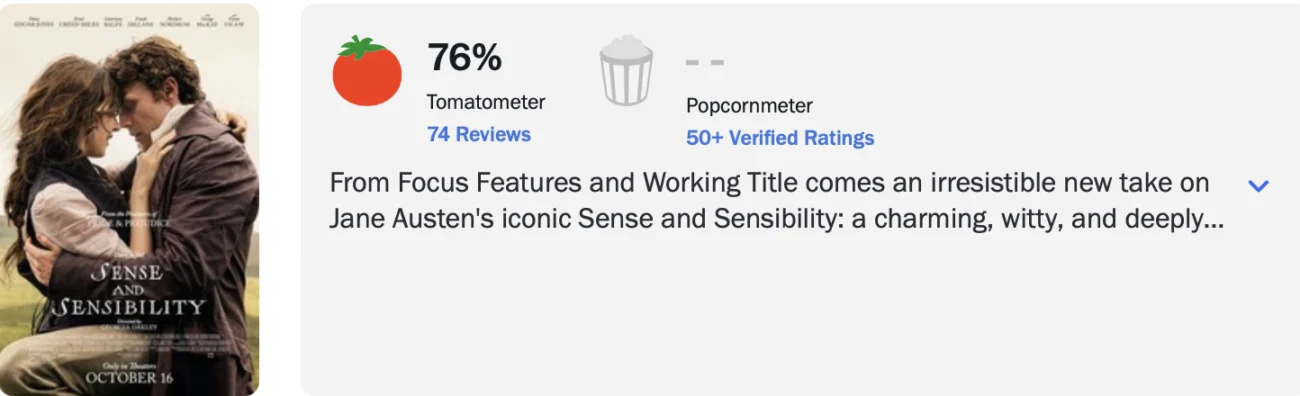
The film debuted at 80% on Rotten Tomatoes based on 10 reviews, with early reactions praising the performances and the chemistry between the leads. A later listing showed a 76% Tomatometer score across 20 reviews. Overall, the film has received generally positive reviews.
TheWrap’s review praised Oakley for keeping the historical context front and center, and it admired the work of both lead actors. Critics have also singled out Fiona Shaw as a scene-stealer.
Not every response has been warm. The Hollywood Reporter called the film fine if not strictly necessary. Another review said it rarely ventures far enough from the familiar to fully justify another adaptation.
The film runs 132 minutes and has earned $6.5 million at the box office so far. With its American release now arriving, audiences will decide whether the gritty, sister focused approach can stand beside the warmth of the 1995 version, and whether Oakley’s decision to let Elinor and Marianne share both sense and sensibility felt like a bold correction or a step too far from the version you grew up loving.