‘The Greatest’ Recap and Ending Explained: How Cassius Clay Becomes Muhammad Ali

All eight episodes of ‘The Greatest’ premiere together on Prime Video on November 4, in more than 240 countries and territories. The series is described as the first authorized scripted series about the life of Muhammad Ali, with his widow Lonnie Ali serving as an executive producer.
The season covers a narrow stretch of a very long life, which makes the way ‘The Greatest’ closes just as important as what it dramatizes. The season ends with Clay defeating Sonny Liston and proclaiming his new name, and the series stops right there. That choice shapes how the finale lands.
‘The Greatest’ Recap Of Cassius Clay’s Rise
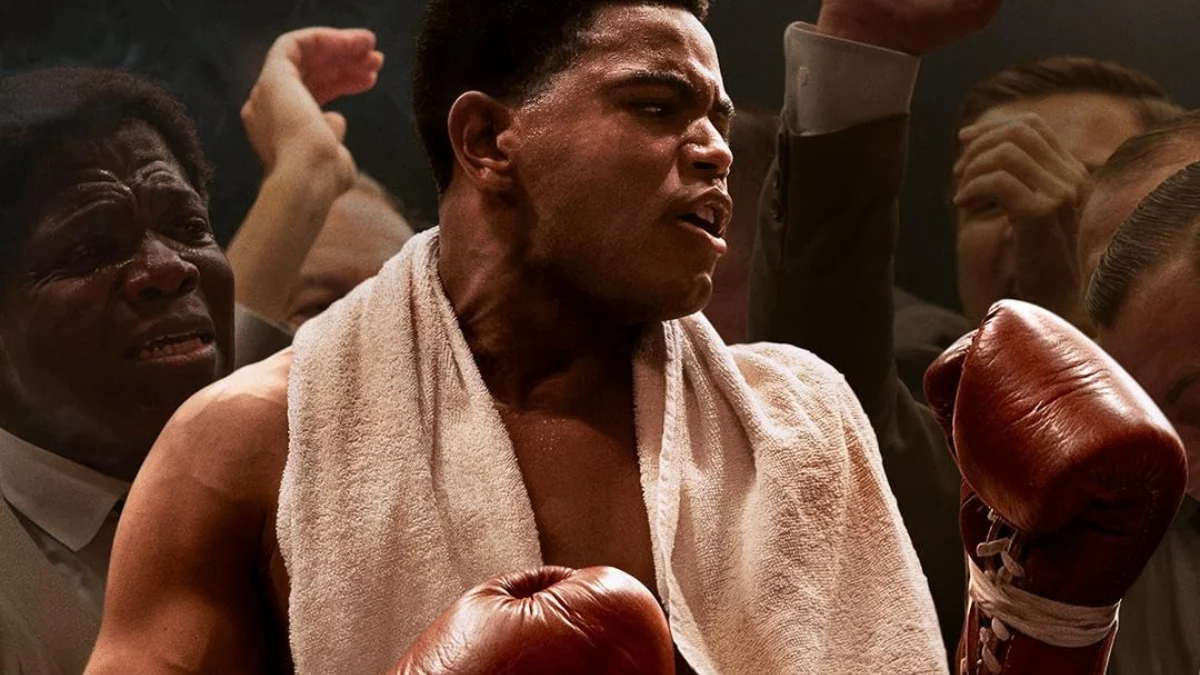
The story begins with 18 year old Cassius Marcellus Clay winning a gold medal at the 1960 Olympics in Rome. Apart from a few flashbacks, the series spans only about four years. Jaalen Best leads the cast as the young fighter.
Victory does not shield him from the country he returns to. He gets a hero’s welcome in Louisville, yet a luncheonette selling a burger named in his honor tells him to leave the counter and collect his order at the back door. That moment forces the young champion to confront the indignities of Jim Crow segregation.
Cassius and his younger brother Rudy, who later becomes Rahman Ali, relocate temporarily to Miami to train with Angelo Dundee, played by Giovanni Ribisi. There they also grow interested in the teachings of the Nation of Islam.
At home, the picture is more complicated. Omari Hardwick plays Cassius Clay Sr. as a man who loved his family but was an alcoholic and sometimes bitter and abusive. Dana Gourrier plays his wife, Odessa, known as Bird.
Sonny Liston And The Road To The Finale
Amin Joseph plays Sonny Liston, and his parallel storyline allows the fearsome heavyweight to become more than a menacing presence on the periphery. The series gives the champion his own arc rather than treating him only as an obstacle.
Time describes Liston as the antithesis of Cassius, a former convict and abuse survivor who has absorbed the caricatures Cassius refuses to accept. The review adds that even with the guidance of a canny wife, played by Erica Tazel, he is poisoned by hatred of himself.
The press vilified Liston as a formerly imprisoned thug with mob ties, and the series does not shy away from his demons. It also lets viewers sit in the discomfort of watching Cassius taunt him with the same stereotypes.
That structure sets up the finale as a clash of opposites, with Clay’s showmanship set against Liston’s inner struggles. One review singles out the finale, titled “Hi, My Name Is…,” as a showstopper.
‘The Greatest’ Ending Explained
The drama builds toward the 1964 fight with Liston in Miami Beach, where Clay shocks the boxing world to claim the heavyweight title. In the aftermath he announces his conversion to Islam and his identity as Muhammad Ali. The final image is a young man naming himself.
Ben Watkins has said the series is designed to remind audiences that Ali was a real person, and the finale treats the title as the moment that person claims his own identity. That reading fits the tone of the whole season, which keeps its focus on family and faith as much as on the ring.
Watkins has been candid about the pressure of the project. Speaking to <a Newsweek, he said he had deified Ali and recalled that the boxer was “a god to me.”
Critics have noted that the season ends where Michael Mann’s ‘Ali’ begins, since that 2001 film opened with the night Clay took the title from Liston. The Wrap observed that the refusal to fight in the Vietnam War and the loss of his boxing license fall outside this season, yet the story still feels complete.
Malcolm X And The Name Change Left Off Screen
Within weeks of the Liston fight, Elijah Muhammad gave Clay the name Muhammad Ali. His father opposed the conversion, and the friendship with Malcolm X broke apart soon after. Michael Ealy plays Malcolm X in the series and has the character caution Cassius that joining the Nation of Islam will carry huge consequences.
None of that fallout appears on screen, which leaves the finale on an open note rather than a tidy resolution. The warning given earlier in the season therefore hangs over the closing scene without being fully answered.
The production’s status adds another layer. The Wrap points out that an officially sanctioned biography made with the cooperation of an estate raises the question of whether it can confront less flattering sides of a beloved figure. Roger Ebert’s review counters that the series presents a complicated picture of the Clay household.
Ending the story on the night Clay becomes Muhammad Ali, before his split with Malcolm X and the harder years that follow, is a bold place to stop, so do you think ‘The Greatest’ chose the right moment to close the book on its young champion, or would you have wanted it to follow him into that fallout?