How ‘Stuart Fails to Save the Universe’ Sets Its Multiverse Chaos in Motion in Episode 1

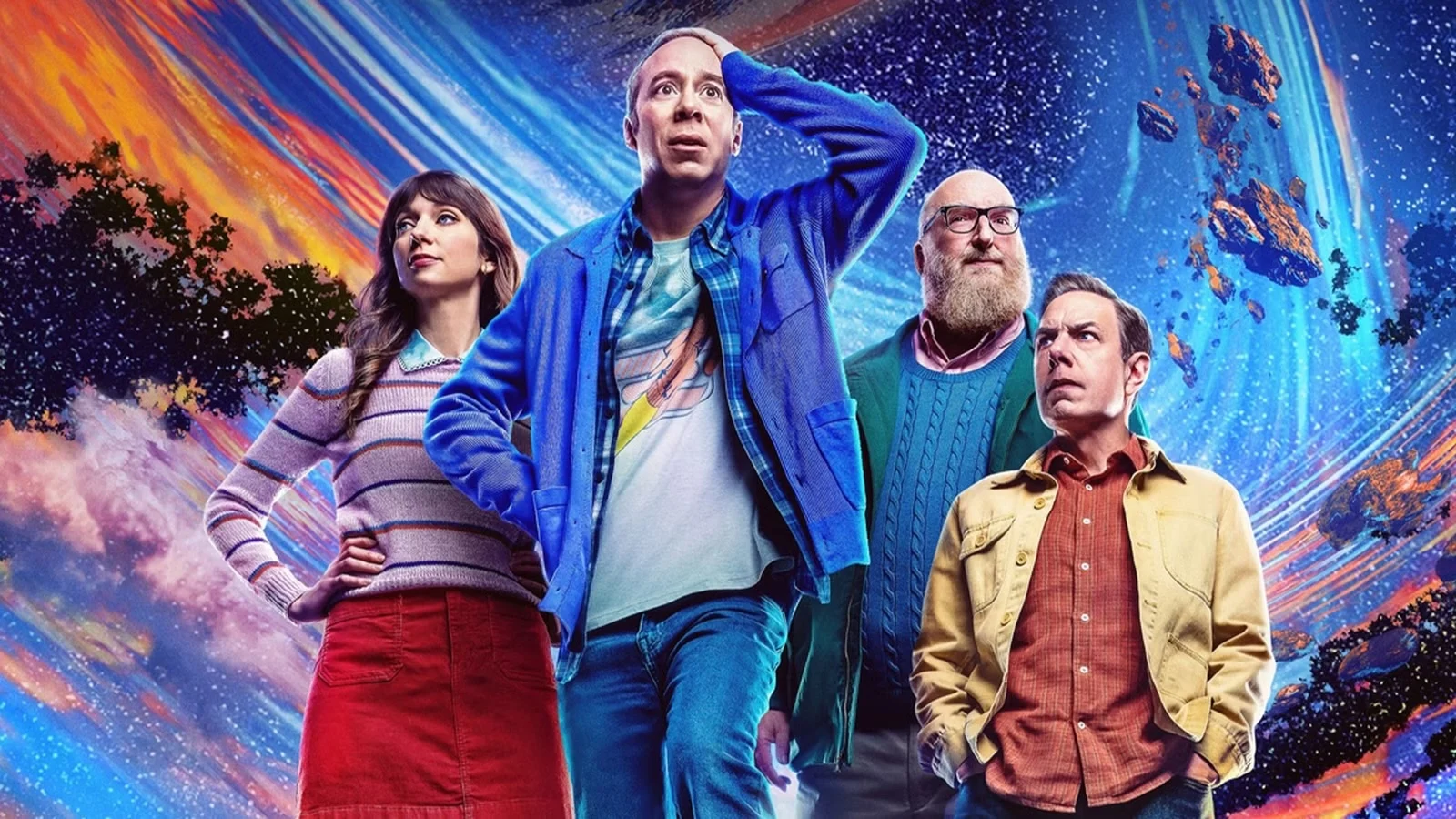

Chuck Lorre’s latest spinoff of ‘The Big Bang Theory’ universe has arrived, and it wastes no time upending the world its title character once occupied. The premiere of ‘Stuart Fails to Save the Universe’ introduces comic book store owner Stuart Bloom as the unlikely center of a multiversal disaster, one he caused himself and now has to undo.
The series marks a tonal departure for the franchise, trading sitcom staples for a genre blending story that spans comedy, science fiction and horror. For longtime fans wondering how the show opens and what its first hour sets up, here is a full breakdown of the premiere and where its ending leaves things.
What Happens in the ‘Stuart Fails to Save the Universe’ Premiere
The episode establishes its premise quickly. Comic book shop owner Stuart Bloom brings about the end of the universe and is tasked with restoring reality along with his girlfriend Denise, geologist Bert, and quantum physicist Barry Kripke. The setup echoes classic multiverse framing, but the show roots it in the specific mythology of ‘The Big Bang Theory.’
According to details from the show’s guide, the series is set in the future, where Stuart Bloom is tasked with restoring reality after he breaks a device built by Sheldon and Leonard, accidentally bringing about a multiverse Armageddon. That framing gives the premiere its ticking clock, since Stuart is not just facing consequences in his own timeline but across every version of reality connected to it.
The opening chapter leans on Stuart’s unlucky reputation as a character. The premise follows Stuart Bloom from ‘The Big Bang Theory’ as he attempts, and apparently fails, to save the universe, staying true to his unlucky nature. That framing is less a twist than a promise, since the show signals from its very title that failure is part of the formula rather than an occasional setback.
Reviewers who watched the full season note that the premiere sets a pattern the show repeats throughout its run. Along the way, Stuart and his companions meet alternate universe versions of themselves and of familiar ‘Big Bang Theory’ characters, and things do not go well, meaning each episode shows how Stuart fails his mission in yet another universe.
Stuart Bloom’s Multiverse Mission Begins
The team assembled to help Stuart is deliberately mismatched. He is aided by his girlfriend Denise, played by Lauren Lapkus, his geologist friend Bert, played by Brian Posehn, and quantum physicist Barry Kripke, played by John Ross Bowie, with Kripke’s grating personality quickly becoming apparent to viewers unfamiliar with the character from the original series. That dynamic gives the premiere its comedic backbone even as the stakes remain existential.
One reviewer who screened the entire season described the group’s chemistry as central to the show’s appeal, noting that Posehn’s Bert functions as something of an emotional anchor while Bowie’s Kripke often plays against the others as more of an obstacle than an ally. The critic specifically praised Lapkus’s performance and called Posehn’s Bert virtually the heart of the show, while describing Kripke as something of a villain in many cases.
How do you feel about the show's multiverse plot?
The premiere also establishes the show’s genre elasticity early. The series was described as a hyper genre mix that touches on nearly every style of storytelling, sometimes turning quite bloody and violent, with the tone shifting into territory that recalls horror or science fiction thrillers whenever a new universe looks similar to the one the characters know. That range is part of what separates this spinoff from its more grounded parent series.
Background on the project’s origins adds context for why the show takes this shape. The series was announced in April 2023, when Chuck Lorre, who co-created ‘The Big Bang Theory’ as well as its spinoff ‘Young Sheldon,’ was reported to be in the early stages of developing another comedy series derived from that intellectual property through his overall deal at Warner Bros. Television.
How the Episode 1 Ending Sets Up What Comes Next
The premiere closes on a structural choice that defines the entire season. According to Deadline, each episode of the series ends with the characters landing in a new alternate reality, functioning as a teaser for what comes next. Series co-creator Chuck Lorre told the outlet that the structure fell into place naturally during production, explaining that it works as a teaser for the next installment while still feeling like an organic way to tell the story.
Co-creator Bill Prady added that the pattern was discovered while breaking the first episode, describing the intent as wanting the story to suggest everything is fine before immediately undercutting that feeling, a rhythm the writers found effective enough to repeat throughout the season. This is Lorre’s third single camera streaming comedy following ‘The Kominsky Method’ for Netflix and ‘Bookie’ for HBO Max, and he has adjusted well to the binge friendly format that closes each episode on a cliffhanger tied to the next universe.
That format also shapes runtime and release strategy. ‘Stuart Fails to Save the Universe’ premiered on HBO Max on July 23 with episodes released weekly. One reviewer who watched the full season in advance noted a similar structural observation from a viewer’s perspective. The episodes all run under half an hour and end with the beginning of the next episode, a pacing choice the critic said made the season difficult to stop watching once started.
The ending of the premiere, then, functions less as a resolution and more as a launchpad. Stuart’s failure in the first universe is confirmed, but the story immediately pivots to the next reality he and his companions must navigate, keeping the mission open ended by design rather than accident.
Critics and Fans React to the ‘Big Bang Theory’ Spinoff
Critical response to the season has been notably split. One review called the show occasionally amusing but more slapdash than inventive, gamely performed but irredeemably sour, and described it as a skippable addition to Chuck Lorre’s expanding solar system of ‘Big Bang Theory’ spinoffs.
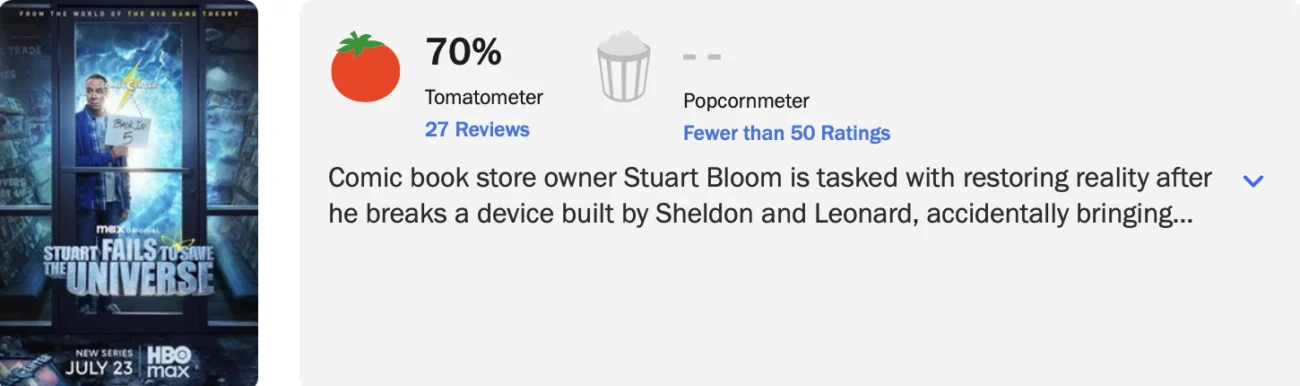
Other critics landed in a far more enthusiastic place. A separate review praised the show’s playful opening credits and uncensored vanity cards at the end of each episode, arguing the spinoff is unlike anything that has come before in the franchise. Another take framed the series as fitting company for the original show’s characters. One critic called it funny, weird and ambitious, adding that it plays like exactly the kind of show Leonard, Sheldon, Howard and Raj would watch themselves.
A more measured take came from a reviewer who watched the entire first season in one sitting before publishing a season length assessment. That critic rated the season three out of five stars overall, acknowledging some episodes felt closer to a four while others landed nearer an average three, while still stating a genuine wish to see a second season. The same review noted that prior familiarity with ‘The Big Bang Theory’ is not required, since a co-viewer unfamiliar with the original series was still able to follow the story with only minor context needed along the way.
Taken together, the range of reactions suggests a series that leans into risk rather than comfort, a choice that will likely keep dividing audiences as more episodes roll out weekly. Given how differently critics have responded to Stuart’s chaotic new mission, it will be worth hearing whether viewers think the multiverse premise pays off or whether the show should have stayed closer to its sitcom roots.