‘La Bola Negra’ Review: A Century Old Secret Hiding in Four Pages of a Dead Poet’s Play


Few films begin with a hole in history, but ‘La Bola Negra’ does. Its title belongs to an unfinished play by Federico García Lorca, the poet and playwright who was assassinated in 1936, and directors Javier Calvo and Javier Ambrossi, known as Los Javis, spend the film imagining what might have grown from those abandoned pages.
The result is a Spanish language epic that moves between 1932, 1937 and 2017, following three gay men whose lives echo one another across the decades. It was co-written with Alberto Conejero and draws on his play ‘La piedra oscura’. It comes from a duo who shared the Best Director prize at Cannes, and Netflix landed it after a bidding war, so expectations are enormous.
I think the film lives up to them, and then some. ‘La Bola Negra’ is that rare big swing that earns its bigness, an intimate story of desire and inheritance told by filmmakers who seem to know exactly where every secret is buried. I expected a handsome history lesson and instead got something that kept needling me long after I left the theater.
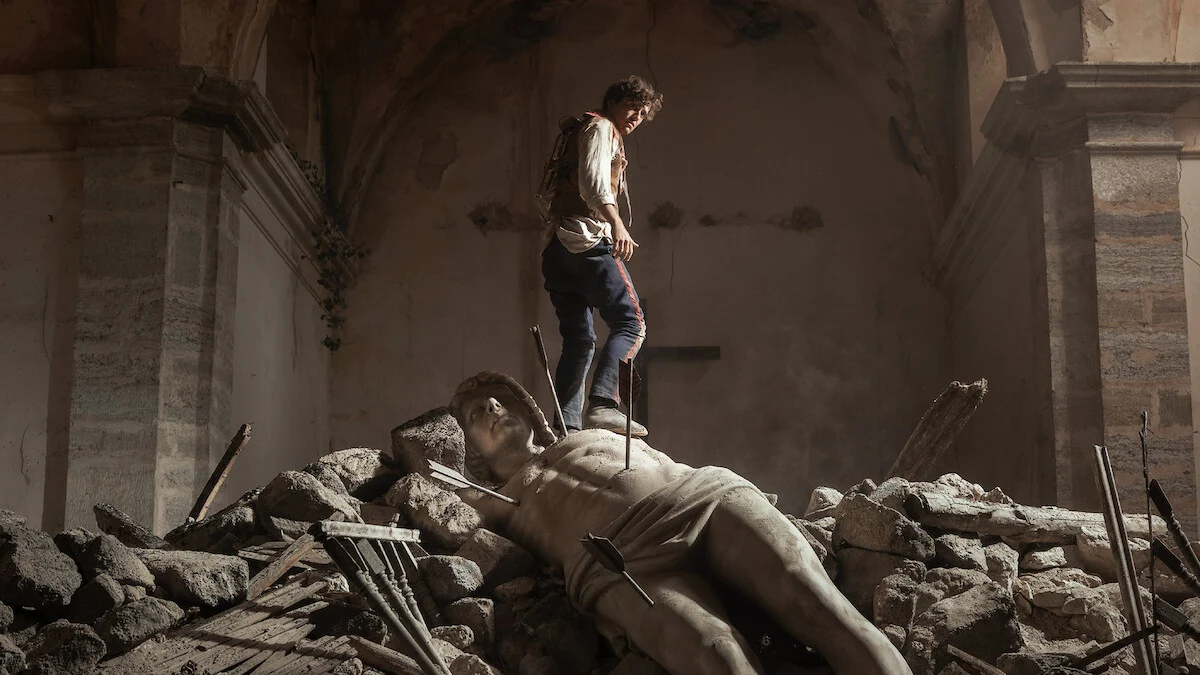
The beating heart is 1937, where Sebastián, a musician played by Guitarricadelafuente in his acting debut, is pulled into Franco’s army and put in charge of a young left wing prisoner. What grows between them is handled with patience and restraint, and the debut performance never feels like one. Looking at the Spanish Civil War through a queer lens could have felt like a modern gloss, but here it feels like it belongs to the period.
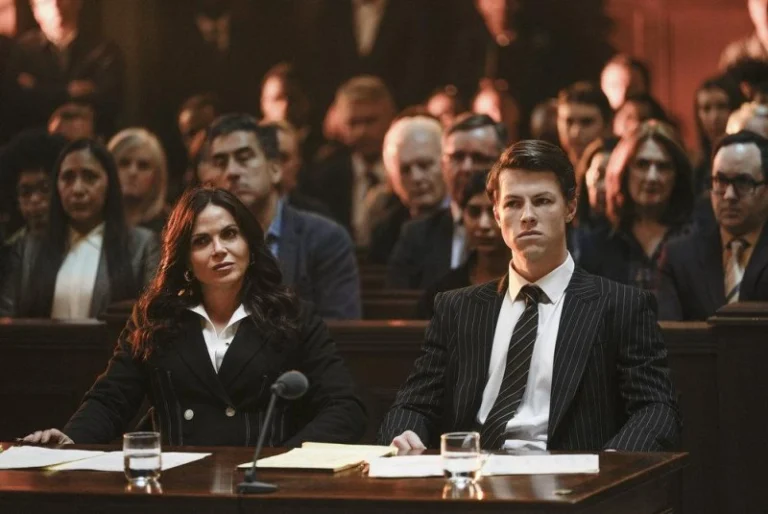
Around that core sit the other two threads. In 1932 Carlos, played by Milo Quifes, is turned away from an elite casino after rumours about his sexuality, while in 2017 a historian named Alberto, played by Carlos González, inherits something from his estranged grandfather and is dragged into a confrontation with his mother. Glenn Close appears as Isabelle, and the supporting cast is generous throughout.
Then there is Penélope Cruz, who turns up as Nené Romero, a cupletista entertaining the troops, and basically stops the movie in the best possible way. Her performance opens Sebastián’s eyes to a life beyond the war, and it opens the film up too. It is a bolt of showmanship in a story otherwise built on hushed glances and withheld confessions.
The film is not flawless. At roughly two and a half hours, the triptych structure can feel unwieldy, and the momentum snags each time the story leaps to another era. A few stretches run longer than they need to, and you can sense the machinery of the crosscutting before the threads finally tighten.
Yet that tightening is the payoff. When the timelines begin to speak to one another, the film becomes something close to a relay race where the baton is a family secret, and the handoffs land with real force. Los Javis said in a statement on Netflix Tudum that they wanted to tell a story about “freedom, legacy, and the importance of LGBTQ+ visibility,” and the finished film never loses sight of that purpose.
For me, ‘La Bola Negra’ is ambitious, heartbreaking and gorgeously alive, a film that trusts its audience to piece things together and rewards the effort. Its length and its occasional sprawl cost it a little, but the emotional wallop of its final stretch and the sheer confidence of the filmmaking more than make up for it. I give it 9 out of 10.
Did ‘La Bola Negra’ wreck you the way it wrecked me, or did the triptych structure lose you along the way, so tell me in the comments whether you agree with my verdict.