‘Moria’ Netflix Ending Explained: How the Argentine Biopic Closes the Story of Moria Casán


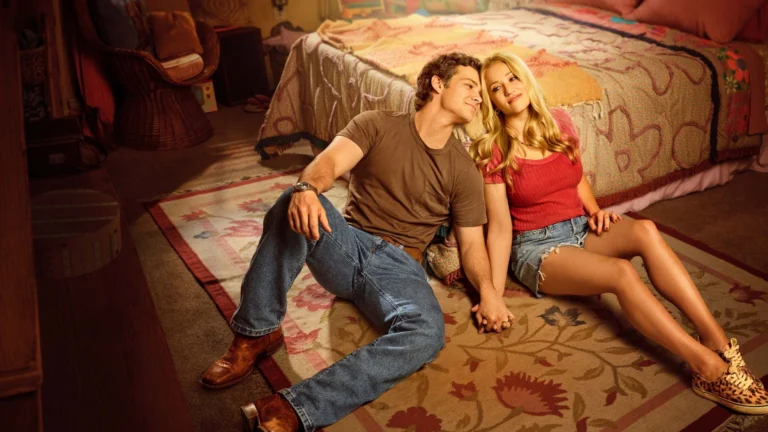
The final episode of ‘Moria’ brings Argentina’s most singular entertainment figure full circle, closing an eight episode season that has spent its runtime asking who the woman behind the persona of Moria Casán actually is. The series follows the transformation of Ana María Casanova into Moria Casán, beginning with an ambitious young woman in 1960s Buenos Aires whose growing confidence and determination push her toward becoming a major figure in Argentine entertainment. By the time the finale arrives, that transformation has run its full course, and viewers are left piecing together what the ending actually means for both Moria and the daughter who has anchored much of her story.
The Spanish language biography drama originates from Argentina and consists of eight episodes, and it premiered globally on August 14, 2026. Netflix has positioned it as a showcase title, and the finale in particular has generated a wave of searches from viewers trying to understand exactly how the season resolves.
How ‘Moria’ Ends on Netflix
The eighth and final episode, titled “You’ll Always Know What I’m Up To,” picks up after Moria has spent time in prison and shows her reconnecting with her daughter Sofía while considering the legacy she has built. The Netflix synopsis confirms that following a stint in prison, Moria reconnects with Sofía, reflects on her legacy and celebrates her inspiring life as a pillar of Argentine culture. The reconciliation is presented less as a tidy resolution than as an acknowledgment that both women have spent decades circling each other’s shadows.
The finale ultimately celebrates Moria’s extraordinary journey and her enduring position as a pillar of Argentine popular culture, closing the loop that opened with a young woman determined to remake herself. Critics have noted that the final two episodes reach what one review calls the meme version of Moria, the version that thrives on social media, attracts new generations of fans, and even leads her into an unlikely episode in Paraguay. That detour becomes one of the more unexpected threads the finale has to tie off.
Cecilia Roth, who takes over the role for the closing chapters, was specifically tasked with portraying Moria during her detention in Paraguay, grounding the season’s final stretch in a real and well documented chapter of the icon’s life. The choice to end on this note, rather than on a triumphant career highlight, is part of what gives the finale its weight, since it forces the show to reckon with consequence rather than only spectacle.
The Ending’s Meaning for Ana María Casanova and Moria Casán
Throughout the season, the show has repeatedly asked where Ana María Casanova ends and Moria Casán begins, examining the price and power of creating an unforgettable public identity. The finale answers that question by refusing to separate the two entirely, suggesting instead that the persona and the person became inseparable long before the story’s final scenes.
Reviewers have described the series as built around a bold conceptual premise, telling Moria’s life as if it unfolded inside a kind of snow globe, an imagined territory hovering somewhere between reality and fantasy, with Moria herself functioning as a puppet master who manipulates the sets around her. That framing device pays off in the ending, since the finale leans into the idea that Moria has always controlled how her own story gets told, prison sentence and all.
One review argues that what lifts the series above simple tribute is what it says about the country that produced her, noting that Argentina spent years disciplining Casán for being too loud, too sexual, too working class and too quick with a comeback, only to canonize her for those exact traits as she approached her eightieth birthday. The finale essentially dramatizes that shift from scandal to canonization in real time.
The bond between Moria and her daughter Sofía, played at different ages by Lola Ríos, Thea Garat, and Olivia Nuss, becomes the closest thing the series has to a central axis, challenging conventional ideas about motherhood along the way. By closing on their reconciliation rather than on any single career triumph, the finale signals that this relationship, not fame itself, was the show’s real emotional throughline.
Cast Behind the Three Versions of Moria Casán in the Netflix Series
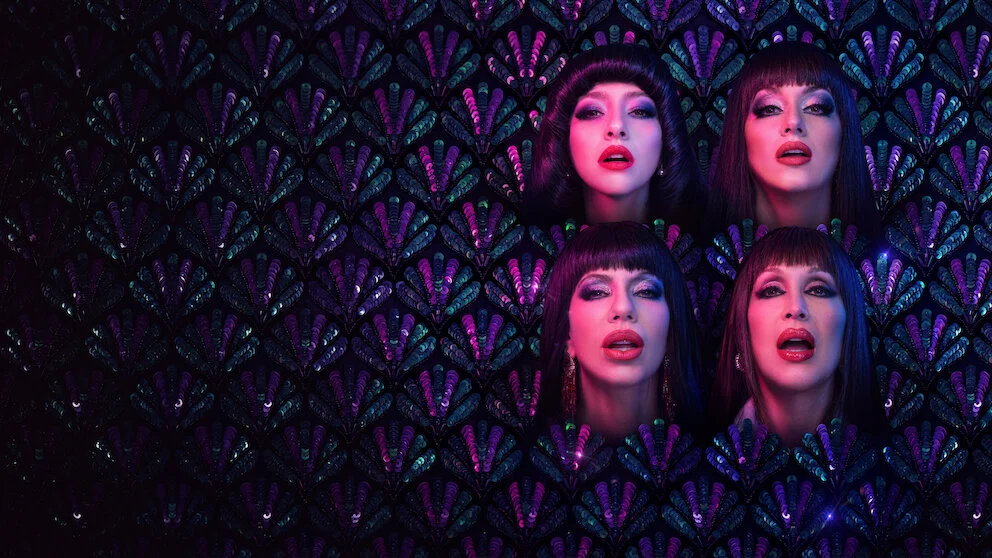
The series is built around triple casting, with Cecilia Roth, Griselda Siciliani and Sofia Gala Castiglione each playing Casán at a different stage of a single life, a structural choice the production treats as its central argument rather than a marketing stunt. Sofía Gala Castiglione, who is Moria Casán’s real daughter, plays the young version of her mother, while Griselda Siciliani takes over from the close of the third episode through the sixth, covering the diva’s period of greatest television exposure, and Cecilia Roth closes out the final two episodes with a more retrospective look at the character’s arc.
Director Javier Van de Couter avoids the traditional biopic approach of having a single actress artificially age across five decades, instead presenting several distinct versions of the same constructed persona, an approach that has drawn comparisons to Todd Haynes’s ‘I’m Not There,’ which fragmented Bob Dylan across six different performers. Marco Antonio Caponi plays Mario Castiglione, the man Moria described as the great love of her life and the father of her only daughter, Sofía Gala.
The wider cast includes Joaquín Ferreira, Rafael Ferro and Olivia Nuss, rounding out a supporting ensemble built around the different eras the show moves through. The series was created and directed by Javier van de Couter for Netflix.
Critical Reception and What Comes Next for ‘Moria’
The response from critics has been largely favorable, with reviewers praising the show for resisting a conventional, glossy biopic treatment. One review from Micropsia Cine describes the show as strikingly bold even within Netflix’s relatively conventional framework, noting that it adopts a clear point of view centered on Moria as a cult figure embraced by queer and marginal communities rather than as a mass market television diva, and commits to that perspective fully.
Coverage summarizing critical response has noted that the show’s stylistic debts to filmmakers like Todd Haynes, Pedro Almodóvar and Federico Fellini, combined with its framing of Casán as a puppet master with total control over her own narrative, are credited with keeping the series from collapsing into a paint by numbers biography. That approach has clearly resonated with critics assessing the show’s craft.
As for whether the story continues past this finale, nothing has been confirmed. Netflix has not announced any renewal, and with the show having only just premiered, there is currently no information available about a potential second season, though the platform has occasionally continued limited series that performed unexpectedly well with international audiences. Because Casán’s real life has continued well beyond the season’s opening chapters, including her stint in prison and her eventual reconciliation with Sofía, there is clearly more story that could be told if Netflix chooses to pursue it.
For now, the ending stands on its own as a portrait of reconciliation, reinvention and reckoning, and viewers who just finished watching Moria walk out of prison and back into her daughter’s life are left to decide for themselves whether that final embrace feels earned, a question worth settling in the comments below.