Netflix’s ‘My Brilliant Career’ Gives Sybylla Melvyn a Bolder, More Modern Voice

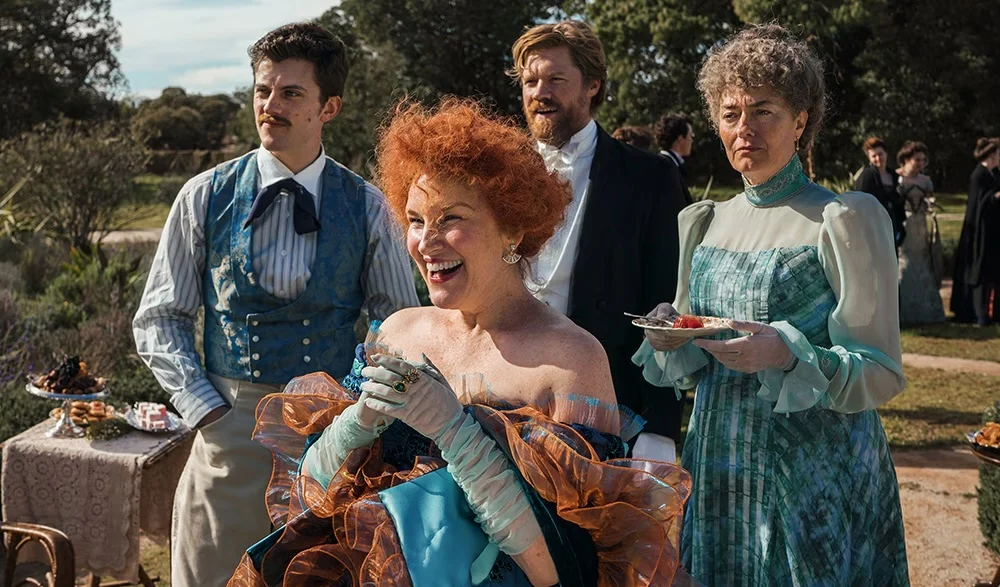

Miles Franklin’s 1901 novel has outlived a century of adaptations, but Netflix’s new take on ‘My Brilliant Career’ is betting that its heroine still has something to say to a streaming audience. The six-episode series is loosely based on Franklin’s classic, itself inspired by the author’s own independent, writerly adolescence. At the center of it all is Sybylla Melvyn, a young woman determined to become a writer in a world that expects her to marry instead.
The series comes from creator Liz Doran and takes viewers back to Australia in the early 1900s, following Sybylla, played by Philippa Northeast, as her family sends her from their farm to her grandmother’s home in high society to find a wealthy suitor. What follows is less a straightforward romance than a portrait of a young woman trying to figure out whether love and ambition can coexist at all.
Sybylla Melvyn’s Journey From Novel to Netflix
The story had already been adapted once before, in Gillian Armstrong’s acclaimed 1979 film starring Judy Davis and Sam Neill, so Netflix’s version arrives with a fair amount to live up to. Rather than simply restaging that earlier film, the new adaptation, developed by Doran and directed by Alyssa McClelland and Anne Renton, aims for a sharper and more contemporary lens.
Reviewers have noted that the series offers a more honest depiction of turn of the century Australia, particularly through the female and Indigenous gaze, while still honoring the tone of the original story and film. That balance between reverence and reinvention has become the defining tension of how critics are discussing the show.
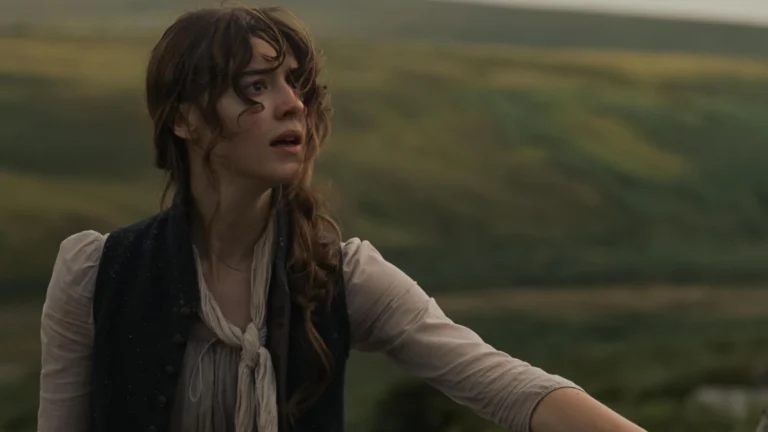
The season opens with Sybylla reciting an erotic poem at a birthday gathering, scandalizing her grandmother and setting the tone for the character’s refusal to behave the way her new social circle expects. It is a deliberately provocative choice, one meant to signal early that this version of Sybylla is not interested in softening her edges for polite company.
Behind the camera, the production brings together Jungle Entertainment and the South Australian Film Corporation, with Chloe Rickard, Liz Doran and Alyssa McClelland serving as executive producers alongside producer Paul Ranford. The creative team’s choices, from casting to cinematography, have shaped a series that critics describe as distinct from its predecessors even while staying tethered to Franklin’s source material.
Philippa Northeast Steps Into an Iconic Role
Philippa Northeast, known for her work on ‘The Newsreader’, takes on a role that previously helped make Judy Davis a global star following the 1979 film. Following in those footsteps carries its own pressure, but Northeast’s performance has become a central talking point in how the new series is being received.
Netflix describes its Sybylla as restless and razor sharp, a young woman dead set on writing her own story in an era that expects her to find a man and settle down. Northeast stars alongside Christopher Chung and Genevieve O’Reilly, with the season running six episodes.
Critics reviewing the series have singled out Northeast’s ability to make Sybylla feel uncouth and rebellious without losing the character’s warmth. That balancing act, playing a young woman who is simultaneously brash and sympathetic, appears to be central to why the adaptation has resonated with audiences discovering the story for the first time.
Speaking about the character’s arc, Northeast discussed with TV Insider why Sybylla could not end the season engaged or married, tying the decision directly to who the character is at her core. That conversation, exclusive to the outlet, offers a window into how deliberately the ending was constructed around Sybylla’s refusal to compromise.
Sybylla and Harry Beecham’s Complicated Romance
Much of the season centers on whether love, marriage and Sybylla’s dream of becoming a writer can exist together, and by the end she does fall in love. She receives more than one proposal and comes close to marrying the wrong man before eventually facing the possibility of marrying Harry.
That romance, opposite Christopher Chung’s Harry Beecham, becomes the emotional core of the back half of the season. Their relationship is framed less as a simple will they or won’t they and more as a genuine philosophical disagreement about what Sybylla owes herself versus what she owes the people who love her.
In the finale, Harry proposes again, believing he is finally ready to build a life with Sybylla, but she turns him down, not out of spite but out of her belief that a shared future was not meant to be theirs. During his absence, she had rediscovered how much she enjoyed writing and realized she did not need a man to save her.
She had come to believe she needed to dedicate herself fully to her writing, uncertain whether she could manage that after marriage, and she was convinced she was not meant to be anyone’s wife. The choice, as several outlets have framed it, is less a rejection of Harry than an affirmation of the life Sybylla wants to build on her own terms.
How the Ending Reflects Sybylla’s Values
‘My Brilliant Career’ premiered on Netflix on August 13, 2026, with all six episodes released at once, and the show has already sparked heated debate among fans of both the original novel and the 1979 film. Viewers have been buzzing about how Sybylla’s journey wraps up almost as soon as the season landed.
At the very end of the series, Sybylla leaves home with her manuscript in hand, choosing her writing over the security of marriage. It is a quietly defiant final image, one that echoes the novel’s own insistence that Sybylla’s story belongs to her alone.
That ending has proven divisive precisely because it refuses the neat resolution many period dramas offer. Rather than rewarding Sybylla with both love and career, the series insists she choose, and her choice says as much about the show’s ambitions as it does about the character herself.
For a series built around a woman who spent six episodes refusing to be told who she should become, it feels fitting that the ending has left so many people arguing about whether she made the right call. What do you make of Sybylla walking away from Harry with nothing but her manuscript in hand, and would you have made the same choice in her position.