Netflix’s ‘Michael Jackson: The Verdict’ Uncovers What the Media Got Wrong About the Trial of the Century

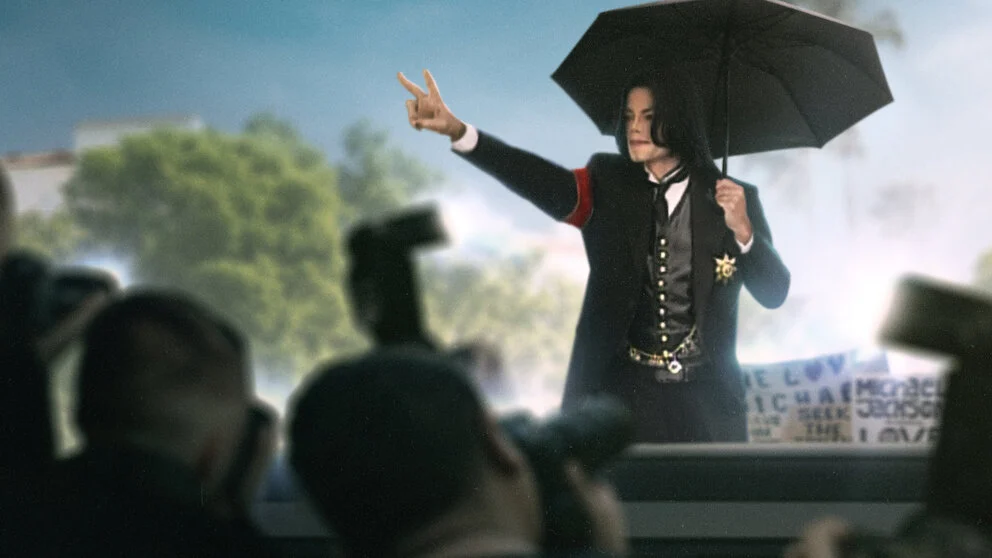

Twenty years after one of the most watched celebrity legal proceedings in modern history concluded, the questions it left behind have never fully gone away. ‘Michael Jackson: The Verdict’, now streaming on Netflix, sees director Nick Green examine the case against the music legend, the media circus surrounding the 2005 trial, and what actually happened inside the courtroom. The result is a docuseries that forces audiences to confront uncomfortable truths not just about a man, but about the justice system that surrounded him.
The filmmakers approached the project as a historical account, presenting the facts as they unfolded in court, arguing that no cameras were allowed inside the proceedings and that the public’s view of the facts at the time was filtered by commentators and presented piecemeal. That framing alone signals what makes ‘Michael Jackson: The Verdict’ worth watching, even for those who lived through the original headlines.
The Bashir Documentary and How It Set Everything in Motion
Former BBC journalist Martin Bashir’s film ‘Living With Michael Jackson’ put the spotlight directly on Jackson’s relationship with then-12-year-old Gavin Arvizo, who would go on to accuse Jackson of molestation. In the BBC documentary, Jackson appeared clutching Arvizo’s hand and speaking openly about sharing a bed with the boy on multiple occasions. Jackson had invited Bashir into Neverland specifically to rebuild his battered image. It destroyed what remained of it instead.
Episode 1 highlights how Jackson never fully recovered from the 1993 child molestation accusations after he settled with 12-year-old Jordy Chandler and his family for $23 million. The documentary makes clear this payment was not closure. It became a shadow that followed Jackson into every courtroom argument, undermining any claim of innocence with jurors who already knew that history.
Bashir was called as the prosecution’s first witness in the 2005 trial. In episode 2, he recalls being “petrified” to testify against Jackson, whose team was working hard to discredit Bashir’s documentary, which was shown to jurors in its entirety, while Jackson’s extremely supportive fans remained present outside the courthouse every day.
Bashir explains that he was briefed by a lawyer to respond to questions by saying he would not answer them, and that is substantively what he said to nearly every question he was asked. He was consequently described by Jackson’s defense attorney as “a disaster for the prosecution” because he refused to answer even basic questions about his own work, which must have appeared evasive to the jury.
Juror Testimony and the Standstill That Almost Changed Everything
The third episode spotlights the various people who testified in Jackson’s defense, including Brett Barnes, Macaulay Culkin, and choreographer Wade Robson. Robson, the documentary acknowledges, would later recant that defense testimony and accuse Jackson of sexual abuse, as documented extensively in ‘Leaving Neverland’.
Juror Melissa Herard’s interview suggests that the real uphill battle for the prosecution was simply convincing Jackson admirers that the man behind ‘Thriller’ could be a monster, particularly when figures like Macaulay Culkin were willing to take the stand to proclaim him a harmless saint. Herard recalls being particularly convinced by Robson’s testimony during the trial, but that was not true for the rest of the jury pool. During deliberations, she claims the jury sent word to the bailiff that they were at a standstill and needed guidance. In response, Herard says the judge told them, “We ain’t doing no mistrial. You’re gonna sit there and work it out.”
Herard says that while she would not allow her own child to share a bed with an adult celebrity, she was not ultimately swayed by Bashir’s documentary and felt the journalist was trying to “trap” Jackson. That admission carries weight in a series that asks viewers to sit with the complexity of how verdicts are actually reached.
A Prosecution That Undermined Itself
Time and again throughout the documentary, a familiar arc emerges. The prosecution calls what they expect to be a devastating witness, only for the testimony to fizzle. Bashir refused to answer many questions, and Jackson’s ex-wife Debbie Rowe unexpectedly reversed course on the stand, while other witnesses had their credibility dismantled by Jackson’s lawyers over what sometimes appeared to be relatively minor inconsistencies.
According to Variety, the prosecution appeared to have forgotten that the burden was truly on them to prove guilt, which meant they needed to battle the court of public opinion from the very beginning. From the media tapes, juror accounts, and archival footage of megafan Sheree Wilkins, who quit her job as a preschool teacher to be present for the trial, it quickly became evident that many people had long ago formed their opinions of Jackson and were not going to change them.
‘Michael Jackson: The Verdict’ recounts the full saga through sit-downs with subjects sympathetic to Jackson, including biographer J. Randy Taraborrelli, head of security Kerry Anderson, and attorney Brian Oxman, as well as those less so, including reporter Diane Dimond, family friend Stacy Brown, and prosecutor Ron Zonen. Their accounts, alongside TV reports, sheriff’s footage from the raid of Neverland Ranch, and video of Gavin Arvizo’s initial interview with authorities, give the proceedings an up-close intimacy that earlier coverage never allowed.
The Legacy Question the Documentary Leaves Open
Even with all of its assembled evidence, the docuseries is a fairly linear affair that is heavier on recounting known events than on genuine revelation. Those already familiar with this chapter of Jackson’s story will come away with limited new information. What the series does accomplish, however, is assembling the pieces of the trial into a single coherent account at a moment when renewed public attention demands exactly that.
The project lands in the slipstream of a blockbuster biopic, and questions over bias were already flaring before it premiered, fueled by producers linked to earlier contentious reporting and the long shadow of ‘Living with Michael Jackson’. What was promised was objectivity, while what arrived is an ongoing fight over who gets to define it. The trial unfolded over twelve dramatic weeks and concluded on June 13, 2005, with a not guilty finding on all counts. That outcome settled nothing in the court of public record, and ‘Michael Jackson: The Verdict’ makes no pretense that it will settle anything now.
The series is most powerful not when it prosecutes or defends, but when it shows how thoroughly the machinery of celebrity can bend a legal system already straining under its own weight. Where do you stand after watching ‘The Verdict’, and do you think the documentary gives enough space to those whose accounts the courtroom ultimately dismissed?