‘Stuart Fails to Save the Universe’ Rotten Tomatoes Score Reveals a Divided Critical Response


The verdict is officially in for HBO Max’s newest entry in the Chuck Lorre comedy universe. ‘Stuart Fails to Save the Universe’ has debuted with a Rotten Tomatoes score that critics are already calling one of the more polarizing outcomes in the franchise’s history.
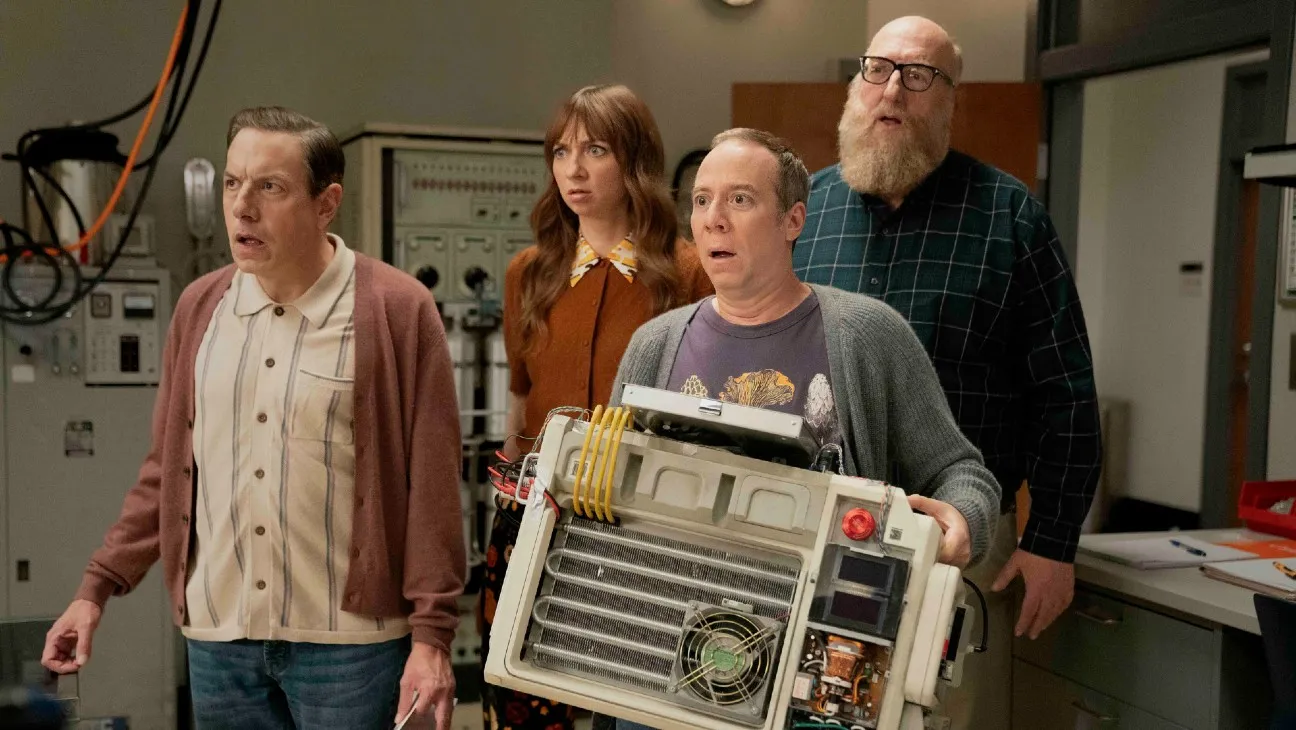
The multiverse comedy follows Stuart Bloom, the comic book shop owner played by Kevin Sussman, as he accidentally shatters reality and scrambles to fix it. Reviews began rolling in ahead of the premiere, and the resulting Tomatometer numbers tell a story of a show that critics either embraced or dismissed entirely.
The Rotten Tomatoes Score For The Big Bang Theory Spinoff
Rotten Tomatoes released its initial Average Tomatometer Score for HBO Max’s ‘Stuart Fails to Save the Universe,’ and after tallying 16 reviews from critics, 72 percent of them were positive. That number has moved somewhat since the earliest tally, which is typical for a show still collecting reviews in its opening days.
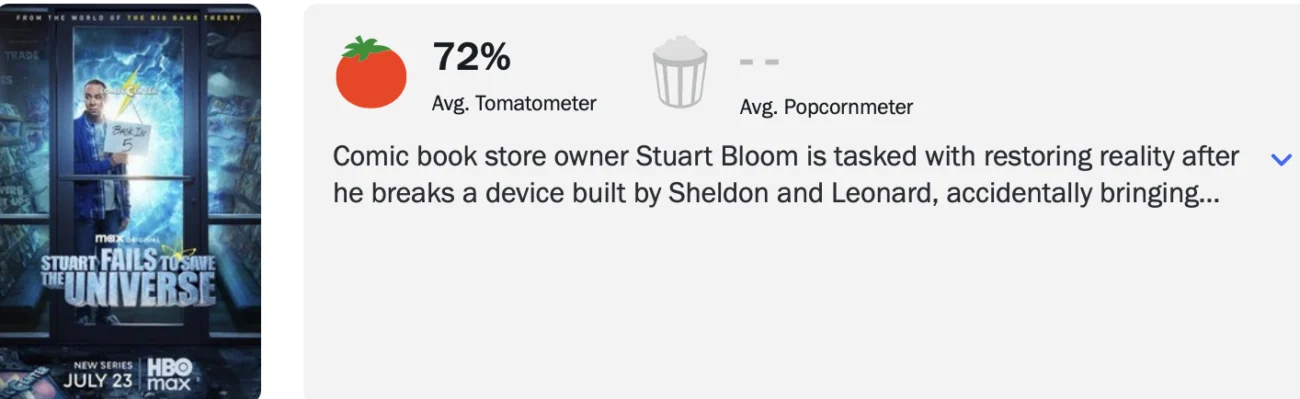
A later count based on 19 reviews found five leaning negative and 14 leaning positive, with the numbers likely to keep shifting as more critics weigh in. Other outlets reported the score landing closer to the high 60s, with a 67 percent Fresh rating at Rotten Tomatoes alongside a 72 on Metacritic appearing in coverage published around the same window.
Some reporting placed the number lower still. One report put the spinoff’s Rotten Tomatoes rating at 64 percent, describing the reception among critics as mixed. The spread between these figures reflects how quickly aggregator scores can move once a title crosses from early access reviews into wider critical coverage.
Whichever exact figure ends up settling, the consensus across all of them is consistent. This is the lowest Tomatometer score of any show in the extended ‘Big Bang Theory’ universe so far.
How Critics Reacted To Stuart Fails To Save The Universe
Early coverage of the reviews framed the split in stark terms, with some calling it the best new sitcom of the year and others describing it as apocalyptically bad. That gap between reactions is unusually wide for a legacy franchise entry.
On the more critical side, Rotten Tomatoes’ own critical consensus describes the series as occasionally amusing but more slapdash than inventive, gamely performed but irredeemably sour, and ultimately a skippable addition to Chuck Lorre’s expanding ‘Big Bang Theory’ universe. The same critical summary contrasts it with ‘Young Sheldon,’ noting that where that prequel successfully carried over what audiences loved about the original show, ‘Stuart Fails to Save the Universe’ does not manage the same feat.
Individual reviews echoed that disappointment. According to ScreenRant, the outlet’s own review concedes the spinoff is bold in concept but falters in execution, arguing the series does little to meaningfully connect to the original show and that the jokes generally do not land. The Hollywood Reporter’s review struck a similar chord, praising the performances while noting that the half hour comedy fails to live up to its clever premise.
Not every critic came away disappointed, however, and the range of opinion is part of why the aggregate score sits in mixed territory rather than clearly positive or negative. The series has been described in the same breath as everything from a superhero triumph to a supervillain origin story, depending on which critic is doing the describing.
The Story And Cast Behind Stuart Bloom’s Multiverse Mission
The premise centers on familiar faces navigating unfamiliar chaos. Stuart Bloom is tasked with restoring reality after he breaks a device built by Sheldon and Leonard, accidentally bringing about a multiverse Armageddon, and is aided in the quest by his girlfriend Denise, his geologist friend Bert, and quantum physicist Barry Kripke. Along the way, the group encounters alternate universe versions of characters that longtime fans already know well.
The supporting cast includes Brian Posehn reprising his role as geologist Bert Kibbler, John Ross Bowie returning as physicist Barry Kripke, and Lauren Lapkus as Stuart’s girlfriend Denise. That combination of returning players gives the spinoff a direct tether to the original sitcom even as its tone shifts into more overtly sci-fi territory.
The series is co-created by ‘Big Bang Theory’ mastermind Chuck Lorre, and follows the fan favorite comic book shop owner as he finds himself at the center of a mad multiversal nightmare. The show premiered its first of a ten episode season on the same day its panel took place at San Diego Comic-Con.
Reviewers have noted the series draws on influences well beyond its own franchise. One critical assessment observed that the consistently witty tone recalls not just ‘The Big Bang Theory’ itself, but also touchstones like Bizarro World, the myth of Orpheus and Eurydice, and even ‘The Asphalt Jungle.’
How This Compares To Other Big Bang Theory Spinoffs
Placing ‘Stuart Fails to Save the Universe’ next to its franchise siblings makes the scale of its critical reception clearer. Season one of the original ‘Big Bang Theory’ earned an 84 percent Tomatometer score, ‘Young Sheldon’ season one scored 76 percent, and ‘Georgie and Mandy’s First Marriage’ debuted at 89 percent.
By that measure, the original ‘Big Bang Theory’ series holds an 81 percent average Tomatometer overall, while ‘Georgie and Mandy’s First Marriage’ sits at 89 percent average. Against those benchmarks, Stuart’s debut score marks the lowest freshman season result across the entire extended ‘Big Bang Theory’ franchise.
That context matters given the franchise’s track record with the Television Academy. ‘The Big Bang Theory’ was an Emmy favorite during its run, winning 10 trophies across 55 career nominations, which is part of why the new sci-fi leaning spinoff was expected to be taken seriously from the outset.
Some coverage has also noted the timing of the show’s arrival amid larger shifts at its home network. Reporting on the franchise’s fortunes has connected the spinoff’s debut to broader questions about what the Paramount and Warner Bros. Discovery merger could mean for HBO Max’s Emmy prospects going forward.
Whether ‘Stuart Fails to Save the Universe’ settles as a footnote in the franchise or grows into something audiences embrace over its ten episode run remains to be seen, and given how sharply critics have disagreed on Stuart Bloom’s accidental apocalypse, it seems fair to ask which side of that divide most viewers will end up on.