The White Lantern Corps Are DC’s Most Powerful Team, and They’re Suddenly Everywhere Again

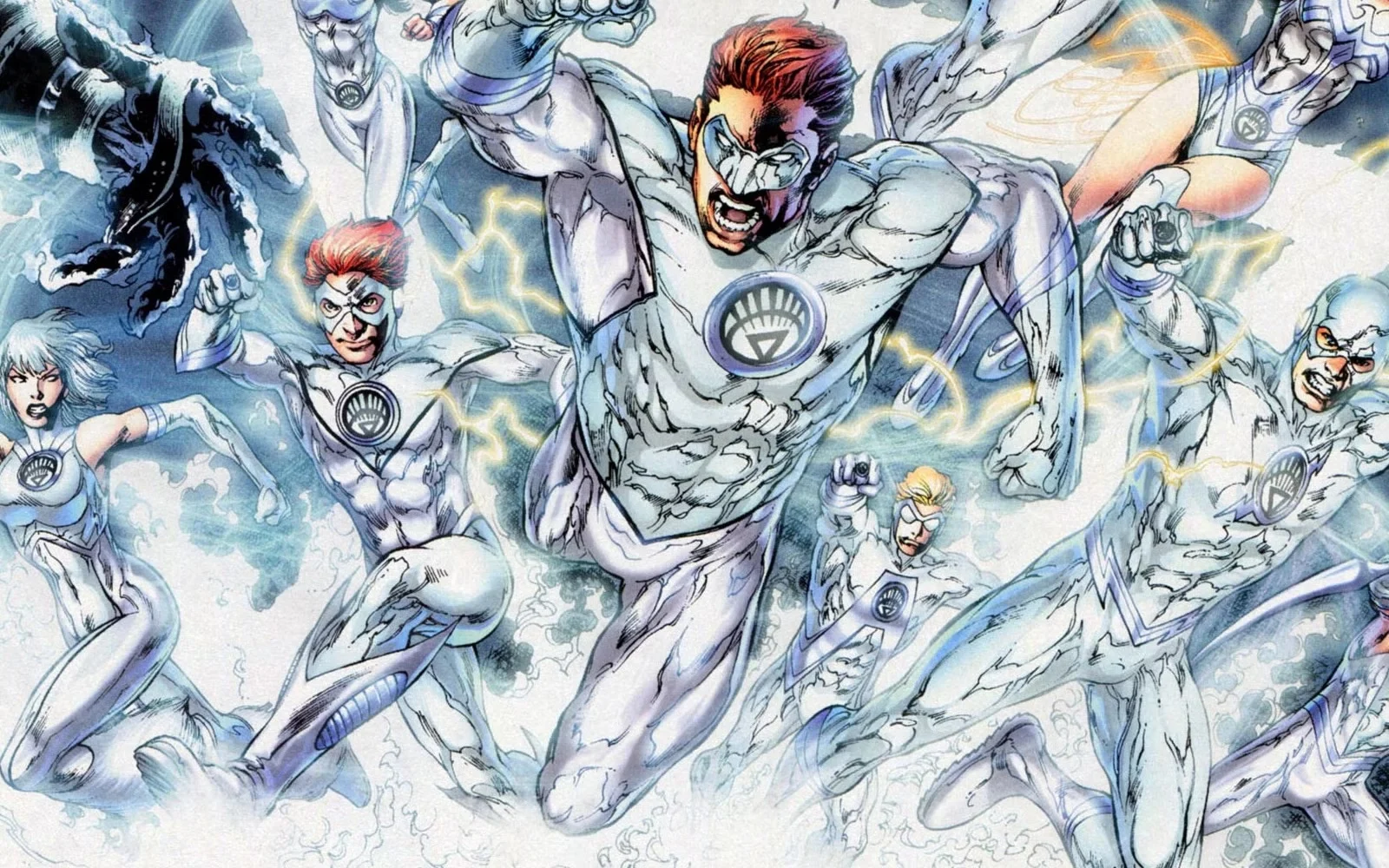

Few concepts in DC Comics carry the strange mixture of scale and mystery that defines the White Lantern Corps. Unlike the more familiar Green Lanterns or even the villainous Sinestro Corps, this group has never had a large membership or a permanent headquarters, yet it represents something closer to the beating heart of the entire emotional spectrum mythology.
That combination of rarity and raw power is part of why the White Lantern Corps has quietly become shorthand for resurrection, second chances, and the idea that life itself can be weaponized against death. With new collectibles, comic arcs, and renewed fan attention keeping the concept in circulation, it is worth revisiting exactly where this corps came from and why it still resonates with readers.
How the White Lantern Corps Was Born in ‘Blackest Night’
The team’s roots trace directly to ‘Blackest Night,’ the sprawling 2009 to 2010 crossover written by Geoff Johns with art from Ivan Reis, and the corps itself first appeared in ‘Blackest Night’ issue seven in 2010. That timing lines up with the official publication record, which credits Geoff Johns as writer and Ivan Reis as artist, with the corps debuting in ‘Blackest Night’ number seven in April 2010.
The corps was never meant to be a standing army in the way the Green Lantern Corps functions. According to background on the team, the White Lantern Corps was formed by an entity known as The Entity specifically to combat Nekron and his Black Lantern Corps and bring an end to the Blackest Night event. That origin story frames the group less as a police force and more as an emergency response to an existential threat.
The mechanism behind its creation is just as unusual. Accounts of the storyline explain that the White Lanterns came into being when Hal Jordan fused with the Entity, the bringer of all life in the DC Universe, as a direct counter to Nekron. Notably, the very first person to wear a White Lantern ring was not a hero at all but the supervillain Sinestro, though the connection was short lived once Nekron pulled the Entity away from him.
Hal Jordan ultimately became the character most associated with the power. Coverage of his role in the story notes that Jordan briefly wielded the White Lantern’s power to defeat Nekron and the Black Lantern Corps, cementing him as the corps’ most recognizable face even though his time with the ring was brief.
What Makes the White Light So Powerful
Part of what separates the White Lantern Corps from every other group in the emotional spectrum is what its light actually represents. As one breakdown puts it, the White Lantern Corps embodies life itself, drawing on white light that combines all seven colors of the emotional spectrum. That places it structurally above the individual corps built around rage, fear, hope, and the other emotions.
This unity is also thematic. Analysts of the team have pointed out that where other corps are defined by conflict and division, the White Lanterns exist as a rare symbol of unity, representing the one moment when every faction of the emotional spectrum worked together instead of against each other. That framing helps explain why the team has endured in fan discussion even with so few members.
The corps’ signature ability is resurrection, but with an important distinction from its opposite number. Descriptions of its powers note that while Black Lanterns can reanimate the dead as reanimated corpses, White Lanterns bring back the dead as genuinely living beings rather than something monstrous. That single difference is often cited as the philosophical crux separating the two corps.
Do you think the White Lanterns are the most powerful?
The scale of that resurrection power was massive within the original storyline. Reference material on the team lists Deadman, Aquaman, Firestorm, Martian Manhunter, Hawk, Maxwell Lord, Captain Boomerang, Professor Zoom, Jade, Hawkman, Hawkgirl, and Osiris among the characters restored to life through the White Light during the event.
Who Has Worn the White Lantern Ring
Membership in the corps has always been fluid and temporary, which is part of what makes tracking it interesting for longtime readers. During the climax of ‘Blackest Night,’ Hal Jordan transformed Wonder Woman, Superboy, The Flash, Green Arrow, Animal Man, Donna Troy, Kid Flash, Superman, and Ice into White Lanterns so they could collectively attack Black Hand.
That group did not stay empowered for long. Once the immediate threat passed, records of the story confirm that the White Lanterns were released from the corps once the Black Lanterns and Nekron were defeated, with the notable exception of Deadman, who retained a lasting connection to the white light.
Later comic arcs expanded the roster further. Kyle Rayner eventually earned his own place among the corps’ most significant wielders after he mastered all seven colors of the emotional electromagnetic spectrum, creating white light of his own, a feat tied to the ‘Rise of the Third Army’ storyline in which Kyle united the powers of all seven corps to stop a new threat despite his own uncertainty about channeling that power.
Membership has not always ended on a high note. In one case, Simon Baz was discharged from the corps after failing to restore his homeland of Korugar, a reminder that wearing the white ring has come with real consequences for the characters involved rather than functioning as an unconditional reward.
Why the White Lantern Corps Is Back in the Conversation
The White Lantern Corps has resurfaced in a very concrete way this year through collectibles. Reporting on this summer’s convention season confirms that McFarlane Toys revealed a 2026 San Diego Comic Con Gold Label exclusive featuring Hal Jordan in his White Lantern form, giving collectors a new entry point into the imagery associated with the team.
That release has become a broader talking point precisely because the corps rarely gets dedicated merchandise. One recent analysis observed that with new collectibles, comic arcs, and fan speculation about live action adaptations keeping the concept in the cultural conversation this year, the moment felt right to revisit what the White Lantern Corps actually is and why it still matters.
The renewed attention has not been limited to toys either. Broader DC coverage from this same period notes ongoing speculation about a potential ‘DC Next Level’ crossover, alongside reports that Warner Bros. is preparing several new DC Comics based projects across film and games, all of which keeps corps like the White Lanterns in circulation among fans mapping out what could come next for the wider DC line.
None of this amounts to a confirmed live action appearance for the White Lantern Corps, and nothing in current reporting suggests an imminent one. What it does suggest is that a team built around resurrection and unity, born from one of the publisher’s most ambitious crossovers, still has enough narrative weight to draw fresh interest more than a decade after its debut.
Given how rarely this particular corps gets its due compared to its Green and Sinestro counterparts, which hero do you think deserves to wear the White Lantern ring next.