Tom Hiddleston’s Pompeii Docuseries Turns a Teenage Obsession Into National Geographic’s Latest Deep Dive

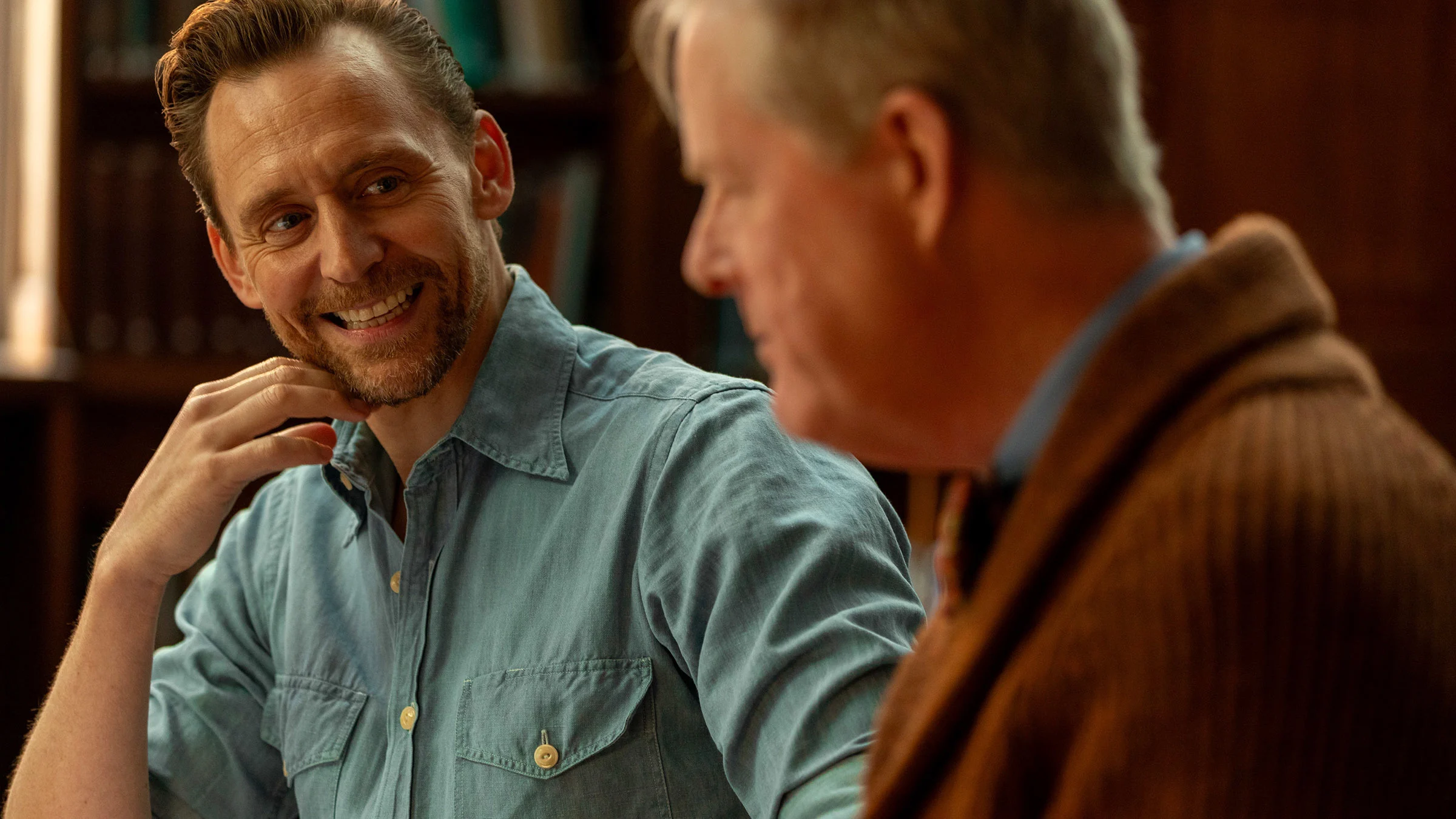

Tom Hiddleston has spent nearly three decades circling the same question, and now he finally gets to answer it on screen. Long before he was cast as a mischievous Norse god, he was a teenager wandering the ruins of Pompeii on a family trip, taken with the eerie stillness of a place frozen mid-catastrophe.
That fascination has now become ‘Pompeii: Out of Time with Tom Hiddleston,’ a National Geographic docuseries that blends dramatized reconstruction with hard science to ask what actually happened during the final hours before Mount Vesuvius buried an entire Roman city. The show gives Hiddleston a role that goes beyond hosting, positioning him as guide, investigator and occasional actor across a story he has been personally drawn to since childhood.
What Pompeii Out of Time With Tom Hiddleston Is About
The three part docudrama transports audiences to ancient Rome in the hours before and during the eruption of Mount Vesuvius, fusing cinematic scripted drama with investigative documentary storytelling. Hiddleston serves as host, travel guide and investigator, examining the lives of three people caught in the disaster, a Praetorian Guard, a teenage boy and a businesswoman.
Starting hours before the eruption, the series traces the backstory of each of these three individuals and the decisions they made once the chaos began. The framing gives the familiar tragedy a more personal shape, following ordinary residents rather than treating Pompeii purely as a spectacle of destruction.
Through the blend of documentary and drama, Hiddleston brings to life the voices of ordinary Romans, revealing their resilience and relatable experiences. Guided by a team of archaeologists, historians, geologists and disaster experts, he uncovers evidence and the stories of real people that challenge long held assumptions about Pompeii and its final hours, including the revelation that many caught up in the disaster had a chance to survive.
The series was produced by Plimsoll Productions, with Tom Barbor-Might serving as showrunner and director, Jessica Ruston and Mark Ravenhill credited as writers alongside additional writing from Kevin R. Wright and Barbor-Might, and Grant Mansfield, Wright, Helen Flint and Alan Eyres serving as executive producers. The series premiered on National Geographic before rolling out on Disney+ and Hulu.
How the Series Blends Documentary and Drama
Hiddleston steps into cinematic scripted sequences following the lives of real Romans caught in Vesuvius’ path, following a teenage apprentice, a powerful businesswoman and a mysterious Praetorian Guard as he pieces together how each confronted impossible choices as disaster loomed. Hiddleston has described his approach to bringing these figures to life as a matter of combining historical evidence with imagination, treating the reconstructions the way he would approach a role.
That instinct keeps the show from tipping into exploitation, even when it stages the final moments of people who really died, and the series stays upfront about which portions are dramatized and which are drawn directly from evidence. The dual structure lets ‘Pompeii: Out of Time’ function simultaneously as a character piece and a scientific investigation.
Geologist Chris Jackson walks Hiddleston through the eruption’s actual timeline atop Vesuvius itself, and those segments give the series a backbone of credibility beneath the dramatized flourishes. Cinematographer Jim Jolliffe worked alongside director Tom Barbor-Might and Hiddleston to blend past and present visually across the series.
Hiddleston is also noted for putting people at ease on set, which matters given how often the production relies on interviewing archaeologists, historians and academics who are rarely in front of a camera. That comfort behind the scenes appears to translate into the way the documentary segments unfold on screen, favoring conversation over spectacle.
The Ending Explained and What Happens to the Three Romans
Across the three episodes, Hiddleston repeatedly returns to a central question, whether anyone could have survived Pompeii’s final day, tracing real Romans through the eruption using both expert testimony and intuition. As tremors begin, the series follows two Romans ignoring the warning signs of disaster, before ash starts falling and the focus shifts to a soldier, a mother and a boy as survival hangs in the balance.
By the time the final surge hits, new evidence reveals the fate of three real Romans, closing out the countdown structure built into each episode. Most people already know the broad tragedy of Pompeii, but the series poses a more hopeful possibility, asking what if someone managed to escape and start a new life rather than perish in the eruption.
That countdown clock built into each episode is part of what makes the resolution land, with the show generating real investment in whether these three ordinary Romans made it out despite audiences already knowing how the broader catastrophe ends. The structure turns a historically settled outcome into a more suspenseful character study by narrowing the focus to individuals rather than the city as a whole.
For a closer look at how Hiddleston’s own history with the ruins shaped his read on the material, How-To Geek spoke with him directly about the trip that altered the course of his interest in ancient history.
Critical Reception and Why the Docuseries Stands Out
Variety reported that the docuseries was made with the specific goal of capturing the interest of younger audiences, a notable strategy for a network built around natural history and science programming. That positioning lines up with the show’s hybrid format, which leans on dramatized sequences to draw in viewers who might not otherwise seek out a straight documentary.
The reunion between Hiddleston and executive producer Kevin R. Wright carries some symbolic weight, since the two previously worked together on ‘Loki.’ Hiddleston’s connection to Pompeii long predates his Hollywood career, and archive photographs show him at age seventeen standing atop Mount Vesuvius during his first trip to Pompeii and Herculaneum with friends in 1998.
Rotten Tomatoes has begun collecting audience and critic responses for the season, though the Popcornmeter score was still populating shortly after release. Early critical response has focused less on spectacle and more on tone, with observers noting how carefully the series handles material tied to real historical deaths.
For a fuller breakdown of how that tonal balance plays out episode by episode, ComicBasics published an in-depth review examining how the series treats its dramatized reconstructions.
Between the countdown structure, the mix of drama and hard science and Hiddleston’s own decades-long fixation on the city, ‘Pompeii: Out of Time’ asks viewers to sit with a version of the disaster that feels smaller and more personal than the usual retelling. Anyone who has now watched all three episodes and formed an opinion on which of the three Romans they were most invested in should feel free to say so in the comments.