Top 10 Coolest Things About Ken Kaneki



Ken Kaneki’s story anchors the world of ‘Tokyo Ghoul’, tracing a path from quiet literature student to figurehead in the conflict between humans and ghouls. Across ‘Tokyo Ghoul’, ‘Tokyo Ghoul √A’, and ‘Tokyo Ghoul:re’, his character moves through identities, allegiances, and power thresholds that reshape both sides of the series’ world. The result is a single through-line you can follow to understand the larger systems—CCG structures, ghoul societies, and the science behind RC cells—that drive the plot.
What makes Kaneki especially compelling is how clearly the series documents each turning point: the surgery that changes his biology, the training that changes his tactics, and the leadership choices that change the balance of power. If you want a snapshot of the series’ core ideas—ethics of coexistence, the cost of survival, and the mechanics of ghoul physiology—tracing Kaneki’s milestones gives you a practical syllabus.
One-Eyed Ghoul Origin
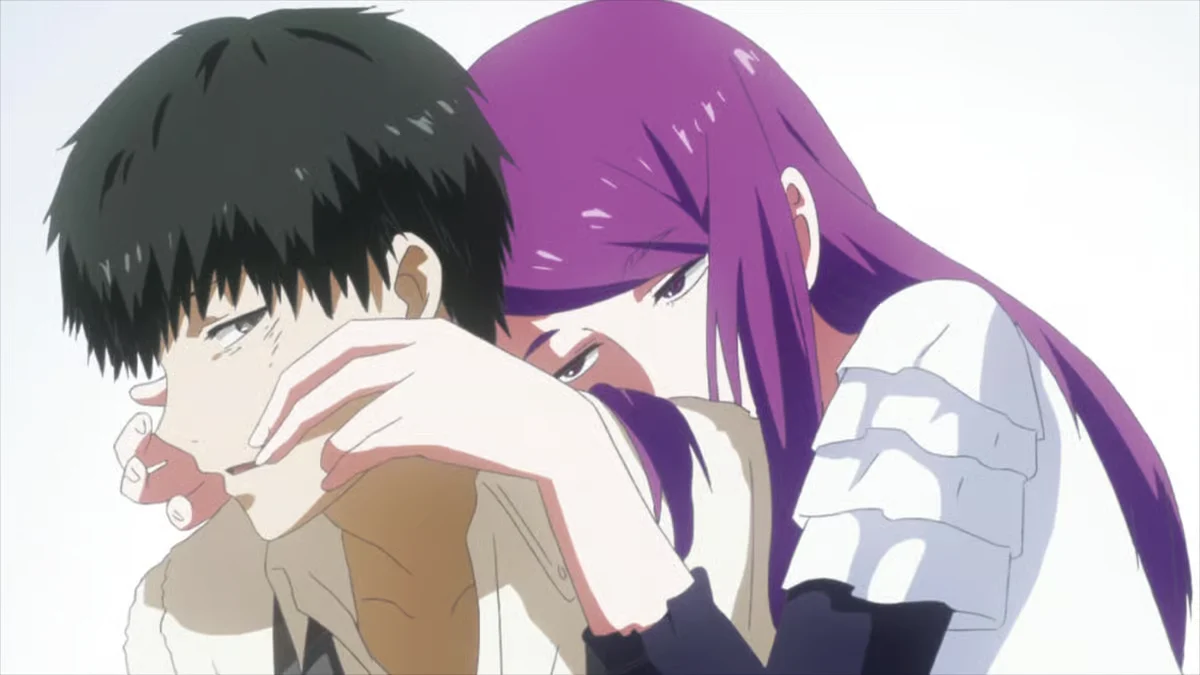
Kaneki becomes a one-eyed ghoul after emergency surgery in which Dr. Akihiro Kanou transplants organs from Rize Kamishiro into his body. The procedure integrates a kakuhou—an organ that produces RC (Red Child) cells—giving him ghoul traits like a kagune, enhanced strength, and the need to consume human flesh to maintain RC cell levels. This single transplant differentiates him from naturally born ghouls and explains his unusual kakugan pattern.
Because he is a hybrid, Kaneki can pass among humans more easily than most ghouls while still accessing ghoul strength. The series uses his status to show how RC cell density, nutrition, and stress affect performance, laying out rules that later explain power scaling in fights across ‘Tokyo Ghoul’, ‘Tokyo Ghoul √A’, and ‘Tokyo Ghoul:re’.
Rinkaku Kagune and Kakuja Evolution
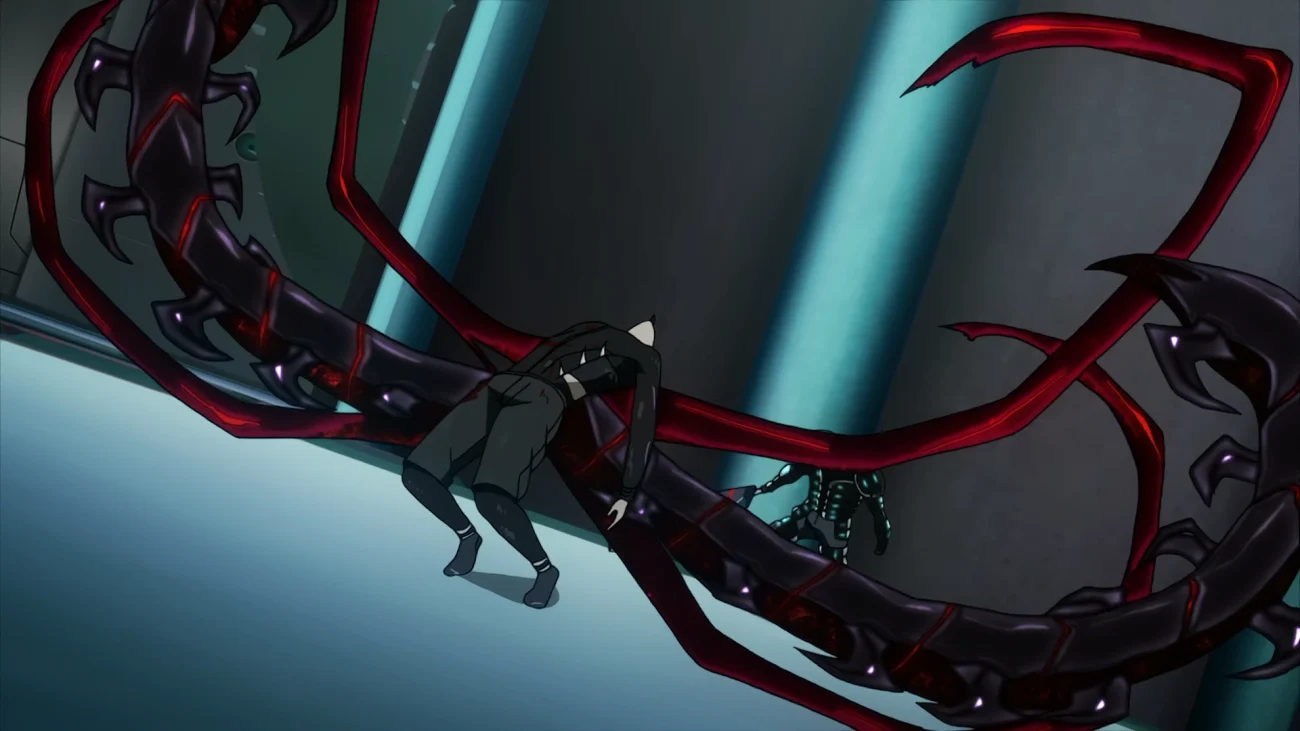
Kaneki’s base kagune is a rinkaku, which manifests as flexible, tail-like tendrils with high regenerative capacity and heavy striking power. Rinkaku users typically specialize in burst offense and resilience; Kaneki’s tendrils function as both striking whips and grappling anchors, letting him control range and reposition in close quarters without sacrificing defense.
After periods of extreme stress and cannibalization of other ghouls, he develops a kakuja—an advanced, armor-like evolution of the kagune. This kakuja increases protection, striking mass, and sustained output by distributing RC cell structures over his body, creating a form that supports longer engagements and damage trading. The progression visibly maps how resource intake and trauma accelerate ghoul evolution in the series.
The Eyepatch Mask and Identity Concealment
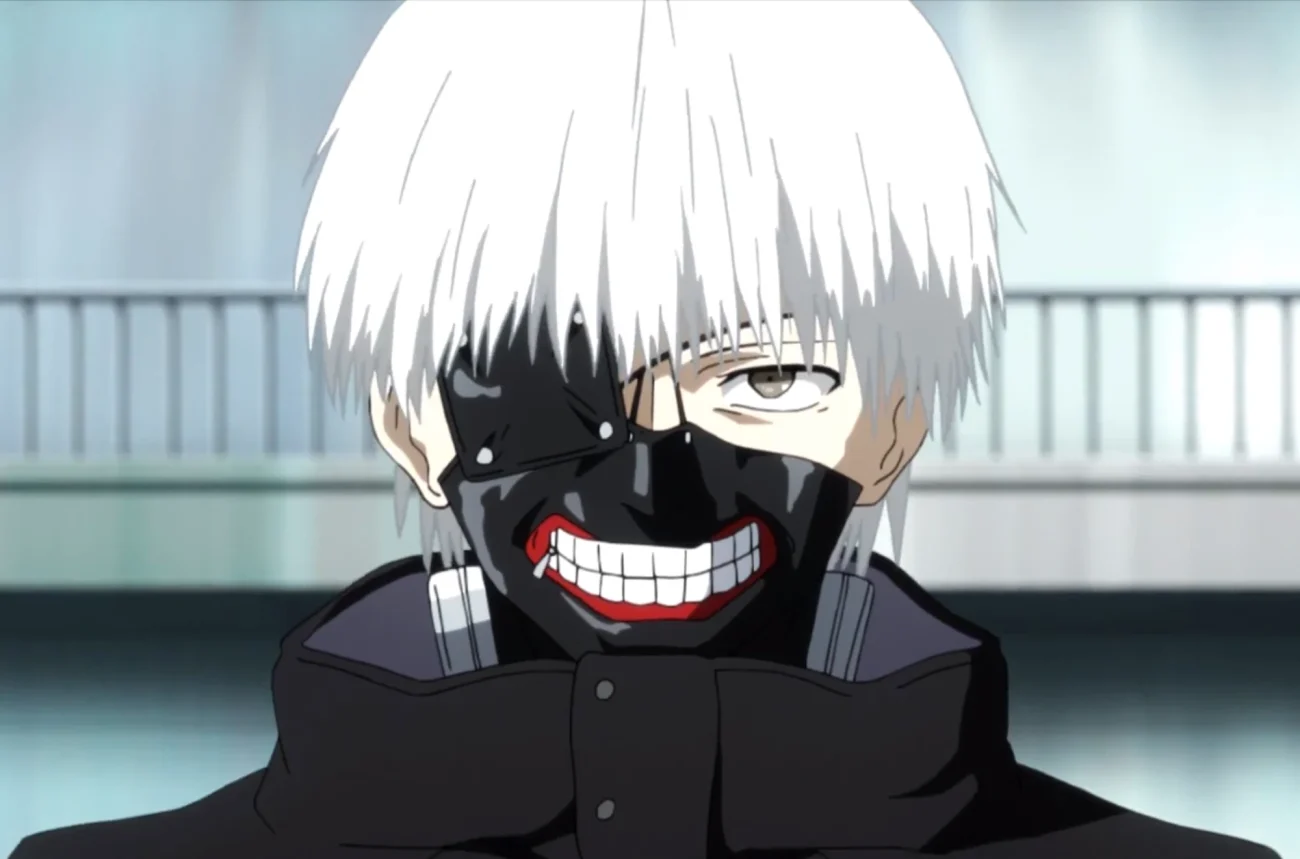
Kaneki’s signature eyepatch mask is crafted by Uta of HySy ArtMask Studio and designed to conceal his human identity while allowing him to operate among ghouls. The mask covers his human eye and exposes the kakugan side, preventing accidental human recognition during CCG encounters and underworld activity. Its asymmetric design also makes “Eyepatch” a traceable field codename in CCG files.
Through this mask, the series demonstrates how masks function as practical tools in ghoul society: they disrupt facial recognition, obscure personal networks, and standardize personas used in inter-ghoul negotiations. Scenes across ‘Tokyo Ghoul’ and ‘Tokyo Ghoul √A’ use Eyepatch sightings to tie incidents together in CCG investigations without revealing Kaneki’s civilian identity.
Anteiku and Coffee: Human Integration
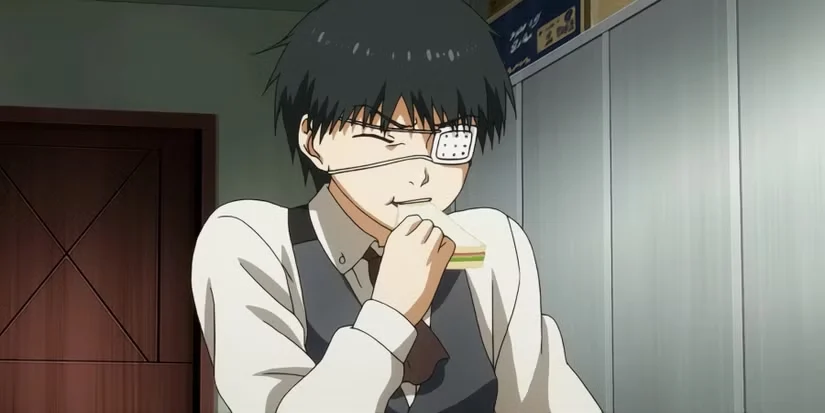
At Anteiku café, Kaneki learns operational norms that let ghouls coexist with humans—securing ethical food sources, minimizing public exposure, and supporting community members in crisis. The café doubles as a logistics hub, coordinating safehouse support and conflict de-escalation with other wards. For Kaneki, Anteiku is where he receives practical training in restraint and community protocols.
The coffee detail underscores RC biology: ghouls cannot digest most human food, but coffee’s composition allows limited consumption without adverse effects. Working at Anteiku lets Kaneki maintain human social habits—shared meals, conversation, and routine—while adapting to ghoul needs, a pattern ‘Tokyo Ghoul’ revisits whenever the story contrasts daily life with conflict operations.
Torture and Psychological Transformation
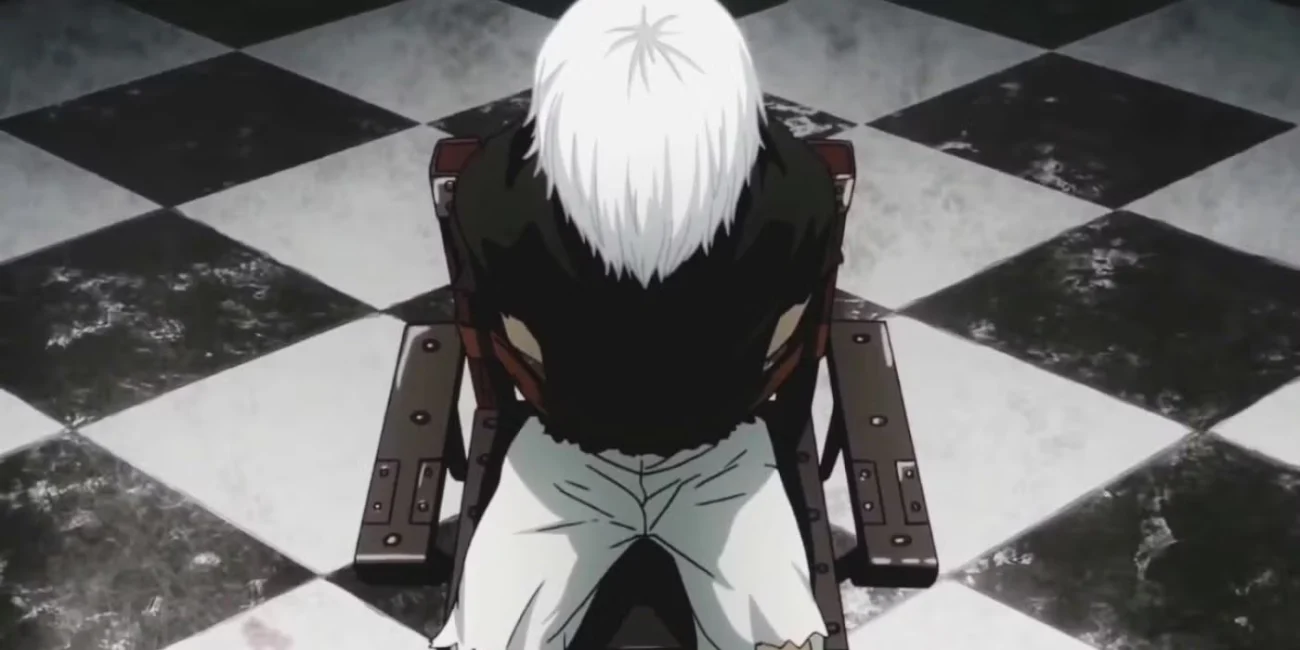
Kaneki’s capture and torture by Yamori (Jason) subject him to prolonged physical trauma and sensory manipulation, including the use of a live centipede placed in his ear. The arc documents how pain thresholds, sleep deprivation, and repeated injury interact with ghoul regeneration, leading to altered cognition and stress-induced RC cell fluctuations. His hair whitening visually marks the metabolic and psychological shift.
This period recalibrates his risk tolerance and combat style. Post-torture, Kaneki prioritizes rapid incapacitation and pre-emptive threat removal, techniques that align with rinkaku strengths. The series uses this change to illustrate how extreme stimuli can trigger both tactical reprogramming and kagune adaptation—a through-line that ‘Tokyo Ghoul √A’ and ‘Tokyo Ghoul:re’ reference when mapping his later decisions.
Haise Sasaki and the Quinx Squad
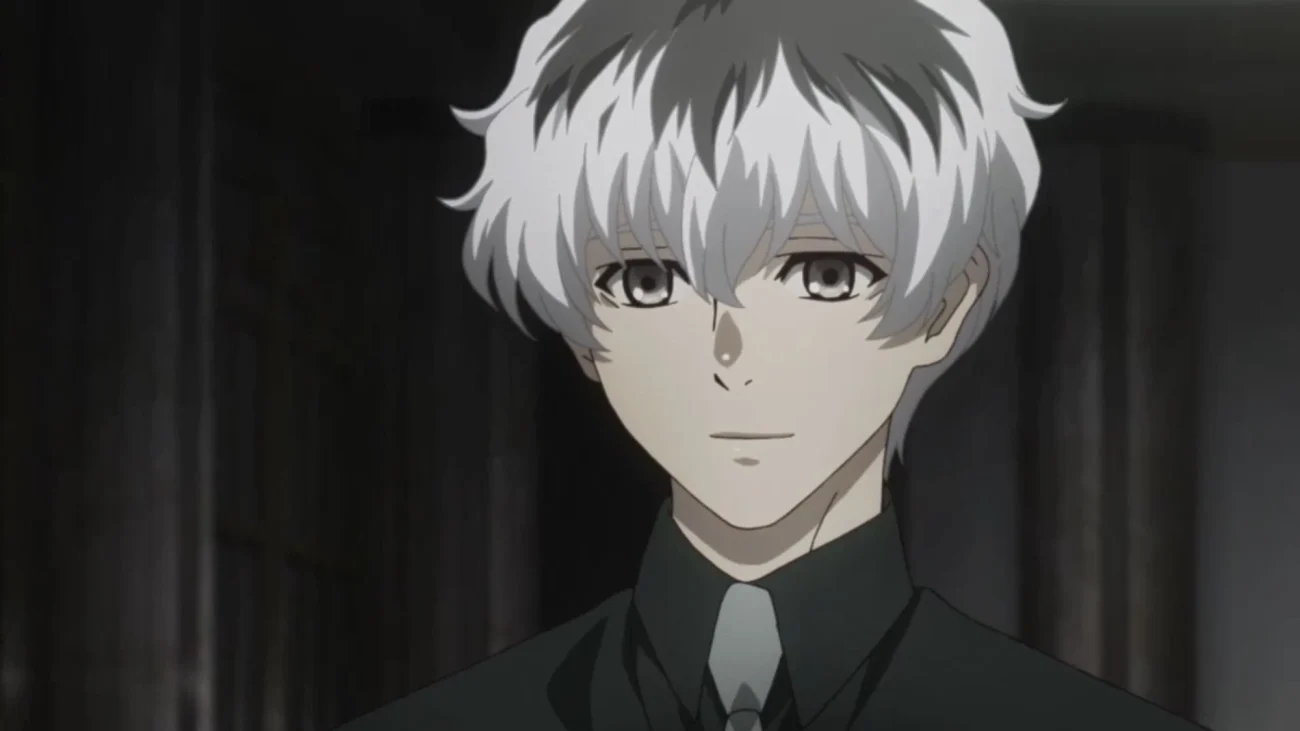
After a decisive battle and subsequent memory loss, Kaneki lives as Haise Sasaki within the CCG. Under this identity, he trains and leads the Quinx Squad—humans implanted with modified kakuhou frames—to improve investigator survivability against high-rated ghouls. His dual familiarity with ghoul physiology and CCG doctrine allows him to tailor drills, evidence handling, and engagement rules for hybrid operators.
The Haise period gives a procedural view of CCG operations: case building, quinque logistics, rank progression, and inter-department coordination. ‘Tokyo Ghoul:re’ uses his leadership to show policy trade-offs around hybridization programs and the data pipelines—autopsies, RC scans, and field reports—that drive agency decisions on raids and containment.
Leadership as the One-Eyed King and Goat

In the later arc, Kaneki becomes the new One-Eyed King, consolidating disparate factions under a single banner to pursue coexistence. He forms the organization Goat to reduce hostilities, coordinate safe zones, and negotiate paths away from open warfare. The title reflects operational authority rather than lineage, signaling a shift from clandestine survival to structured governance.
Through Goat, the narrative details how resource distribution, intelligence sharing, and ceasefire maintenance work when both sides carry long histories of retaliation. ‘Tokyo Ghoul:re’ tracks these logistics in ward-by-ward movements, demonstrating how leadership choices—amnesty terms, evacuation corridors, and target prioritization—change incident statistics and civilian risk.
Regeneration, Thresholds, and Combat Adaptability

As a rinkaku user, Kaneki demonstrates superior regeneration, allowing him to absorb damage that would disable other types. The series quantifies this indirectly: longer time-on-target in engagements, faster return-to-fight after injuries, and the ability to sustain kakuja output when RC reserves are maintained. His training sequences emphasize threshold management—balancing offense bursts with recovery windows.
He complements regeneration with adaptive tactics: switching between multi-tendril area control and single-point penetration, improvising restraints, and using environmental anchors for acceleration. Across ‘Tokyo Ghoul’, ‘Tokyo Ghoul √A’, and ‘Tokyo Ghoul:re’, these adjustments show how battlefield literacy—reading opponent kagune types, identifying quinque weaknesses, and timing RC expenditure—determines outcomes more than raw power alone.
Core Relationships: Hide and Touka

Kaneki’s bond with Hideyoshi Nagachika (Hide) grounds his human life throughout the series. Key scenes establish Hide as a constant observer who assembles accurate inferences about Kaneki’s condition from behavioral clues and investigative leads. Their interactions demonstrate how trust, built before Kaneki’s transformation, survives secrecy and diverging affiliations.
With Touka Kirishima, Kaneki’s relationship charts a path from mentor-student dynamics at Anteiku to partnership in rebuilding after large-scale conflicts. In the manga storyline of ‘Tokyo Ghoul:re’, they marry and later have a daughter, Ichika, aligning their personal commitment with broader goals of community stability. These milestones tie character arcs to institutional changes, showing how private decisions ripple through ward politics.
Literary Motifs and Reading Habits

Before his transformation, Kaneki is introduced as an avid reader, and the series threads literary motifs through his choices and self-talk. References to works like Kafka’s ‘The Metamorphosis’ and the in-universe novelist Takatsuki Sen (publicly a best-selling author, secretly the ghoul Eto) frame his internal debates about identity and humanity. The text uses these intertexts to map how characters rationalize actions under duress.
The centipede motif, children’s story allusions, and recurring quotes function as practical signposts: they timestamp psychological states and foreshadow later developments. Across ‘Tokyo Ghoul’ and ‘Tokyo Ghoul:re’, Kaneki’s reading habit becomes a structure for exposition—explaining ethics, signaling theme shifts, and linking plot turns to larger questions about change and selfhood.
Share your favorite Kaneki milestone or detail from ‘Tokyo Ghoul’, ‘Tokyo Ghoul √A’, or ‘Tokyo Ghoul:re’ in the comments!