Why Pop Culture Can’t Get Enough of Casino Thrillers


You don’t need to be a card buff to appreciate a good showdown in a movie. When James Bond sat across Le Chiffre in Casino Royale, the careful movement of cards and hard stares across the table were more than enough to captivate audiences. With just a felt table and a deck of cards, the movie built a thrilling, tense atmosphere that had people at the edge of their seats.
For decades, casinos and the high-stakes games unfolding within them served as hooks for many exciting narratives. They were dens of vice to be investigated, an impenetrable fortress for a heist gang to crack, or the set dressing for character dramas where proximity to Sin City brought out the worst habits in the people we’ve gotten invested in. This flexibility makes it a favored choice, both for movie watchers and movie makers.
The Architecture of Cinematic Tension
The high stakes poker table is a perfect condensation of risk and drama. When players take their seats, they’re entering a game where one player takes all. Good movies will tie this in with other plot points, like a character’s debt or a means of keeping a target distracted while the team pulls off a daring heist. As a result, every card draw, dice roll, or wheel spin means a lot more than just a win or a loss. One mistake can result in everything going off rails, which just adds to the turmoil.
On top of that, the casino floor is just a fun setting in general. The flashing lights, the suspenseful pause before the results appear, it all evokes a certain thrill that players seek out both in person and in digital gaming hubs like fortunesultimateslots.com. In a way, the casino becomes a movie character itself. You can see this in 2001’s Ocean’s Eleven, where the Bellagio casino is portrayed as a complicated, living organism whose many moving parts means there’s no such thing as a perfect plan. Instead, the heisters have to adapt on the fly in a high-risk game where one mistake means everything comes crashing down.
Glamour, Risk, and Escapism
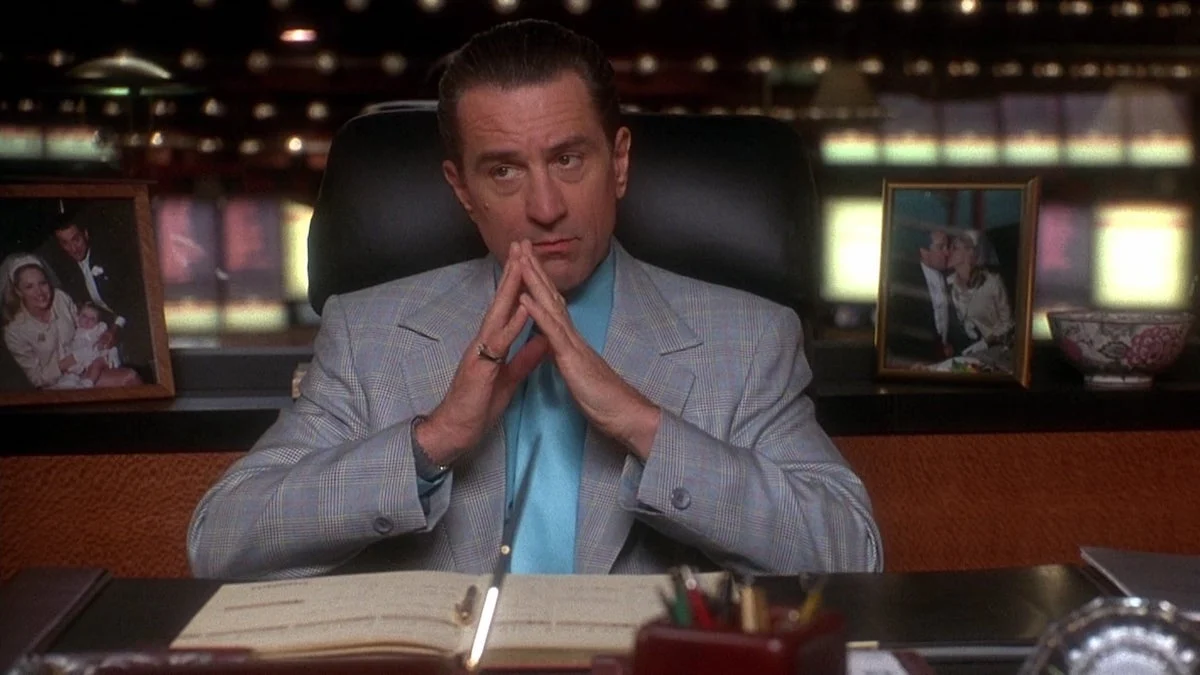
Of course, movies set in luxurious casino resorts provide more than just a way to keep tension high. They also provide a peek past the curtain, the sort of mouthwatering luxury absent in a mundane, everyday life. Ocean’s Eleven and Martin Scorsese’s 1995 movie Casino pull this off effortlessly. Everyone’s dressed to the nines, the drinks flow freely, and glitz and glamour surround you at every corner.
These places tap into that base part of our brain, one that yearns for a big, life-changing event. Casinos seen in movies are so steeped in wealth and power that, for a moment, your brain thinks that it could happen. That, in turn, makes you more likely to empathize with the characters when temptation blows them off course.
The Human Element
One cannot discard the human element in all of these stories. This goes beyond the plot points that makes someone desperate enough to gamble with loaned money. The nature of these games can reveal a lot about who a character is through the game itself. Are they a cool-headed and calculated, a charming bluffer, or a risk-taker willing to go all-in to get to their goal quickly? The game tells us about the person without having to spell it out, while capturing the innate human desire to test our luck.
A Game That Never Ends
All these elements make high-stakes casino games an irreplaceable tool for movie makers. Whether it’s a way to make a conversation-heavy scene more interesting or to portray a character’s descent into sin, spinning slot reels and dice bouncing on the Craps table have become a staple of movies and pop culture. As such, the casino and all it offers will never fully disappear from movies, instead turning into a game that never ends.