Ser Gwayne Hightower’s Sexuality Has Quietly Become ‘House Of The Dragon’s’ Most Debated Mystery

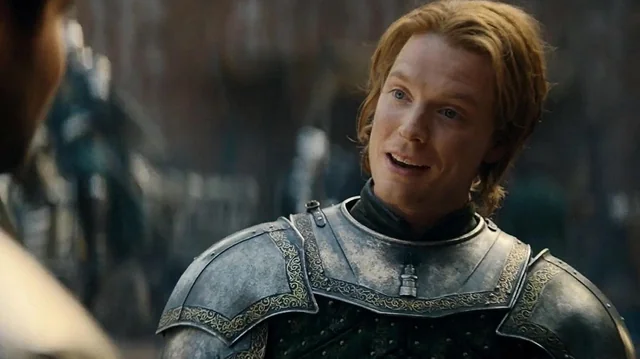

‘House of the Dragon’ has never been shy about layering queerness into its version of Westeros, and heading into season three, few characters have generated more quiet speculation than Ser Gwayne Hightower. Played by Freddie Fox, the arrogant, sharp tongued knight has gone from a minor jouster in season one to one of the Green faction’s most compelling figures, and along the way, viewers have started asking a very specific question about who he is.
That question, whether Gwayne Hightower is gay, has picked up steam thanks to on screen dialogue, fan reaction online, and Fox’s own history playing queer characters before he ever put on Hightower armor. Here is what the show has actually shown, what critics have said about it, and what ‘Fire and Blood’ has to say about the version of Gwayne that exists on the page.
The Scene That Sparked The Gwayne Hightower Sexuality Debate
The speculation reached a clear turning point in season three episode six, when Gwayne’s cousin Ormund makes pointed remarks suggesting Gwayne is gay. The insinuation makes Ormund, played by James Norton, arguably the most openly homophobic and sexist character currently on the show. The moment was not subtle, and it registered immediately with viewers watching live.
Reaction online was swift and direct. One widely shared post from a television critic summed up the episode by declaring that Criston Cole was dead and that Gwayne Hightower had been confirmed gay, calling it a great episode of the show. That kind of reaction reflects how many fans read the Ormund exchange, though the show itself stops short of giving Gwayne a definitive, spoken label.
That ambiguity fits a pattern the franchise has followed before. Because the characters in this world rarely describe themselves using modern terms like gay, bisexual, or transgender, many of the show’s queer coded characters are left for audiences to interpret rather than being explicitly named. Gwayne appears to be following that same pattern, with the text pointing toward something the show has not yet spelled out in plain language.
How Freddie Fox Brings Gwayne Hightower To Life In Season Three
Fans who noticed queer undertones in Gwayne’s storyline may have been picking up on something rooted in Fox’s own career. Before joining ‘House of the Dragon,’ Fox had a leading role in two of Russell T Davies’ most explicitly gay dramas, ‘Cucumber’ and ‘Banana,’ where he played an arrogant, bisexual character named Freddie Baxter. That background has made some viewers read extra intention into how Gwayne is written now.
Fox was cast as Gwayne Hightower, the son of Otto Hightower and brother to Queen Alicent, for season two of the series, joining a cast that also includes Rhys Ifans, Olivia Cooke, and Ewan Mitchell. Since then, the character has grown from a background tournament competitor into a central player in the Green faction’s war effort. His arc in season three has leaned heavily into his loyalty, his frustration, and his complicated relationships with the men around him.
Fox has spoken about the emotional weight of playing Gwayne opposite Criston Cole this season. Fox told Mashable that serving under a commanding officer with something close to a death wish creates an unbearable weight for Gwayne, especially given the code of honor he was raised inside. He described the dynamic as a rock and a hard place, torn between the strict hierarchy he grew up around and the instinct to simply survive. That tension has shaped much of Gwayne’s behavior across the back half of the season.
What Ormund’s Jabs And Gwayne’s Bond With Daeron Reveal
The homophobic insinuation from Ormund does not exist in isolation. After Gwayne abandons Criston Cole’s doomed campaign and returns to Ormund, his cousin greets him with visible displeasure and a round of homophobic jokes before sending Daeron to show Gwayne to his room. The moment establishes Ormund as dismissive of Gwayne in a way that goes beyond simple rivalry.
What follows is arguably more revealing than the jab itself. Once alone with his nephew Daeron, Gwayne grows angry that the teenager has resorted to flattering and appeasing Ormund just to get by, prompting Daeron to admit that he hates who he becomes around him and describes himself as little more than a puppet. Gwayne responds by telling Daeron he will be fine now that he belongs to Ormund, a line laced with resignation rather than reassurance.
Do you think Gwayne Hightower is gay?
Critics have noted how much this dynamic adds to the season’s texture. Reviewers pointed out that Gwayne’s arrival in Tumbleton creates a genuinely interesting dynamic, since he functions as the closest thing Ormund has to an equal, and the private exchange between Gwayne and Daeron only deepens once Ormund is no longer looming over the conversation. None of these scenes confirm a label outright, but they consistently frame Gwayne as someone shaped by scrutiny, restraint, and the expectations placed on him.
What Fire And Blood Says About Gwayne Hightower
Anyone hoping the source material settles the question should know the show has already diverged significantly from the books. In ‘Fire and Blood,’ Gwayne never travels to Harrenhal at all, instead serving in King’s Landing as second in command of the City Watch, where his father placed him specifically to keep watch over the commander, Ser Luthor Largent. That job ultimately gets him killed once Rhaenyra seizes the capital, a very different ending than anything his television counterpart has faced so far.
Because the book gives Gwayne a much smaller and more procedural role, it does not include the kind of interpersonal material that has fueled the show’s speculation. There is no equivalent scene of a cousin publicly questioning his sexuality, and no extended relationship with a nephew like Daeron to unpack. The character was largely built out for television, which means any exploration of his personal life, including his sexuality, is a choice the show’s writers made rather than something adapted directly from George R R Martin’s text.
That distinction matters for viewers trying to separate canon fact from performance choice and fan reading. Gwayne Hightower as audiences know him this season is very much a television creation, shaped by Fox’s performance, the show’s dialogue, and the reactions of critics and fans watching in real time. Whether the series ever gives him a definitive answer remains to be seen, but the groundwork for that conversation has clearly been laid.
Given how much of Gwayne’s arc this season has hinged on the tension between duty and self, it’s worth asking what viewers make of Ormund’s jab and the quiet moment that followed it with Daeron.