Gotham’s Golden Age Reboot: How ‘Batman: Caped Crusader’ Rewrites the Dark Knight’s Origins

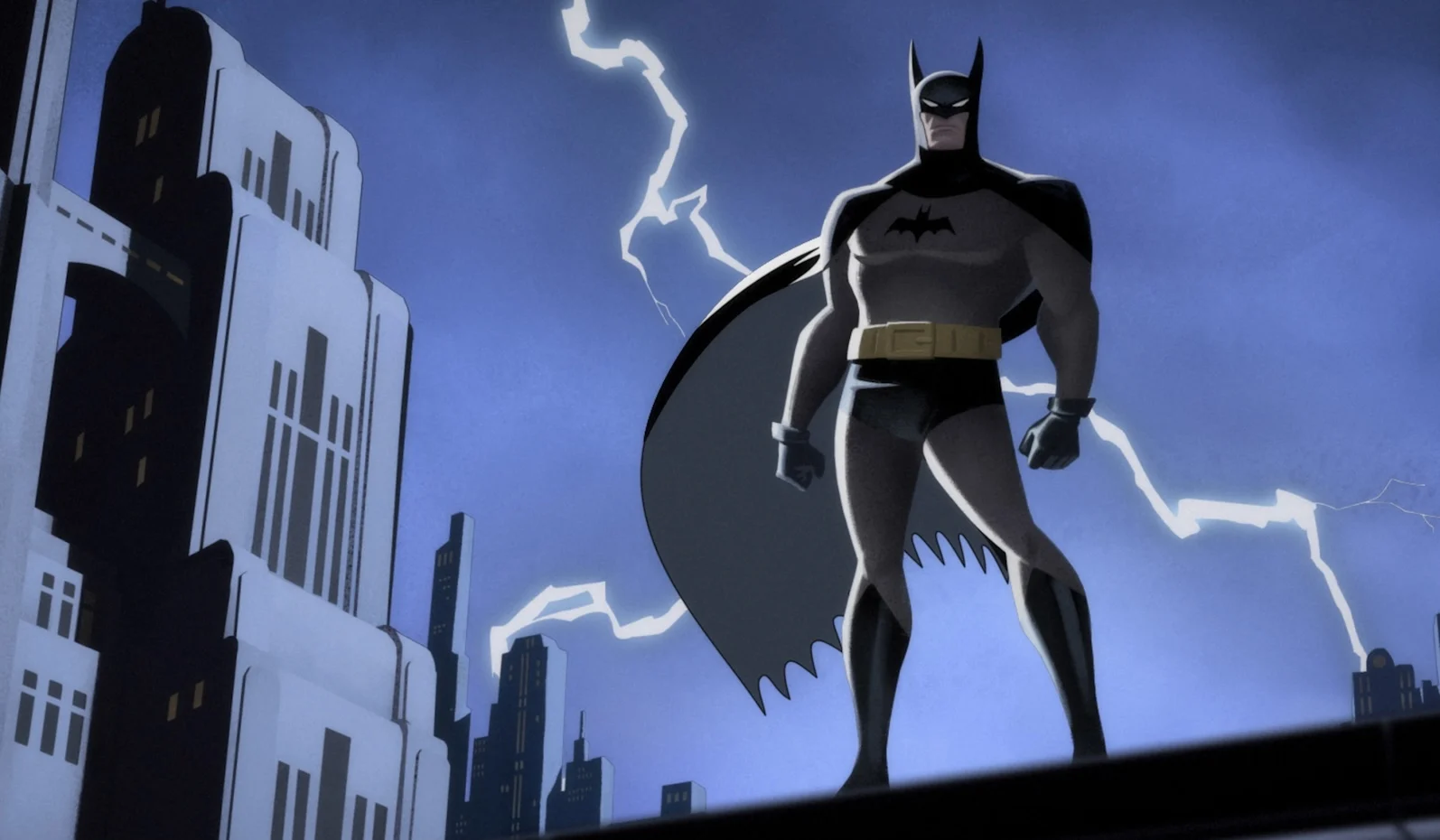

Fans have spent countless hours parsing the visual clues scattered across ‘Batman: Caped Crusader,’ and the answer to when exactly this Gotham City exists has become one of the more satisfying puzzles the animated series offers. There is no title card announcing a specific year, no throwaway line pinning the action to a calendar date, yet the show leaves little doubt about the decade it inhabits.
Created by Bruce Timm with J.J. Abrams and Matt Reeves serving as executive producers, ‘Batman: Caped Crusader’ is set in the 1940s and carries an unabashedly noir vibe throughout its storytelling. That choice was not incidental, and it shapes nearly every frame of the series.
Batman Caped Crusader Setting Rooted in the 1940s
The consensus among outlets covering the series is remarkably consistent. The show centers on the titular vigilante’s crime fighting activities around Gotham City, drawing heavy influence from the detective noir Batman comics of the Golden Age. That Golden Age framing matters, since it ties the show’s aesthetic directly to the earliest published Batman comics rather than any of the character’s later, more technologically advanced eras.
Timm has been candid about why he wanted this specific period. In comments to the Television Academy, he explained that his original ambition for ‘Batman: The Animated Series’ was to commit fully to a 1940s setting rather than the looser, “40s ish” version Tim Burton’s films offered, and that he had always wanted rotary dial phones with no computers anywhere in sight. That idea finally found a home decades later in ‘Caped Crusader.’
The physical evidence supports the dialogue. Modern technology is conspicuously absent from the series, with the desks in the police precinct and Batman’s workstation in the Batcave left largely bare of gadgets. Computers are nowhere to be found, and even typewriters are scarce, while the automobiles on screen maintain design cues that track with the years following World War II.
Costume choices reinforce the same timeline. Batman’s suit in this series skips the bulky gauntlets seen in many modern adaptations, instead using the simple gloves from Bob Kane and Bill Finger’s original design, a detail that signals the production’s commitment to the character’s earliest comic book appearance rather than any hybridized modern look.
Golden Age Comics Influence Shapes Gotham City
The series does not simply borrow a decade for atmosphere, it uses that period to reframe Gotham’s power structures and criminal underworld. The show follows a young Bruce Wayne in the early days of his crusade, with Gotham City struggling against corruption, organized crime, and a growing number of costumed villains. That framing places ‘Caped Crusader’ closer to an origin story than a fully established Batman mythology.
What sets this version apart from a straightforward period piece is its willingness to diverge from historical accuracy in one specific area. The series features strong female characters, LGBTQ representation, and characters of color in prominent roles, positions that would have been largely unavailable to marginalized communities in the actual 1940s. Multiple critics have noted this intentional blending of authentic period design with a more inclusive vision of who holds power in Gotham.
Visually, the production leans hard into the era’s fashion and design language. Automobiles featured throughout the series are based on models from the period, as is the clothing, with men frequently dressed in double breasted suits, fedoras, and suspenders, while women’s wardrobe choices evoke a specific postwar style rather than a vague retro blend. That specificity is part of why so many viewers have zeroed in on the late 1940s rather than the decade’s earlier years.
Do you like 'Caped Crusader's' 1940s aesthetics?
Critics reviewing the first season have generally responded well to this approach. One reviewer described the series as a dark period piece, noting that the show is set in 1940s Gotham and does not hold back, with darker themes and hard hitting storylines helping it succeed.
Bruce Timm Vision Connects to Batman The Animated Series
‘Caped Crusader’ owes an obvious debt to ‘Batman: The Animated Series,’ the 1990s show that Timm also helped shape. There is an undeniable similarity between the two, both coming from Timm, with the earlier series carrying a timeless quality where architecture and fashion hearkened back to the past while still incorporating modern elements like an advanced Batcave computer. ‘Caped Crusader’ shares that visual sensibility but commits more fully to the period rather than blending eras.
That link between the two shows has resonated with longtime fans, many of whom view the newer series as the spiritual successor they had hoped for. The noir tone, paired with a genuine detective focus for Batman rather than pure action spectacle, has become one of the show’s most frequently praised qualities among viewers who grew up on Timm’s earlier work.
Batman Caped Crusader Season 2 Cast and Story Direction
The show returned for a second run on Prime Video, with all ten episodes of season two arriving on July 31, 2026. The new season picks up from the events of the first, which saw Harvey Dent’s death leave Gotham in an even darker place, with the city’s corruption taking a toll on Bruce Wayne as his no kill rule nearly broke under the weight of revenge.
Hamish Linklater returns as the voice of Bruce Wayne and Batman, joined by a returning ensemble that includes Jason Watkins as Alfred Pennyworth and Krystal Joy Brown as Barbara Gordon. Watkins’ Alfred remains the person Bruce relies on for advice and support, both inside Wayne Manor and out in the field, while Brown’s Barbara Gordon continues clashing with her father’s role within a systemically corrupt police department, and her deepening friendship with Batman appears to be laying groundwork for a future as Batgirl.
Season two also introduces Matthew Needham as the Joker, a character whose absence loomed over the first season. The character’s arrival was reportedly the moment Linklater said he was most looking forward to all season, and producers have teased pulling from deeper corners of Batman lore for future antagonists.
As for what comes next, nothing is confirmed. Amazon MGM Studios originally commissioned the series with a two season order, meaning the episodes already released complete that original commitment, and there has been no confirmation that additional episodes are moving into production. Whether Gotham gets a third chapter now rests on viewership and audience engagement in the weeks ahead.
Given how deliberately this Gotham was built around a single, specific era, it feels only right to ask what corner of ‘Batman: Caped Crusader’s’ 1940s world you noticed first, whether it was the cars, the wardrobe, or the total absence of anything resembling a computer.