What Happened to the King Road House From the Idaho Murders Case, Explained

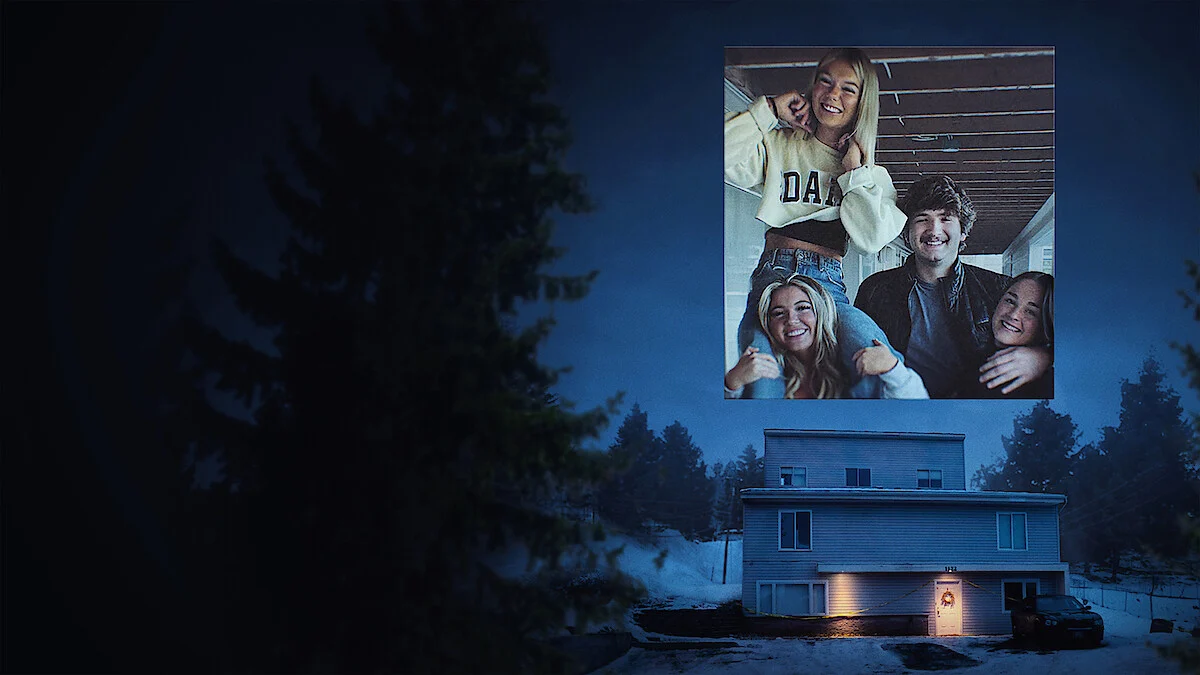

The King Road house in Moscow, Idaho, became one of the most recognizable crime scenes in the country after four University of Idaho students were killed inside it in November 2022. Years later, the property itself no longer exists, but the story of what happened to it, from crime scene to demolition to memorial garden, remains a central part of the case’s aftermath.
With Netflix’s ‘The Idaho Murders: College Nightmare’ bringing renewed attention to the tragedy, many viewers are asking what became of the physical house where the killings occurred and why the university made the choice it did.
The King Road House Where the Idaho Murders Took Place
Ethan Chapin, Xana Kernodle, Madison Mogen and Kaylee Goncalves were murdered in the off campus residence, referred to as the King Road house, on Nov. 13, 2022. The three story house featured six bedrooms and three bathrooms and housed five female students, with a sixth roommate having moved out earlier in the year, as reported by the Idaho Statesman.
The rental home sat near a row of fraternity and sorority houses close to the university’s Greek Life scene. After the killings, the home was boarded up and blocked off by a security fence. A memorial with photos, flowers, candles and teddy bears was placed on a rock wall at the front of the property and remained there for months.
The property’s owner eventually donated the house to the University of Idaho, which planned to erect a memorial garden on campus. That decision set the stage for one of the more contentious chapters in the case, one that unfolded well before Bryan Kohberger’s legal proceedings concluded.
Why the University of Idaho Decided to Demolish the House
The University of Idaho announced that demolition of the King Road house would begin on Dec. 28, and that Kohberger’s defense team would visit the home in the days beforehand to take photographs, measurements and possibly gather drone footage. The decision drew objections from some victims families, who argued the house still held evidentiary value for the ongoing case.
The Goncalves family and Kernodle family issued a final plea the day before demolition began, asking officials to stop the demolition of the King Road home, stating that victims families deserve to be heard. Shanon Gray, an attorney representing Kaylee Goncalves’s family, said the home carried enormous evidentiary value and was among the most important pieces of evidence in the case, and criticized the university for asking families their opinion and then proceeding to ignore it.
Despite the objections, demolition crews used an excavator to tear apart the front of the house at 1122 King Road on the morning of Dec. 28, 2023, and within two hours the home had been leveled. The demolition took roughly three hours to complete, after which the concrete foundation was broken up and multiple dump trucks hauled debris away from the site.
University officials said the demolition was intended to help students move forward and heal, even as some parents wished the school had waited until after Kohberger’s trial concluded. That tension between institutional healing and the families’ pursuit of justice would continue to shape public conversation about the case for years afterward.
How the Vandal Healing Garden and Memorial Replaced the Home
Following the demolition, the university moved forward with plans for a student designed Vandal Healing Garden and Memorial, intended to honor the four students as well as any other Vandals who died while attending the school. University spokesperson Jodi Walker described the garden as a place for Vandals to reflect and connect, noting that having a community space designed by students added depth to the healing process.
The Vandal Healing Garden and Memorial is located on MacLean Field between the College of Education, Health and Human Sciences and the Physical Education Building, offering a peaceful space for reflection that honors all Vandal students who passed away while enrolled at the university. The finished space includes a looping concrete walkway lined with flowers and trees leading to a large steel memorial pavilion, with a beacon that shines a light visible from the main campus walkway at night.
The garden was dedicated on Aug. 21, 2024, and stands as a lasting symbol of hope, care, connection and resilience on campus, made possible through donations and in kind support. On the third anniversary of the killings in November 2025, the university shared photos taken in the garden and committed to keeping the four students forever in their hearts, while Idaho Governor Brad Little publicly acknowledged the enduring impact of the tragedy on the state.
Netflix’s ‘The Idaho Murders: College Nightmare’ Revisits the Case
‘The Idaho Murders: College Nightmare’ arrived on Netflix on July 29, 2026, joining an already crowded field of documentaries covering the case, including Prime Video’s ‘One Night in Idaho: The College Murders’ and Peacock’s ‘The Idaho Student Murders.’ The series is directed by Skye Borgman, known for ‘Unknown Number: The High School Catfish,’ with Joe Berlinger, the Academy Award nominated producer behind ‘Cold Case: Who Killed JonBenét Ramsey,’ serving as executive producer.
The three episode docuseries follows the police investigation largely through bodycam footage, paired with interviews from law enforcement alongside friends and family of the victims. Among the details highlighted in the series is how Moscow Police Chief Anthony Dahlinger contacted school officials to report the four homicides, and how friends of the victims learned of the deaths through a campus wide text alert before receiving official word from police, according to a piece from Rolling Stone.</cite>
Per FlixPatrol, the docuseries became the number one most watched series worldwide, topping charts in the United States, the United Kingdom, Sweden, Germany, Australia and other countries. A review from Ready Steady Cut called the series meticulously arranged and impressively detailed, noting its most striking feature is its abundance of humanity for both the victims and their surviving families, while also observing that Bryan Kohberger pleaded guilty in 2025 and has since sought to reverse that plea, according to Ready Steady Cut.</cite>
The King Road house is gone, replaced now by a garden built for remembrance rather than a structure tied to violence, and Netflix’s latest documentary has brought the case back into the spotlight for a new wave of viewers processing what happened to Madison Mogen, Kaylee Goncalves, Xana Kernodle and Ethan Chapin. What do you make of the university’s decision to tear down the house and build the Vandal Healing Garden in its place, and does ‘The Idaho Murders: College Nightmare’ change how you see that choice?