Every Lantern Corps Oath in DC Comics and What Each One Reveals About Its Wielders

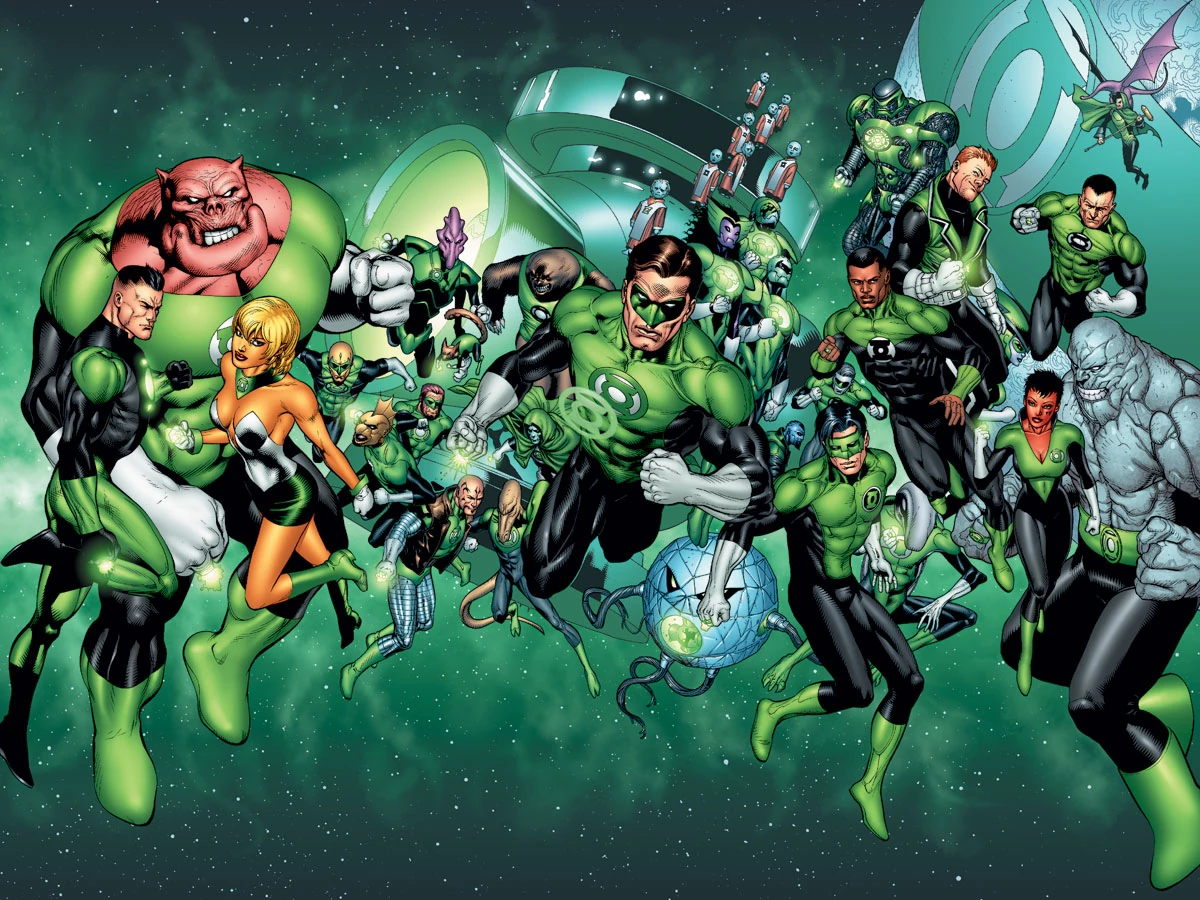

The Green Lantern mythology has grown into one of the most intricate corners of DC Comics lore, built around the idea that raw emotion can be harnessed as literal power. At the center of that system sits the Emotional Electromagnetic Spectrum, a framework that powers the various Lantern Corps through unique oaths recited before a central or personal battery. Each faction recites its own creed when charging its ring, and those words say almost as much about the group’s philosophy as the color of light they wield.
What began as a single pledge for the ‘Green Lantern Corps’ has since multiplied into a dozen distinct oaths spanning heroes, villains, and factions that resist easy categorization. Understanding how each ‘Lantern Corps’ oath ties back to its governing emotion offers a useful map through decades of connected ‘Green Lantern’ storytelling.
The Green Lantern Corps Oath Set the Standard for Every Spectrum That Followed
The original ‘Green Lantern’ oath is built around vigilance and willpower, warning wrongdoers that no evil can escape notice under Green Lantern’s light. The pledge was created by artist Gil Kane and writer John Broome for ‘Showcase’ #22, and it became the primary oath for the guardians of Sector 2814 and the wider universe. Its emphasis on willpower is what allows officers like Hal Jordan and John Stewart to push past fear and keep their rings charged.
Not every ring bearer sticks to the official script. While many members of the Corps eventually adopted the official pledge as a sign of respect, individual Lanterns have historically spoken their own personal oaths, particularly before the modern rebirth of the Corps. That tradition of personalized creeds is part of why the franchise’s oath system has always felt more like a living tradition than a rigid script.
The ‘Green Lantern’ oath’s structure, contrasting the brightest day with the blackest night, became the template every subsequent Corps would riff on or invert. That consistency is a big part of why fans treat the phrase as one of the most recognizable pieces of dialogue in DC Comics.
The Sinestro Corps and Red Lantern Corps Reflect Fear and Rage
The ‘Sinestro Corps’ oath is a direct mirror of the Green Lantern pledge, flipping its conditions to blackest day and brightest night while warning that fear itself will be turned into a weapon. The faction was formed by former Green Lantern Thaal Sinestro during the ‘Sinestro Corps War’ storyline, and its creed asserts Sinestro’s belief that enforced order through fear is the only true path to stability. Members use that fear to manifest their targets’ worst phobias into hard light constructs.
The Red Lantern Corps takes a much more visceral approach, built entirely around grief curdled into rage. The Corps debuted in ‘Green Lantern’ #25 under writer Geoff Johns and was founded by Atrocitus on the prison world of Ysmault, where inductees have their blood replaced with corrosive plasma. The oath’s language leans into that brutality, reducing most speakers to something closer to feral instinct than a formal pledge.
Fans often single out the Red Lanterns as the most theatrical of the bunch. One breakdown of the faction describes their creed as reflecting their anger and murderous nature outright, which lines up with how the group behaves across the comics, frequently prioritizing vengeance over strategy.
Hope and Love Take Shape Through the Blue Lantern and Star Sapphire Oaths
Where the Sinestro and Red Corps trade in fear and fury, the Blue Lantern Corps was designed as a direct counterweight. Established by the exiled Guardians Ganthet and Sayd and introduced during the prelude to ‘Final Crisis’, the Blue Lanterns require a nearby Green Lantern to unlock their full offensive power. Their oath leans on hope as a stabilizing force, one that calms rather than destroys.
That calming function has practical effects within the fiction. Reciting the creed allows Blue Lanterns such as Saint Walker to recharge Green Lantern rings well beyond normal capacity while also restoring dying suns across the galaxy. It is one of the rare oaths in the mythology tied directly to a measurable in-story power boost rather than pure combat utility.
The Star Sapphire Corps occupies the opposite end of tone while sharing the Blue Lanterns’ interest in healing rather than punishment. Governed by the Zamarons and introduced in ‘Green Lantern’ #38, the faction channels the violet light of love and uses its oath to offer sanctuary to those who have suffered heartbreak or isolation. Their rings can trap enemies in crystalline constructs designed to reveal what a person’s heart truly wants, turning rehabilitation into the group’s central weapon.
The Rest of the Emotional Spectrum Covers Greed, Death, Life, and Order
Not every ‘Lantern Corps’ oath is built for grandeur. The Orange Lantern Corps is functionally a solo act, powered almost entirely by the alien Larfleeze, who refuses to share his battery with anyone. His creed is less a formal mantra than a blunt declaration of ownership, and when he kills opponents, his ring absorbs their identities into a spectral army under his total control.
The Indigo Tribe and Black Lantern Corps sit at more somber ends of the spectrum. The Indigo Tribe speaks in a largely untranslated alien tongue and was secretly founded by Abin Sur and Natromo to channel compassion into reformed criminals, while the Black Lantern Corps was unleashed by the cosmic entity Nekron during ‘Blackest Night’ and sustains itself by ripping emotional energy from the living to fuel a resurrection scheme. The White Lantern Corps was built as the answer to that threat, representing life itself and drawing power from the Life Entity that originated on Earth.
More recent additions round out an already crowded roster. The Ultraviolet Lantern Corps, introduced in Scott Snyder’s run on ‘Justice League’, draws on a hidden Invisible Emotional Spectrum fueled by the sentient black sun Umbrax, while the Alpha Lantern Corps functions as internal affairs for the main Green Lantern Corps, with officers surgically altered to enforce law without personal bias. Even the unstable Phantom Ring, worn by ordinary civilians desperate for power, has its own unpolished creed reflecting entitlement rather than heroism.
Taken together, these dozen oaths trace a surprisingly coherent emotional map across one of comics’ longest running franchises, and it is worth asking which one actually sounds like something you would want charging a ring in your own hand.