10 Types of Anime Figures Explained: What’s the Difference?

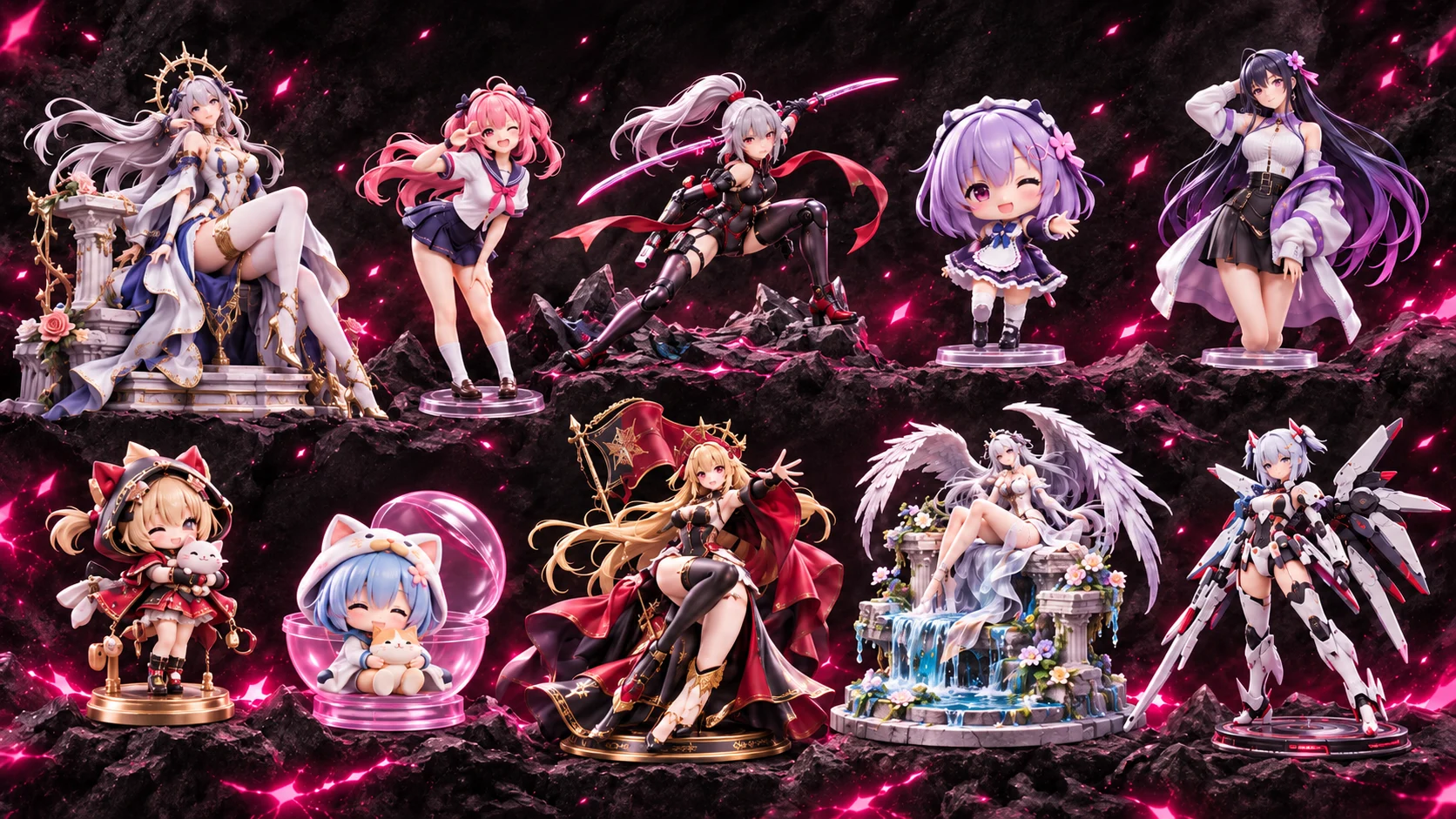
If you’ve ever searched for anime figures, you’ve probably come across terms like scale figures, prize figures, Nendoroids, and figma. But what exactly makes them different, and how do you know which one is right for your collection? With so many anime figure types available, it’s easy to get confused about their sizes, quality, features, and prices.
Some figures are designed for detailed display, while others let you recreate your favorite anime scenes or collect characters on a smaller budget. Knowing what sets them apart can save you from an expensive mistake.
In this guide, we’ll explore 10 popular types of anime figures, compare their features, and help you find collectibles that fit your budget, display space, and collecting style.
Anime Figure Types at a Glance: Quick Comparison
Anime figures come in different sizes, designs, and collecting formats. Some capture a character in a carefully sculpted pose, while others feature movable joints, miniature proportions, or parts you assemble yourself.
Here’s a quick comparison of 10 popular figure types and what makes each one unique.
| Figure Type | Common Size or Identifying Features | Articulation | Best For |
| Scale Figures | Common ratios include 1/4, 1/6, 1/7, and 1/8 | Usually fixed-pose | Detailed character displays |
| Prize Figures | Often approximately 15–25 cm, depending on the release | Usually fixed-pose | Collecting favorite characters on a budget |
| Articulated Action Figures | Many popular lines feature figures around 13–16 cm | Movable joints | Action poses and photography |
| Chibi and Mini Figures | Stylized proportions; standard Nendoroids are around 10 cm | Fixed or adjustable | Cute desk displays and small collections |
| Non-Scale Display Figures | No stated scale; standard POP UP PARADE figures typically stand around 17–18 cm | Usually fixed-pose | Ready-to-display character collections |
| Trading Figures and Blind Boxes | Usually compact; may contain randomized characters | Usually fixed-pose | Completing small character sets |
| Gashapon Capsule Figures | Miniatures originally distributed through capsule machines | Usually fixed-pose | Capsule toy and miniature collectors |
| Ichiban Kuji Lottery Figures | Size depends on the prize; some releases feature larger display figures | Usually fixed-pose | Collectors seeking specific lottery prizes |
| Resin Statues | Range from compact statues to large display pieces | Usually fixed-pose | Elaborate showcase displays |
| Garage Kits and Plastic Model Kits | Size and articulation depend on the kit | Fixed or articulated after assembly | Building, painting, and customization |
Dimensions are approximate examples rather than universal standards. Actual specifications vary by product, and several of these categories can overlap.
An Ichiban Kuji prize, for example, might also be a non-scale display figure. Likewise, a chibi figure can feature interchangeable parts or movable joints. Understanding how these classifications work makes comparing different releases much easier.
How Are Anime Figures Classified? Types vs. Product Lines
If you’ve spent time browsing anime figure stores, you’ve probably seen terms like scale figure, Nendoroid, figma, POP UP PARADE, and PVC figure. They may look like different figure categories, but they describe different aspects of a collectible.
Anime figures can be classified by their design, articulation, scale, materials, product line, or distribution method.
| Classification | What It Describes | Examples |
| Figure Type or Design | The figure’s form, proportions, or display features | Scale Figures, Chibi Figures, Articulated Action Figures |
| Product Line | A named series developed by a manufacturer | Nendoroid, figma, POP UP PARADE, S.H.Figuarts |
| Scale | The figure’s proportional size relative to the character | 1/4, 1/6, 1/7, 1/8 Scale |
| Material | Materials used to manufacture the collectible | PVC, ABS, Resin, Polystone |
| Distribution Method | How the product is originally offered or distributed | Standard Retail, Arcade Prize, Ichiban Kuji Lottery, Gashapon |
Take Nendoroid, for example. It’s a specific product line from Good Smile Company, famous for its chibi-style character designs and interchangeable parts. Chibi, however, describes a broader art style used by many manufacturers.
Similarly, figma and S.H.Figuarts are product lines known for articulated action figures. Both allow collectors to recreate character poses, but their joint systems, accessories, and proportions differ between releases.
Another familiar name is POP UP PARADE, Good Smile Company’s display figure series. Standard releases commonly stand around 17–18 cm tall, although individual products may differ. Unlike figures explicitly labeled 1/7 or 1/8 scale, these releases are generally sold without a declared proportional scale.
Materials tell a different story. A figure described as PVC is identified by part of its construction, while resin and polystone are commonly associated with certain statues and kits.
Distribution also matters. Prize figures are associated with amusement games, while Ichiban Kuji is Bandai Spirits’ character lottery format. These labels describe how products are offered, rather than establishing their material, scale, or sculpting quality.
Once you recognize these distinctions, it’s easier to understand exactly what you’re buying instead of relying on a single product label.
10 Types of Anime Figures Explained: From Scale Figures to Nendoroids
1. Scale Figures
Scale figures are collectibles designed to represent anime characters at a specified proportion of their intended full size, such as 1/4, 1/6, 1/7, or 1/8 scale. Most feature fixed poses, detailed sculpting, and carefully applied paintwork.
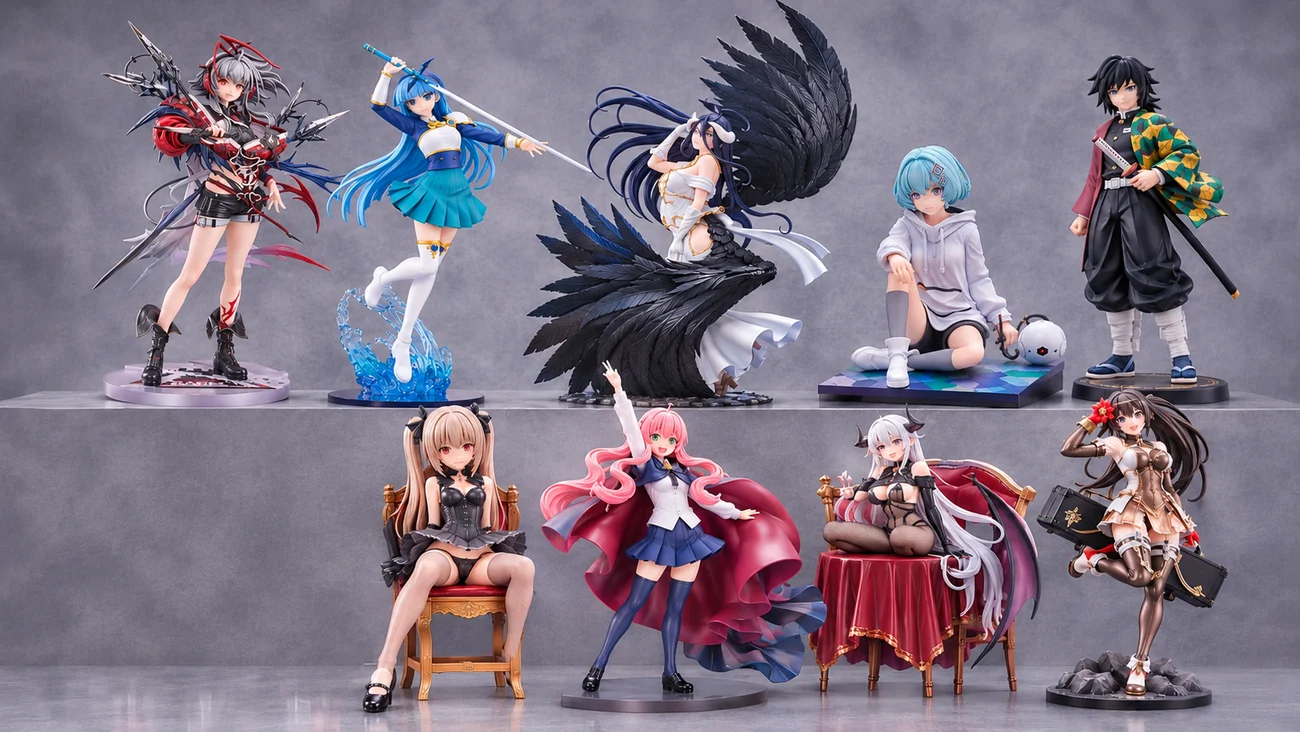
They’re particularly appealing to collectors who want a striking display piece featuring a favorite character.
To understand how figure scales work, consider a character who stands 168 cm tall:
| Scale Ratio | Approximate Standing Height | Height in Inches |
| 1/8 Scale | 21 cm | 8.3 in |
| 1/7 Scale | 24 cm | 9.4 in |
| 1/6 Scale | 28 cm | 11.0 in |
| 1/4 Scale | 42 cm | 16.5 in |
These measurements assume a 168 cm character standing upright. Actual figure height may differ because of the pose, base, hairstyle, accessories, or special effects.
A seated 1/7 scale figure, for instance, might be considerably shorter than the calculated standing height, while extended weapons or flowing hair can take up extra shelf space. Always check the manufacturer’s product dimensions before purchasing.
2. Prize Figures
Prize figures are collectibles originally produced for Japanese amusement games, particularly crane machines. Well-known prize figure brands and manufacturers include Banpresto, Taito, SEGA, and FuRyu.
They’re typically pre-painted, fixed-pose figures featuring recognizable character designs. Many are more affordable than premium scale figures, making them popular among fans who want to collect several characters from the same anime series.
Quality varies between releases, and some prize figures offer surprisingly impressive sculpting and paintwork for their price.
3. Articulated Action Figures
Articulated action figures feature movable joints that let collectors recreate memorable poses, battle scenes, and character expressions.
Popular examples include Max Factory’s figma and Bandai Spirits’ S.H.Figuarts. Depending on the release, these figures may include interchangeable hands, facial expressions, weapons, or effect parts.
They’re especially popular with fans who enjoy figure photography, dynamic displays, and experimenting with different poses. Check the included accessories and joint design carefully, as interchangeable parts from different products aren’t always compatible.
4. Chibi and Mini Figures
Chibi and mini figures feature compact designs, often with oversized heads, simplified proportions, and expressive faces.
Good Smile Company’s Nendoroid series is a familiar example, with standard figures typically standing around 10 cm tall. Many include interchangeable face plates and body parts. Other collections, such as MegaHouse’s Look Up series, offer charming seated displays with more limited movement.
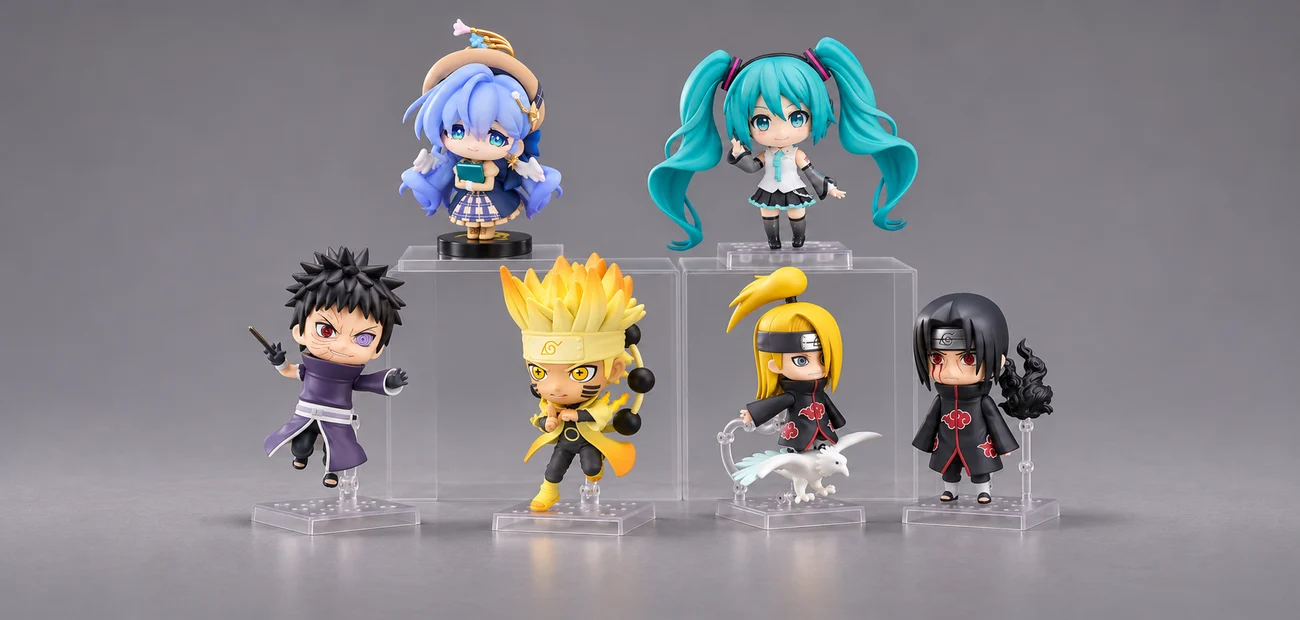
These figures are perfect for fans who love cute character designs or want to brighten a desk, bookshelf, or smaller display space.
5. Non-Scale Display Figures
Non-scale display figures are collectibles that aren’t manufactured to a declared proportional scale. They’re commonly sold as finished, fixed-pose figures in a range of sizes and designs.
Good Smile Company’s POP UP PARADE and Bandai Spirits’ Figuarts ZERO are recognizable examples of display-focused product lines.
They’re a good choice for collectors who want a ready-to-display character figure without necessarily purchasing a larger scale collectible. Check the actual product dimensions, as non-scale figures don’t follow a standardized size.
6. Trading Figures and Blind Boxes
Trading figures are small collectibles commonly released as themed character assortments. Some are sold in blind boxes, meaning you won’t know exactly which character or design you’ve received until opening the package.
A series might feature several standard characters alongside alternate colors, special versions, or secret figures.
They’re especially fun for collectors who enjoy miniature displays, completing character sets, or the surprise of opening mystery collectibles. Before ordering, check whether the listing includes a single random box, a specific character, or an assortment box.
7. Gashapon Capsule Figures
Gashapon figures are miniature collectibles distributed through Japanese capsule toy vending machines. Each capsule contains an item from a particular collection, often selected randomly.
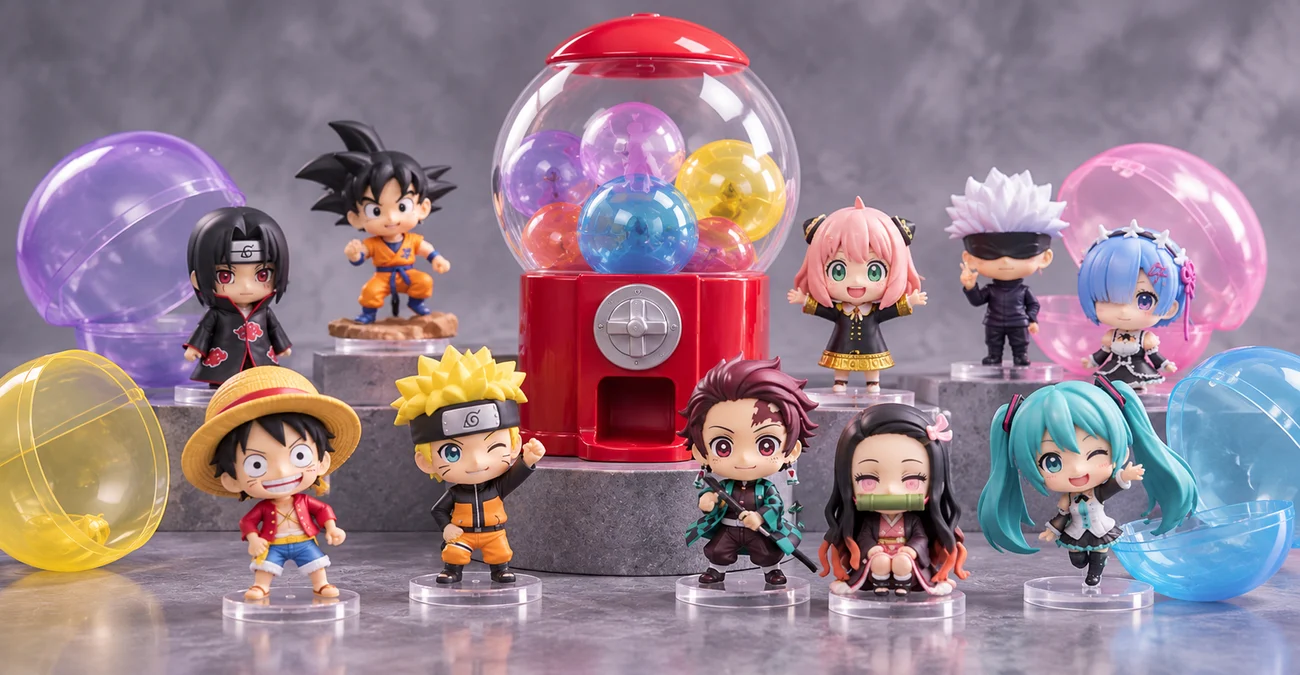
Anime and game characters are popular subjects, with designs ranging from tiny standing figures to miniature scenes and accessories.
Their compact size makes them easy to collect and display alongside larger figures. They’re a fun choice for fans who enjoy capsule toys, miniature merchandise, and collecting complete themed sets.
8. Ichiban Kuji Lottery Figures
Ichiban Kuji figures are collectibles offered through Bandai Spirits’ character lottery system. Participants draw tickets to receive prizes from a particular collection, with different prize tiers offering different items.
Some lotteries feature detailed character figures, including releases from the MASTERLISE line. The Last One Prize is a special reward associated with drawing the final lottery ticket under the promotion’s rules.
These figures appeal to collectors who enjoy exclusive prize designs, especially fans of popular anime franchises. When buying a figure separately, check the exact prize tier and edition to avoid confusing similar releases.
9. Resin Statues
Resin statues are display collectibles made primarily from resin-based materials, sometimes incorporating polystone or other components.
Many feature elaborate sculpting, dramatic scenes, detailed bases, and larger character compositions. They’re generally designed for fixed display rather than frequent posing.
Resin statues can make impressive centerpieces for dedicated collectors, but their weight and fragile components deserve extra attention. Licensing also varies between manufacturers, so check whether a statue is officially authorized before purchasing.
10. Garage Kits and Plastic Model Kits
Garage kits and plastic model kits are collectibles that require assembly rather than arriving as fully finished display figures.
Traditional resin garage kits often need sanding, painting, gluing, and other preparation work. Many modern plastic model kits use snap-fit construction and pre-colored parts, although some collectors still customize them with paint and additional detailing.
These kits are ideal for hobbyists who enjoy building and customizing their favorite characters. Before purchasing, check whether the kit comes painted, partially assembled, or completely unfinished.
Scale Figures vs. Prize Figures: Is the Difference Worth It?
The difference between scale and prize figures often becomes clearer when you look closely at their finishing details. Check the edges where hair meets the face, the seams along clothing, or the shading on folded fabric. Premium scale figures frequently feature more refined paint gradients, cleaner transitions, and intricate sculpting, while prize figures tend to use simpler production techniques. Still, a well-made prize figure can look surprisingly impressive beside a more expensive release.
Is the extra cost worth paying? That depends on the character, the individual figure, and how much you appreciate those finer details. Some collectors are happy with an affordable prize figure that captures their favorite anime moment, while others prefer investing in a carefully sculpted centerpiece. Resale prices also depend on demand, availability, condition, and rereleases, so a higher original price doesn’t guarantee better aftermarket value.
How to Choose the Right Anime Figure: A 3-Step Guide
The right choice comes down to total cost, available space, and how you actually want to interact with the figure.
Step 1 – Set Your Total Budget
- Set a maximum landed cost, not just a product-price limit.
- Add shipping, possible import duties or taxes, and any applicable service fees.
- Compare the original manufacturer price with the current seller’s offer, especially for discontinued or lottery items.
- Decide whether you’d rather buy one premium display piece or several more affordable figures.
Step 2 – Measure Your Display Space
- Measure the usable height, width, and depth of your shelf or cabinet.
- Leave enough room for the complete base and any extended accessories.
- Check package dimensions separately if storage space and shipping volume matter.
- Use the final product measurements supplied by the manufacturer whenever available.
Step 3 – Decide How You Want to Display It
- Recreate action scenes or take photos: Consider articulated action figures.
- Build a fixed centerpiece: Explore scale figures or display statues.
- Collect compact, expressive characters: Consider chibi figures such as Nendoroids.
- Enjoy assembling and painting: Look at model kits and garage kits.
- Start with a ready-made collection on a smaller budget: Compare prize figures and standard non-scale display figures.
Which anime figure is best for beginners? Pre-painted prize figures and standard non-scale display figures are often straightforward starting points because they usually arrive ready to display. Nendoroids can also suit beginners who enjoy swapping expressions and accessories, provided they are comfortable handling small parts.
For collectors ready to explore different figure styles, Japan Figure offers a selection of Japanese anime figures, including scale figures, action figures, and character collectibles from popular series. Comparing actual releases can help you understand how size, design, and articulation differ between figure types.
Frequently Asked Questions About Anime Figures
Why Can a 1/7 Scale Figure Cost More Than a 1/4 Scale Figure?
A 1/7 scale figure can cost more than a 1/4 scale figure because pricing depends on sculpting complexity, paintwork, materials, licensing, and production costs, not just size. Limited production runs, intricate accessories, and elaborate bases can also increase the price of smaller figures.
Can Keeping Anime Figures Sealed in Their Boxes Cause Damage?
Yes, keeping anime figures sealed in their boxes for extended periods can contribute to problems such as sticky surfaces caused by plasticizer migration, particularly under poor storage conditions. Heat, humidity, and limited ventilation can increase deterioration risks, so store figures in a cool, dry place away from direct sunlight and follow the manufacturer’s care recommendations.
Why Can Large Anime Figures Cost More to Ship Internationally?
Large anime figures often cost more to ship because carriers may calculate shipping charges using dimensional (volumetric) weight rather than actual weight. Oversized packaging, protective materials, and fragile components can increase the shipping volume, making international delivery more expensive even when the figure itself is relatively lightweight.
Anime figures come in many forms, from detailed scale figures and affordable prize collectibles to poseable action figures and miniature character displays. Each type offers something different, and understanding their features makes it easier to recognize what suits your collection. Before choosing your next figure, consider the character you love, the space you have, and the kind of display you want to create. Whether it’s a striking centerpiece or a small figure that brightens your desk, collecting should be about enjoying the characters and stories that matter to you.