‘Avatar Aang: The Last Airbender’ Proves Style Can Only Carry a Legacy Sequel So Far

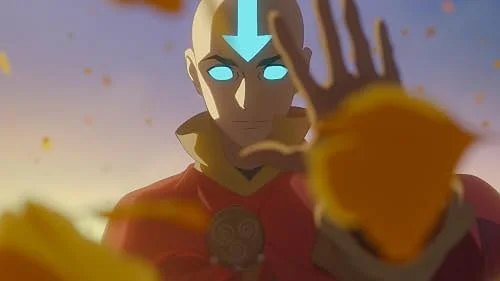

Nearly two decades after the original series ended, ‘Avatar Aang: The Last Airbender’ has finally arrived, and it lands with a complicated mix of visual ambition and narrative shortcuts. The film picks up the story of Team Avatar as adults, a premise that alone was enough to generate significant anticipation among longtime fans of the franchise.
What audiences ultimately received is a movie defined by contrasts, one that critics have described as visually stunning yet dramatically uneven. That tension between craft and storytelling sits at the center of nearly every review published since the film’s debut.
A New Chapter For Team Avatar
The story is set thirteen years after the events of Sozin’s Comet, when a then twelve year old Aang and his friends defeated Fire Lord Ozai and ended the Hundred Year War. The film picks up in an era of peace, operating out of a city where Earth, Fire, and Water benders live together in the multicultural Republic City.
The central plot follows Aang as he learns of an ancient power that could help save his culture from extinction, prompting a global search alongside his friends before that power falls into the wrong hands. Team Avatar meets Tagah, a surviving airbender, and joins him on a mission to find an ancient airbending staff connected to restoring the Air Nomads.
The project carries significant weight for Paramount and Nickelodeon beyond its own story. It marks the first major release from Avatar Studios, the division Nickelodeon created in 2021 to expand the world of ‘Avatar: The Last Airbender’ and ‘The Legend of Korra.’
Behind the camera, the film was shaped by voices deeply familiar with the franchise. Lauren Montgomery directs the film, working from a screenplay by Tim Hedrick and Christopher Yost, based on a story developed by Bryan Konietzko, Michael Dante DiMartino, Hedrick, and Kenneth Lin.
The Voice Cast Brings Old Friends To Life
Reactions to the voice cast have been notably split across reviews. Eric Nam voices Aang in the film, joining an aged up main cast whose new design has drawn comparisons to shows like ‘Castlevania’ and ‘The Legend of Vox Machina.’
Several critics singled out one performance as the clear standout of the ensemble. Román Zaragoza as Sokka delivers the strongest voice performance in the film, sounding the most characteristic and lively of the returning cast. Other actors fared less consistently, with some reviewers noting that supporting characters were given comparatively little to work with in terms of dialogue.
The wider cast draws from a mix of returning franchise voices and notable newcomers. The ensemble includes Eric Nam, Dave Bautista, Jessica Matten, Roman Zaragoza, Steven Yeun, Dionne Quan, Freida Pinto, Ke Huy Quan, Taika Waititi, Geraldine Viswanathan, Ronny Chieng, and Ken Jeong. Dave Bautista voices Tagah, described as a mighty, tough looking airbender, while Freida Pinto voices a past Avatar named Sonom.
Not every reviewer was won over by the new voices. One critic writing for MiscRave felt the recasting created a persistent disconnect throughout the film, noting that the new voice actors do an acceptable job without ever feeling great, which becomes distracting at times, and that the absence of the original series cast was disappointing.
Critics Weigh In On The Sequel
Early reviews of ‘Avatar Aang: The Last Airbender’ have landed on a broadly positive but far from unanimous consensus. The film currently sits at 91 percent on the Tomatometer based on early critic reviews, reflecting strong overall praise even as some reviewers highlighted recurring weaknesses.
Do you think 'Avatar Aang: The Last Airbender' lives up to the original?
Praise for the film has centered heavily on its craftsmanship. One reviewer for But Why Tho argued that between its gorgeous score, dynamic direction that maintains the tactility of the world, and art design that draws from the past while establishing a new tone, the film is largely a triumph.
Not every outlet was as enthusiastic. Frank Scheck’s review for The Hollywood Reporter took a more critical stance, arguing the film explores serious ideas but often rushes through them without fully developing its themes, a sentiment echoed in the outlet’s own official verdict that the movie offers impressive action but not much else.
ScreenRant’s Molly Freeman landed somewhere in the middle, writing that while there are glimmers of what made the original series fun to watch, the film is a merely middling return to the universe, with a blend of new and old that is frankly jarring to watch. IndieWire was harsher still, arguing that the movie’s status as a bridge between two completed shows leaves it with limited real emotional consequence for its characters, feeling at times like a season of television stuffed into an eighty minute runtime, without space to give its conflict real gravitas.
A Troubled Path To Release
The road to release for ‘Avatar Aang: The Last Airbender’ was unusually turbulent even by blockbuster standards. The film was originally set to release on October 10, 2025, marking the 20th anniversary of the original series, before being pushed to January 20, 2026 after being revealed at CinemaCon. It was later delayed again to October 9, 2026, a full year after its initial target date.
Complicating matters further, the film became the subject of a major security incident months before release. An extremely widespread online leak of the entire film occurred in April 2026, followed by a canceled wide theatrical release that shifted the movie to a streaming only plan. Paramount executives investigated the leak and determined it was not caused by a vulnerable internal system, with a man in Singapore eventually arrested in connection to the incident.
Paramount ultimately reversed course once more ahead of launch. The studio moved the film to an earlier release, debuting on Paramount+ on July 25 after originally being scheduled around January and October 2026 dates. The film also received a limited theatrical run to qualify for Oscar consideration, running 99 minutes and carrying a PG rating.
Despite the chaos surrounding its rollout, the film represents a significant creative swing for a franchise built on a devoted fan base. The cinematography and camera work move fluidly between quiet character moments and major action set pieces, tracking flight sequences involving Appa, Zuko’s airship, and Aang himself sailing through the clouds.
Whether ‘Avatar Aang: The Last Airbender’ ultimately satisfies longtime fans of the original series or leaves them wanting a deeper continuation of the story likely depends on what each viewer values most, spectacle or substance. Now that Team Avatar’s grown up adventure has finally reached audiences after a year of delays and a major leak, how does it stack up against your own memories of Aang, Sokka, Katara, and the rest of the Gaang.