Christopher Nolan Finally Explains Why ‘The Odyssey’ Couldn’t Cross the Three Hour Mark

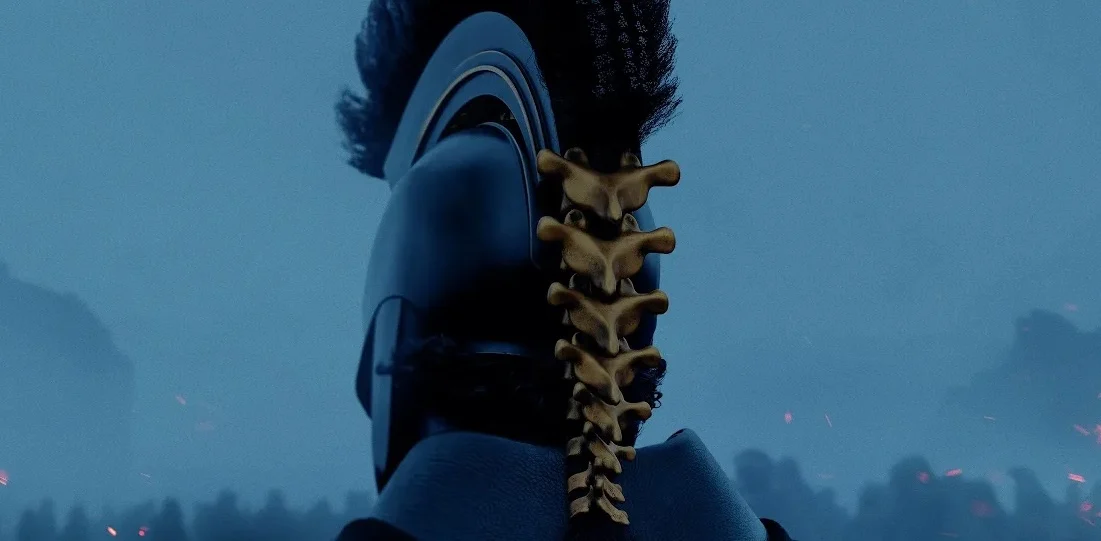

Christopher Nolan has spent his career pushing IMAX further than anyone thought possible, and ‘The Odyssey’ was supposed to be the biggest swing yet. The film marks the first time a director has shot an entire feature using IMAX cameras, and expectations for scale matched the ambition of adapting Homer’s sprawling epic poem. With a cast led by Matt Damon as Odysseus alongside names like Tom Holland, Anne Hathaway, and Robert Pattinson, fans assumed this would be Nolan’s longest and most immersive film yet.
That assumption only grew once people remembered that ‘Oppenheimer’ had already pushed past the three hour mark, becoming the only film in Nolan’s filmography to do so. Given the mythological scope of ‘The Odyssey,’ many expected the director to top himself again, especially since he reportedly shot an almost unbelievable amount of footage during production.
As it turns out, Nolan actually wanted to go longer, but ran into a wall he could not talk his way around. IMAX 70mm projection generally tops out around the 165 minute mark, and Nolan managed to reach that limit, with the possibility of adding another seven minutes of non-IMAX post-film credits. The final runtime of ‘The Odyssey’ landed at two hours and 52 minutes, just under that ceiling.
The reason for the restriction comes down to hardware rather than creative choice. The platter that physically holds the IMAX film print can only fit so many reels, meaning longer films would require an entirely new projection system, and retrofitting that equipment across every IMAX cinema in the world would be extremely costly and time consuming. There are only around 1,800 IMAX cinemas globally, with just 30 offering the true 70mm ratio, so any change to the format’s limitations would ripple across the entire exhibition chain.
Compounding the difficulty was just how much material Nolan actually had to work with. He shot roughly two million feet of IMAX film for the project, equivalent to around 90 hours of exposed footage once every take is accounted for. Trimming that mountain of footage down to a single coherent story fell largely to editor Jennifer Lame, and Nolan has described the process as genuinely ruthless, with any scene that didn’t serve the narrative getting cut regardless of cost or effort.
By comparison, Nolan has only crossed the three hour mark once in his career, with ‘Oppenheimer,’ while his next longest films sit at two hours and 49 minutes for ‘Interstellar’ and two hours and 44 minutes for ‘The Dark Knight Rises.’ Notably, ‘Oppenheimer’ reached its full three hour runtime only through specialized projection solutions, and that film was shot about 75 percent with IMAX cameras rather than entirely, which is part of why ‘The Odyssey’ faced a stricter ceiling.
There is also an emotional layer behind the technical story. Nolan dedicated ‘The Odyssey’ to David Keighley, IMAX’s first chief quality officer and his mentor of more than two decades, who died after a battle with cancer last year, shortly after finishing his work on the film. The newest IMAX camera used to shoot the movie has since been named the Keighley in his honor, tying the format’s physical limitations directly to the man who spent his life pushing against them alongside Nolan.
Are you watching 'The Odyssey' in IMAX 70mm?
With ‘The Odyssey’ finally in theaters, would you have wanted Nolan to fight harder for a longer cut, or does two hours and 52 minutes feel like exactly the right length for Homer’s epic?