

Terraria: Corruption Cannot Spread Through Walls & Here’s Why



By now, you’re probably aware of the existence of two evil biomes in Terraria. Corruption and Crimson. We’ve had a guide in the past that covered all the differences between the two biomes as well as which biome is better. One thing we haven’t analyzed as deeply are the mechanics that allow the two biomes to spread in your world so today’s guide is dedicated to those mechanics. Let’s start with the basics and answer one burning question that a lot of Terraria players have: can corruption spread through walls in Terraria?
Corruption is one of the two evil biomes
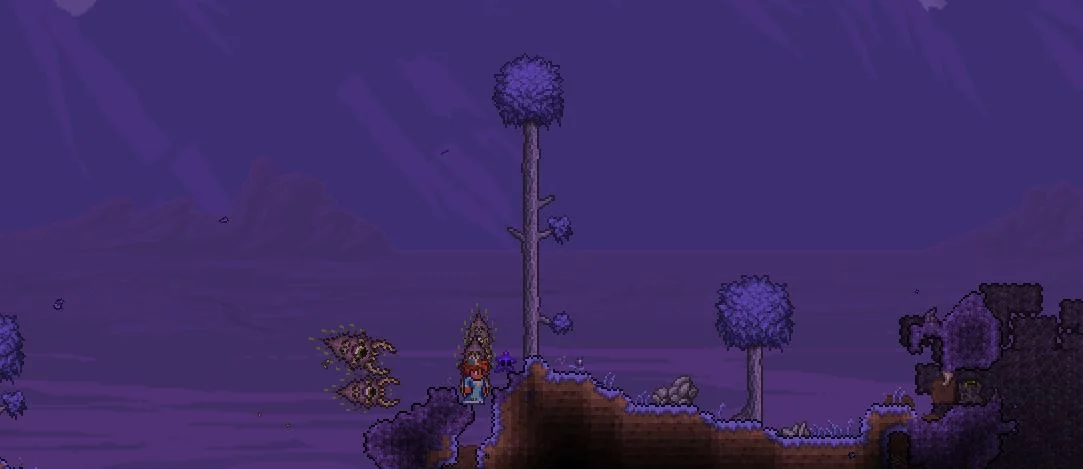
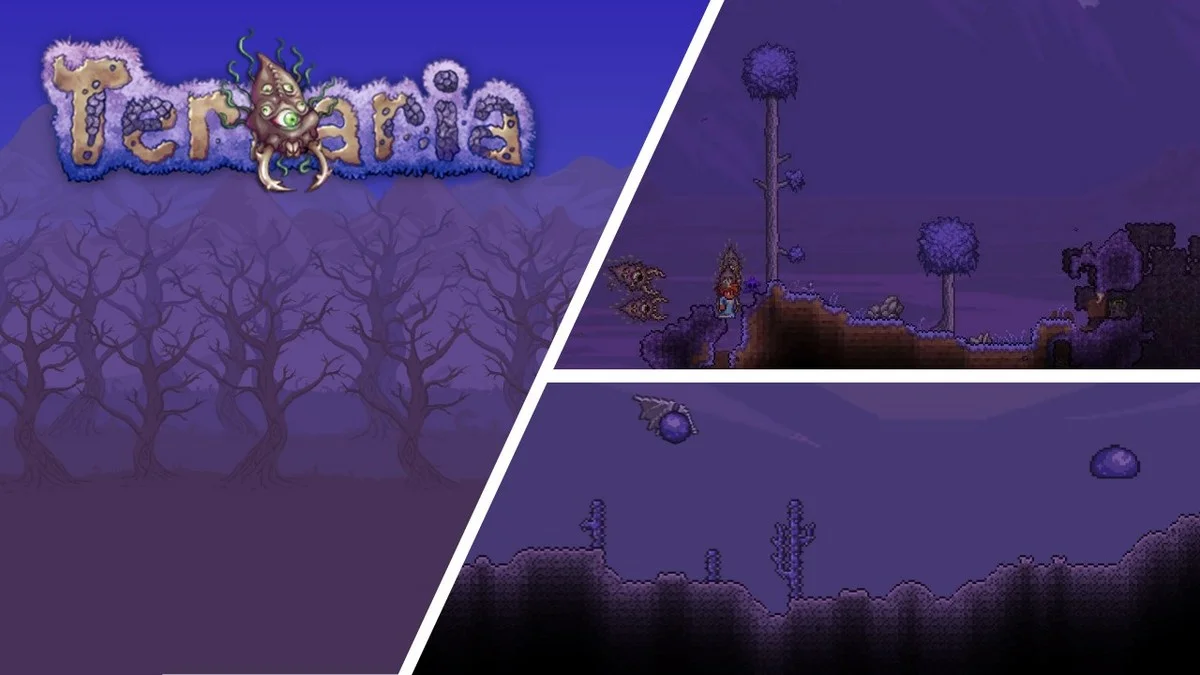
Corruption is one of the two evil biomes in Terraria. It’s marked by purple color themes and creepy ominous music and generally has a haunting graveyard atmosphere. Corruption is easier of the two biomes and as a consequence, its materials aren’t worth as much. Corruption also spawns enemies that are easier to handle, even though keep in mind that both biomes are overall balanced and useful in their own ways.
How does Corruption spread in Terraria?
Corruption spreads by “infecting” nearby blocks. When at least 300 blocks have been infected by corruption, the whole general area will take over the biome’s main themes, music, and watercolor. Three distinctive features of Corruption biomes, chasms, Demon Altars, and Shadow Orbs, will not appear in your “infected” biome, as those creatures spawn only on world generation. Even if Corruption takes over your entire world, the amount of Demon Altars, Shadow Orbs, and chasms remains the same.

Defeating the Wall of Flesh will speed up the spread of Corruption, while defeating Planter will slow it down by a hefty 50%.
Corruption is able to spread to deserts, turning them into Corrupted deserts, as well as underground. Corruption spread in the underground produces additional types of enemies.
What blocks can spread Corruption in Terraria?
Almost every naturally generated block can spread corruption Terraria.
That includes grass, mud, stone, and sand. There is a difference if you’re playing in Hardmode and Pre-hardmode as well. In Hardmode, most naturally generated blocks can spread Corruption, while in Pre-Hardmode, the spread is done via grass and bushes only.
Each naturally generated block that gets infected has its own Corrupted equivalent:
- Grass becomes Corrupted grass
- The stone block becomes an Ebonstone block
- Ice Block becomes purple ice block
- The sand block becomes an Ebonsand block
- The hardened sand block becomes hardened Ebonsand block
- Sandstone block becomes Ebonsandstone block
- Jungle grass can become corrupt grass as well by converting underlying mud blocks
- Jungle thorny bushes become corrupted thorny bushes
The same goes for Crimson and Hallowed biomes, as well the mechanics of spreading are pretty much identical.
Corruption can spread even if there are “non-corruptible” objects in the way due to its capacity to infect naturally generated blocks in a three-tile radius.
Can walls spread Corruption?
Walls cannot spread Corruption, but they can be infected by Corruption. Corruption can only be spread by foreground objects and other blocks. We’ve already mentioned that almost any naturally generated block has the capacity to spread corruption, it’s true and walls can get infected as well but due to their nature of being background objects, walls do not have the ability to spread to other blocks. Walls can, however, infect other walls with corruption.
When corruption spreads to certain walls, they will get their corrupted equivalent:
- Grass, flower, and jungle walls can become corrupt grass walls
- Stone walls will become Ebonstone walls
- The hardened sand wall will become Hardende ebonsand wall
- Sandstone wall becomes Ebonsandstone wall
How far can Corruption spread?
Corruption can spread 6 tiles away in all directions through growing and 3 blocks away through infecting blocks. All evil biomes spread faster after the Wall of Flesh has been defeated and slower by 50 % after Plantera has been defeated.
How to stop Corruption from spreading?
Corruption can be stopped from spreading by placing non-corruptible in your world. To completely stop the spreading of evil biomes, you will have to dig deep since Corruption can spread below as well.
Some examples of non-corruptible blocks are wood, hay, dungeon bricks, etc. Sunflowers can also be used to slow the spread of Corruption, but only on the surface, as they don’t affect underground blocks at all.
Chlorophyte Ore and Chlorophyte Bricks offer some limited protection to your jungle as they can slow the spread of Corruption (and crimson). Chlorophyte ore has the unique ability to convert corrupted blocks back to normal jungle blocks.

Hallow infection can be used to control the spread of Corruption through the jungle as well since Corruption cannot spread through Hallow and Hallow does not have the ability to spread to the jungle.
By far, the easiest way to get rid of the evil biomes is to use The Clentaminator. By purchasing the green solution from Steampunker you have the ability to quickly and efficiently purge your world of any corrupted biomes. Clentaminator has the ability to spread normal biomes as well as long as the right solution has been purchased.
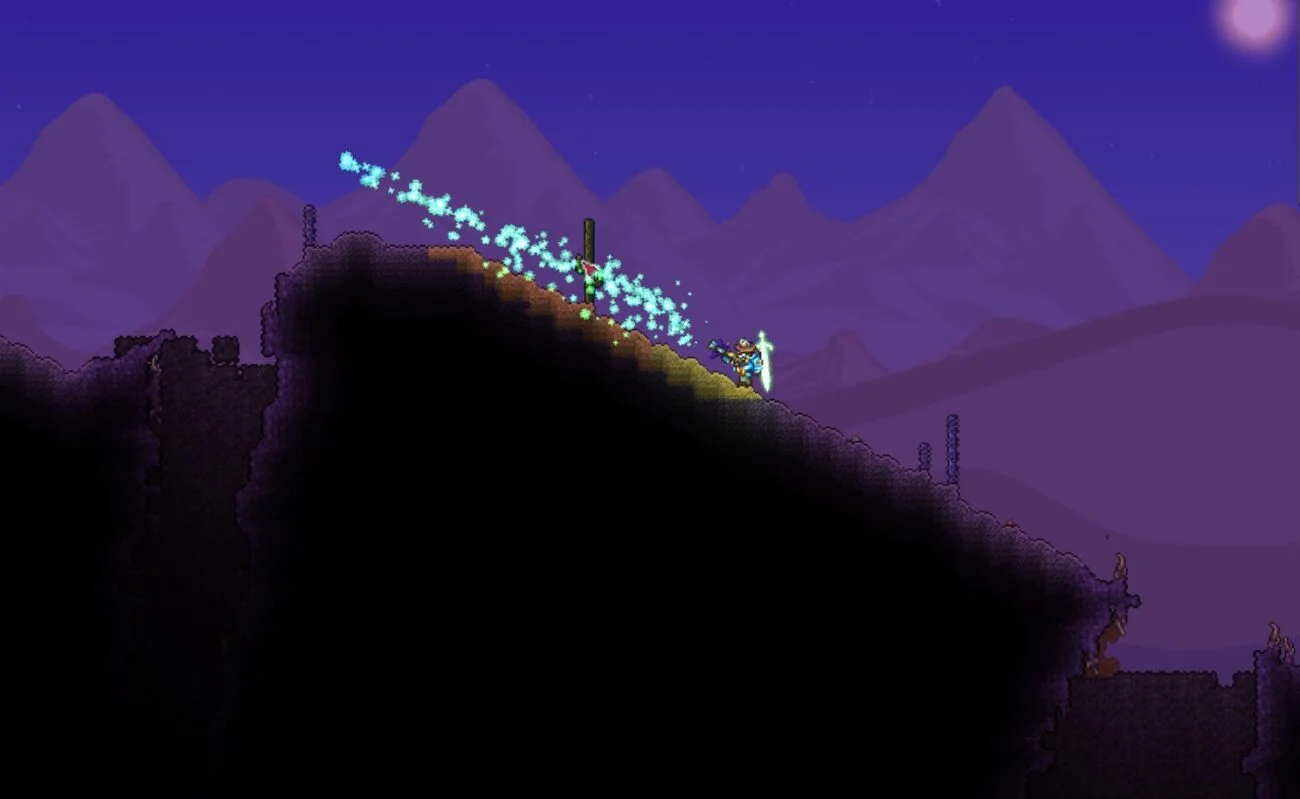
And that’s pretty much it, now you know exactly how Corruption spreads. While Corruption cannot technically spread through walls, it can spread through most other naturally generated blocks. Corruption spread can be slowed down or stopped altogether if you employ various tactics, but the most efficient way is to generally use the Clentaminator, which is available to you once you unlock Hardmode.
Keep in mind that all of these mechanics are easily applicable to Crimson and Hallow as well and can be stopped or slowed down through similar means. Have something to add? Let us know in the comments below!