Daemon Targaryen’s Role in the First Battle of Tumbleton Marks a Major Departure From the Book

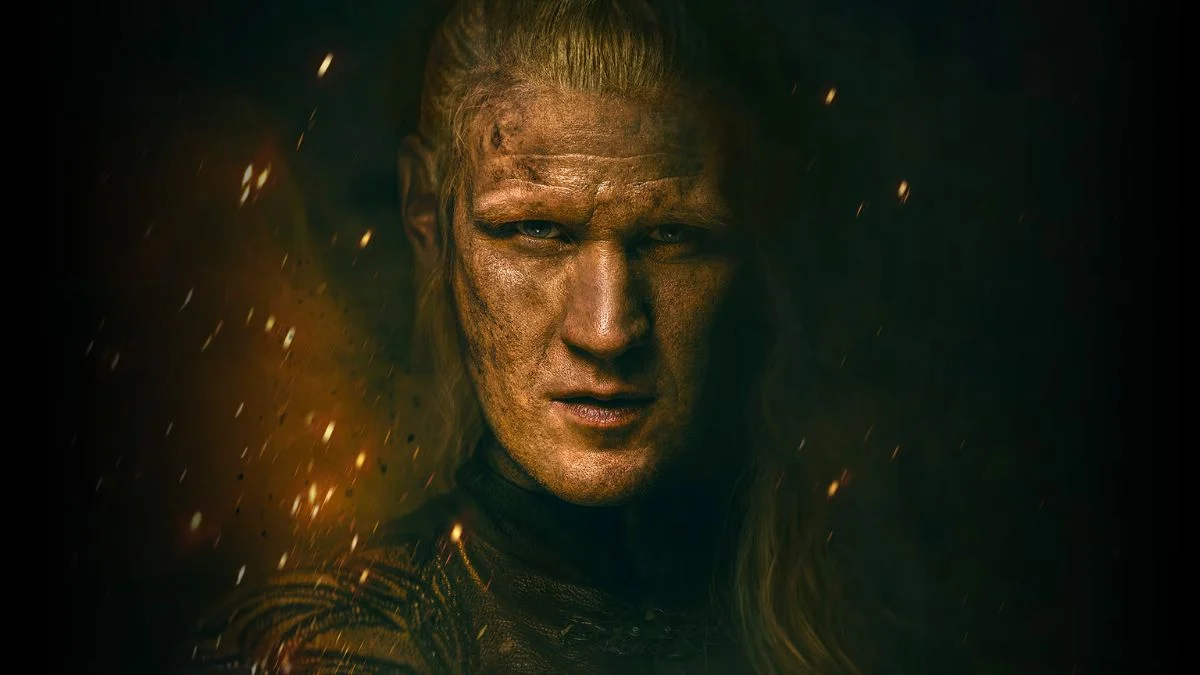

‘House of the Dragon’ closed its third season with the long anticipated First Battle of Tumbleton, a market town clash between the Blacks and the Greens that has been building for most of the season. The finale, titled Episode 8, centers on the Battle of Tumbleton, where Daemon and Roddy the Ruin finally confront the scheming Ormund Hightower and the newly knighted Daeron the Daring. Fans watching Matt Smith’s Daemon fight his way through the burning streets have been asking a simple question, whether his presence there actually lines up with George R.R. Martin’s source material.
The answer turns out to be more complicated than a simple yes or no. Daemon’s involvement in this version of the battle is one of the show’s most significant creative liberties, and understanding why requires looking at what actually happens in ‘Fire & Blood’ compared to what unfolds on screen in ‘House of the Dragon’.
Daemon’s Absence From the Book’s First Battle of Tumbleton
According to multiple sources covering the source material, Daemon simply is not part of this battle in Martin’s book. One of the most interesting changes in the show is that Daemon is never part of the First Battle of Tumbleton in the book. At that point in the story, he is at Maidenpool searching for Vhagar with Nettles, a character the show replaces with Rhaena Targaryen.
This is echoed by other outlets that have compared the two versions directly. The First Battle of Tumbleton in ‘Fire & Blood’ did not involve Daemon Targaryen and Caraxes, Corlys Velaryon, or Gwayne Hightower, all of whom played major roles in the show’s version. That is a notable list of characters the show inserted into a fight that, on the page, unfolds without them.
In the book, the battle instead hinges almost entirely on Ormund Hightower’s advance and the eventual betrayal of two dragonseeds. Lord Ormund Hightower led a Green army from the Reach toward King’s Landing, with Tumbleton standing as the last Black stronghold between the capital and the advancing force. To defend the town, Rhaenyra sent the dragonseeds Ser Ulf White and Ser Hugh Hammer with their dragons Silverwing and Vermithor.
How ‘House of the Dragon’ Rewrote the Battle for Daemon
The show’s version puts Daemon at the center of the action rather than off searching for a missing dragon. In the show, he leads Rhaenyra’s army with Caraxes, composed mostly of Northern and Riverlands men. That shift changes the entire shape of the battle, since Daemon becomes a ground level combatant rather than a distant subplot.
The consequences of that change play out directly in the finale. The leader of the Winter Wolves, Lord Roderick Dustin, fights Ormund, and both perish in dragonfire, while Daemon takes on Jon Roxton, Ormund’s brutal second in command, and both survive that encounter. Other coverage of the episode confirms just how close that fight comes to ending differently for Daemon.
Reports on the finale describe him as nearly overwhelmed in that confrontation. Daemon himself is very nearly slain while battling his way through the city, outmatched by the heavily armored Ser Jon Roxton, Ormund’s right hand man. That near miss underscores how much heavier the personal stakes are in the show’s retelling compared to the more detached, dragon focused version in the book.
The Book’s Original Version of the First Battle of Tumbleton
Without Daemon in the mix, the book’s battle is driven almost entirely by numbers and dragons. The battle is fought between the Blacks, holding Tumbleton at the time, and the Greens, who fought for Alicent Hightower and King Aegon II, with Rhaenyra loyalists from nearby towns in the Reach coming to her aid, including the Northern army known as the Winter Wolves, though the Greens still vastly outnumbered the Blacks. Both sides also brought dragons into the fight, which set up the battle’s most infamous turn.
Did you like how the show changed the Battle of Tumbleton?
That turn comes from the pair nicknamed the Two Betrayers. Once Lord Ormund fell at the hands of Lord Roderick Dustin, it seemed the First Battle of Tumbleton had finally come to a close, but Hugh and Ulf turned their dragons on the town, wreaking fiery havoc, and thanks to that betrayal the Greens won the battle, even beheading many of Rhaenyra’s troops who had surrendered. The aftermath was just as brutal as the fighting itself.
The book is explicit about the scale of the destruction that followed. Buildings throughout Tumbleton burned to ash, and thousands burned to death or drowned trying to cross the Mander. That level of devastation is part of why the battle remains one of the most talked about moments in the entire Dance of the Dragons storyline.
What Daemon’s Expanded Role Means for the Dance of the Dragons
Even with Daemon added to the battle itself, most coverage agrees his ultimate fate is likely to track the book fairly closely. In ‘Fire & Blood’, Daemon is not at the First Battle of Tumbleton, but the show has taken many creative liberties with the source material, and his eventual death is not expected to be changed all that much from the book, since it is too iconic an event in the Dance of the Dragons. Both Daemon and his nephew Aemond Targaryen are ultimately killed in a separate event known as the Battle Above the Gods Eye.
That distinction matters for viewers trying to track where the show is headed next. Daemon surviving Tumbleton, even after nearly losing to Jon Roxton, sets up his eventual confrontation with Aemond rather than ending his arc prematurely in the market town.
The broader pattern across Season 3 has been to give Daemon a far more hands on role in battles the book keeps him away from. Daemon’s Riverlands host is already marching toward King’s Landing and can be redirected toward the Reach, giving the ground assault on Tumbleton more precision than a purely dragon driven fight. That approach has consistently tied his storyline more tightly to the war’s major set pieces than ‘Fire & Blood’ ever did.
For a character who spends much of the book on the periphery of Tumbleton’s fall, ‘House of the Dragon’ has clearly decided Daemon belongs in the thick of it, and it is worth asking whether that change makes his arc stronger or simply louder heading into whatever comes next for Rhaenyra’s war.