Hal Jordan’s Fall From Grace: How Coast City’s Destruction Turned DC’s Greatest Green Lantern Into Parallax

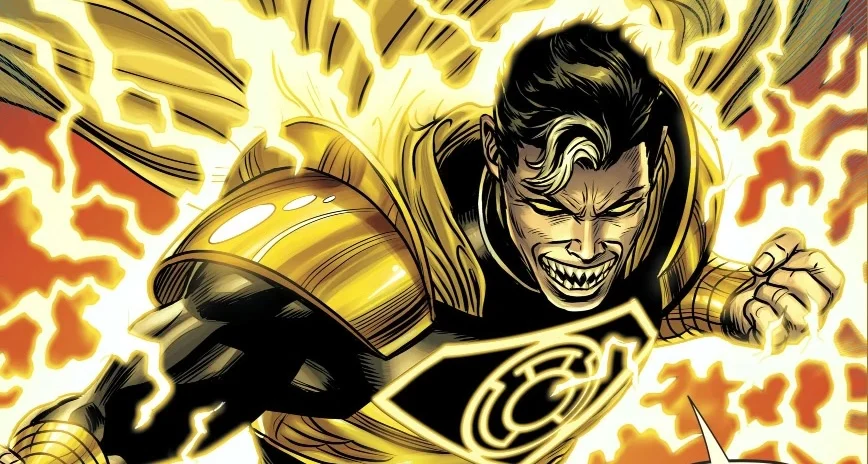

Few transformations in DC Comics history carry the weight of Hal Jordan’s descent into villainy. The story of how a founding member of the Justice League became one of the universe’s most feared destroyers remains one of the publisher’s most debated turning points.
Understanding this arc means going back to a single act of devastation that unraveled everything Hal Jordan had built as a hero. What followed was not a simple heel turn but a years long saga that reshaped the entire ‘Green Lantern’ mythology.
The Destruction of Coast City
Hal Jordan’s fall began after Superman was killed by Doomsday in the early nineties, when the villainous Cyborg Superman teamed up with Mongul to destroy Coast City, Hal’s hometown. The loss came after years of Hal shining as one of the Corps’ most powerful members, having already endured several traumatic events across his career. The attack left the city a barren wasteland, robbing Hal of his entire life in one stroke.
Part of what makes this moment so tragic is that the event which ruined Hal’s life was set in motion by one of Superman’s enemies rather than his own. That detail added a layer of senselessness to a tragedy that already had none. The grief that followed set the stage for everything that came next.
Hal was left wracked with survivor’s guilt, with the unhappy ghosts of his past swirling in his head. That psychological unraveling became the foundation for the character’s undoing, and writers would spend years exploring the fallout.
Emerald Twilight and the Rampage on Oa
The most notorious chapter of this saga was ‘Emerald Twilight,’ a three issue arc that ran through ‘Green Lantern’ volume three, issues 48 through 50, published between January and March of 1994 by writer Ron Marz, with art from Bill Willingham, Fred Haynes and Darryl Banks. Out of sheer grief and hopelessness, Hal attempted to recreate all of Coast City with his Green Lantern ring, an effort that seemingly succeeded, going so far as to manifest the people who had died there.
Hal’s actions violated the rules of the Green Lantern Corps, leading the Guardians of the Universe to erase his creation entirely. Enraged, Hal siphoned energy from a holographic Guardian projection and set out for the planet Oa, intending to use the Central Power Battery to permanently rebuild Coast City.
What followed was a rampage in which Hal killed Lantern after Lantern, taking their rings as he went, eventually overloading the Central Power Battery and destroying all of Oa to claim its power for himself. The destruction of the Green Lantern Corps left Ganthet as the last surviving Guardian of the Universe, and it was in the aftermath of this rampage that Hal Jordan fully became Parallax.
The story marked the complete demolition of the Green Lantern Corps, wiping out much of Hal’s legacy as he was transformed into the villain the character would be known as for years. DC’s creative team used the arc to reset the status quo of ‘Green Lantern,’ removing most of the Corps and leaving only one Green Lantern from Earth standing.
Zero Hour and the Villain Hal Became
Parallax went on to play a central role in one of the biggest DC stories of the 1990s, ‘Zero Hour: Crisis in Time,’ an event meant to smooth out continuity issues left over from ‘Crisis on Infinite Earths.’ Once Hal gained the power of the Central Power Battery, he became one of the most powerful beings in the DC universe, strong enough to knock out Superman with a single punch.
During ‘Zero Hour,’ Parallax attempted to rewrite history in order to stop the destruction of Coast City, drawing on chronal energy pulled from the universe through the combined power of the rings he had taken from the Lanterns he killed. Heroes initially believed the time traveling villain Extant was responsible for the chaos, only to eventually learn that Parallax was the true cause, and that Hal had chosen to work alongside Extant to alter time however he wanted.
Many fans did not embrace the change to Hal’s character, particularly once Parallax attempted to alter the DC timeline during ‘Zero Hour,’ and the arc remained a point of debate among readers for years afterward. In subsequent years, Parallax was revealed to be an evil cosmic entity that had corrupted Jordan rather than a simple manifestation of his own darkness.
Redemption Through Final Night and Beyond
Hal’s time as Parallax did not end with an immediate turn back toward heroism, and he was eventually stopped when his friend Green Arrow was forced to shoot him in the chest. Hal’s actual death as Parallax came during the 1996 event series ‘The Final Night,’ written by Karl Kesel and Stuart Immonen, in which a cosmic weapon known as the Sun Eater extinguished the sun, leaving Earth’s heroes only five days to find a way to reignite it.
Hal ultimately used all of his remaining power to simultaneously reignite the sun and absorb the Sun Eater into himself, dying in the process. Many of his former colleagues forgave him for losing his way as Parallax, satisfied that he had redeemed himself through the sacrifice. His soul not at peace, Jordan went on to become the new Spectre, seeking further redemption for his actions as Parallax before eventually returning to life as a Green Lantern.
Years later, Kyle Rayner learned about the emotional spectrum and about Parallax, realizing that Hal Jordan’s madness following the destruction of Coast City was actually due to mental possession by the fear entity rather than a personal failing. That revelation reframed the entire saga for longtime readers, turning what had once looked like a hero’s total collapse into a story of external corruption and eventual recovery.
The ‘Emerald Twilight’ saga remains one of the most divisive stretches in ‘Green Lantern’ history, and it still shapes how fans talk about Hal Jordan decades later, so what is your take on whether Parallax should have stayed buried in Hal’s past or whether the character is richer for having lived through it.