How Christopher Nolan’s The Odyssey Brings Homer’s Giants To The Screen

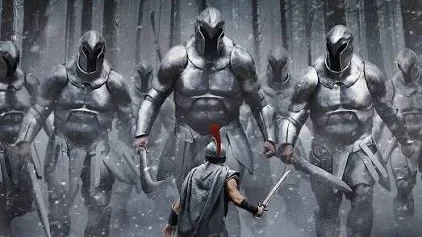

Christopher Nolan’s take on Homer’s epic poem has arrived, and much of the conversation around the film centers on the towering, monstrous figures that stand between Odysseus and his long journey home. Two giants in particular define the film’s most punishing stretches, giving Matt Damon’s Odysseus his hardest physical and moral tests yet.
Between a one eyed cave dweller and a tribe of cannibal marauders, ‘The Odyssey’ leans hard into the mythology that made Homer’s story endure for thousands of years. Here is a breakdown of who these giants are and what role they play in Nolan’s adaptation.
The Cyclops Polyphemus Terrorizes Odysseus And His Crew
The first giant Odysseus and his men encounter is Polyphemus, a towering giant with a single eye who is similar to his depictions in the original myths. He traps the crew inside his cave and eats two of Odysseus’ men each night before resting, leaving Odysseus to realize they cannot kill the Cyclops until he moves the boulder blocking the cave door.
The film adjusts one notable detail from the source material. In the original poem Odysseus tricks his way out of Polyphemus’ clutches, but in the movie the Cyclops does not speak, only uttering a few prayers to his father Poseidon after Odysseus and his men blind him. That silence changes the texture of the sequence considerably from the wordy, cunning exchange readers know from the poem.
On set, Polyphemus was brought to life by Bill Irwin, whose physical performance anchors the cave confrontation. The escape plan itself remains largely faithful to Homer, with Odysseus and his crew blinding the Cyclops while he sleeps and then escaping by strapping straw to their backs so he cannot feel the difference between them and his sheep.
Despite the changes, the sequence still lands as one of the film’s defining set pieces. The Cyclops remains one of the most impactful monsters in Nolan’s adaptation, with the film treating the Greek myth with real care.
The Laestrygonians Bring Cannibal Giants To The Story
The second and arguably more brutal giant encounter comes courtesy of the Laestrygonians, a race of man eating giants. The confrontation was staged in Scotland’s Culbin Forest using seven IMAX cameras, leaning on perspective tricks and wire work rather than CGI.
According to reporting on the production, the Laestrygonians push the film into genuinely punishing territory, turning the crew’s landing into a brutal test of command. The sequence is designed to feel less like a monster movie thrill and more like a survival ordeal for Odysseus and his men.
Nolan spoke about the thematic purpose of the sequence in an interview with the site, explaining that the point of the Laestrygonians is to challenge Odysseus on a character level. The director told Empire that the point of the Laestrygonians in the story, as in the original poem, is to show the questionable nature of Odysseus’ leadership and give his men reason to doubt him, so that what they come up against leaves them all shaken.
What do you think of Nolan's version of the giants?
Homer’s version of events plays out similarly in broad strokes. With the wind and sea working against them, Odysseus and his men were led to the Laestrygonian giants, who brutally attacked them and left them with only one ship and its crew. That devastating loss echoes throughout the rest of the voyage in both the poem and Nolan’s film.
How Nolan’s Giants Differ From Homer’s Original Poem
Nolan has never been shy about reshaping source material to fit his own storytelling instincts, and the giants are no exception. Nolan took considerable creative liberties with the Laestrygonians, a tribe of man eating giants descended from Poseidon, adjusting details from Homer’s account to fit his three hour film.
The broader adaptation compresses a sprawling, centuries old oral tradition into a single feature. Odysseus in this version is a broken man haunted by visions of the Trojan War who, aided by the goddess Athena, clashes with gods, sirens, giants, Scylla, and a Cyclops on his ten year journey home to Ithaca. Waiting for him there are his wife Penelope and his son Telemachus, who are fending off a household full of suitors.
The giants sit alongside a wider roster of mythological threats that Nolan folds into the narrative. The film draws on seven monsters from Greek mythology altogether, giving audiences a condensed but faithful tour of the dangers that define Odysseus’ voyage. Some critics have argued that leaning into this fantastical material, rather than trimming it away, is exactly what makes the adaptation work.
One review put it bluntly, noting that ‘The Odyssey’ without its gods and monsters would essentially become the story of a man who goes out for a pack of smokes and never comes back, calling the mythological elements the magic the story needs. That argument suggests the giants are not just spectacle, they are structurally necessary to the story Nolan is telling.
Critics And Fans React To The Odyssey’s Monster Sequences
Early reception to the film’s mythological set pieces has been largely positive, with several outlets highlighting the giants as standout moments. One reviewer described the poem’s cannibal warrior giants and gore flecked cyclopses as part of the wild, frenetic fancy that Nolan finally embraces after years of more restrained filmmaking.
The cast surrounding Damon’s Odysseus has also drawn attention for how it supports these sequences. Tom Holland plays Odysseus’ son Telemachus, Robert Pattinson plays Antinous, Charlize Theron plays the witch goddess Circe, Benny Safdie plays Agamemnon, and Jon Bernthal plays Menelaus, the Greek king of Sparta. That ensemble surrounds the giant encounters with a grounded, character driven backdrop rather than letting the monsters carry the film alone.
Marketing for the film leaned into the giants early, with the trailer for ‘The Odyssey’ showing Matt Damon facing off against the one eyed Cyclops after playing before screenings of ‘Avatar Fire and Ash’ and alongside teasers for ‘Avengers Doomsday.’ That placement signaled how much weight Universal is putting on the monster material to sell the film to a broad summer audience.
For fans who grew up with Homer’s poem in a classroom setting, seeing the Cyclops and the Laestrygonians rendered with IMAX scale and practical stunt work marks a significant shift from page to screen. What do you make of Nolan’s decision to make Polyphemus silent and lean so heavily into practical effects for the Laestrygonian attack.