How Hugh Hammer’s Rise and Betrayal Come to an End in ‘House of the Dragon’

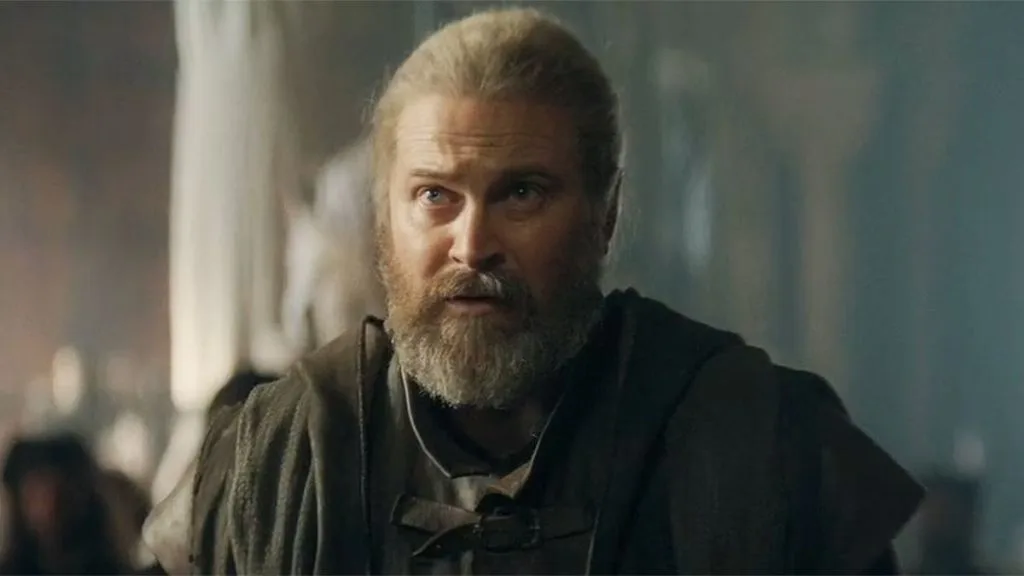

Few characters in ‘House of the Dragon’ have traveled as far, or fallen as hard, as Hugh Hammer. What began as the story of a struggling blacksmith trying to keep his family alive during a city under siege turned into one of the more startling transformations of the Dance of the Dragons, ending with a claim to a legendary dragon and an even bigger claim to the crown itself.
Hugh’s journey has become a point of fascination for fans following the show, especially as the series moves closer to adapting the darker, messier chapters of George R.R. Martin’s civil war saga. His fate, drawn from Martin’s ‘Fire and Blood’, gives a clear picture of where the character is headed, even as the show continues to shape the details of how it gets there.
Hugh Hammer’s Rise From Blacksmith to Dragonrider
Before he was a dragonrider, Hugh Hammer was simply a blacksmith trying to survive in King’s Landing as the city buckled under blockade and food shortages. His family struggled as starvation set in around the city, and caring for an ill child made his circumstances more dire than most. A promised payment from King Aegon II never arrived, which pushed Hugh to steal food once Rhaenyra began offering aid to the smallfolk.
The turning point in Hugh’s story came with devastating loss. His daughter ultimately succumbed to her illness, leaving him grief stricken and searching for a way to change his circumstances. When word spread that Rhaenyra was seeking Targaryen bastards who might be able to claim a dragon, Hugh left King’s Landing for Dragonstone, revealing for the first time that he believed his mother had been a Targaryen princess.
That gamble paid off in dramatic fashion. Once at Dragonstone, Hugh joined other dragonseeds in an attempt to claim one of the riderless dragons, a process that proved lethal for at least one other hopeful before Hugh succeeded. Hugh claimed and rode Vermithor, the enormous dragon once bonded to King Jaehaerys I Targaryen, instantly making him one of the most formidable weapons in Rhaenyra’s arsenal.
Physically, Hugh matched the power of his new mount. He was described as a very tall and huge man, capable of twisting steel bars with his bare hands, with silver hair that hinted at his Valyrian ancestry. In the television series, Kieran Bew plays Hugh with longer hair and a beard, giving the character a rougher, more weathered look than his book description alone suggests.
Hugh Hammer’s Betrayal of Rhaenyra and the Path to Tumbleton
Hugh’s loyalty to Rhaenyra did not last. After helping Rhaenyra retake King’s Landing, he was rewarded with a knighthood and lands on Driftmark, a significant elevation for a man who had been stealing food to survive only months earlier. That goodwill collapsed at the Battle of Tumbleton, where Hugh and fellow dragonseed Ulf White abandoned Rhaenyra and defected to the Greens instead.
Once he switched sides, Hugh’s ambitions grew far beyond a simple change of allegiance. He began calling himself Lord Hammer and set his sights on the crown itself, backed by soldiers who believed in a prophecy that a new king would rise once a hammer fell on a dragon. Hugh went as far as wearing a crown of black iron, and when Ser Roger Corne knocked it from his head, Hugh had three horseshoes nailed into Roger’s skull in retaliation, sparking a brawl that left three men dead and twelve wounded.
This kind of brutality did not go unnoticed among his own allies. A group of Green nobles calling themselves the Caltrops concluded that Hugh Hammer and Ulf White’s ambitions had become more dangerous to their cause than the war against the Blacks, and organized a conspiracy to have both men killed. Ulf White, for his part, was demanding Highgarden as payment for his loyalty, further fueling the resentment building against the two former blacksmiths turned dragonriders.
Hugh Hammer’s Death at the Second Battle of Tumbleton
The Caltrops’ plot against Hugh finally came to a head during the Second Battle of Tumbleton. Ser Jon Roxton, a bold and hot tempered Green knight wielding the Valyrian steel blade Orphan-Maker, was the man chosen to carry out Hugh’s killing. As the Second Battle of Tumbleton unfolded, Roxton struck when Hugh least expected it, catching him off guard in the chaos of the fighting.
The manner of Hugh’s death was as brutal as the man himself had been. Roxton stabbed Hugh in the belly before cutting him open from groin to throat, and a dozen of Hugh’s own loyal men arrived just in time to watch their leader die in front of them. Those men then turned on Roxton, killing him in retaliation, with legend holding that Roxton slipped on Hugh’s entrails in the process.
Ulf White’s fate came shortly after, and in a different, quieter form. Ser Hobert Hightower, one of the Caltrops’ leaders, poisoned Ulf with wine, though Hobert was forced to drink from the same cup to avoid suspicion and died alongside his target. Once Ulf learned Hugh had been killed, he had already set his own sights on claiming the Iron Throne for himself, a plan that never came to pass.
What Hugh Hammer’s Fate Means for ‘House of the Dragon’ Season 3
For a show building toward the darkest stretch of the Dance of the Dragons, Hugh’s arc offers one of the clearest examples of how quickly power can corrupt. His story moves from a desperate father trying to protect his family to a man crowning himself with black iron, and it stands as one of the more tragic falls among Rhaenyra’s former allies. Whether ‘House of the Dragon’ plays his death exactly as written in ‘Fire and Blood’ or adjusts certain details for the screen remains to be seen as the season progresses.
What is clear is that Hugh’s arc was never designed to end well. Roxton’s kill is described as the war’s most dramatically necessary act paired with its most undignified death, a combination that fits the grim, unglamorous tone Martin built into this stretch of the story. That tone has become a defining feature of the back half of the Dance of the Dragons on screen.
Fans who have followed Hugh from his days swinging a hammer at a forge to his brief reign as a self declared lord now have a fuller picture of where his story ends. With Kieran Bew’s performance driving so much of the character’s screen presence, viewers are left to wonder how the show will stage his final moments at Tumbleton, and what they make of a man who traded a hammer for a crown only to lose everything in the process.