How the Battle of Tumbleton Resolves in the ‘House of the Dragon’ Season 3 Finale

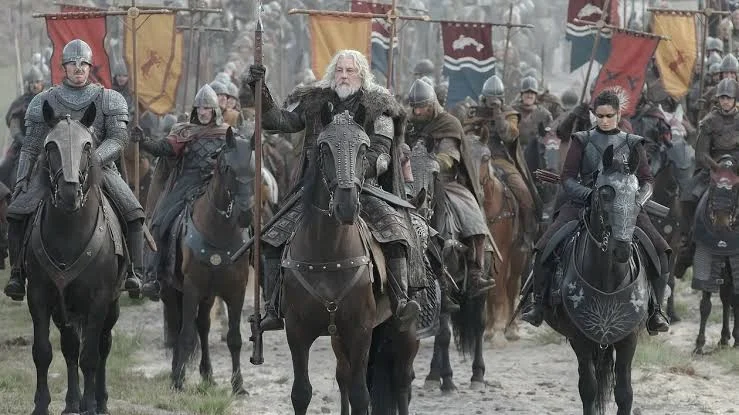

The war for the Iron Throne finally reached its bloodiest turning point in the season 3 finale of ‘House of the Dragon,’ which aired Sunday night on HBO and HBO Max. The episode built toward the First Battle of Tumbleton, a confrontation that had been teased since Ormund Hightower’s forces seized the city earlier in the season.
The finale had been positioned as the season’s defining confrontation, one expected to involve more key players and produce consequences that could not be undone, even with the earlier Battle of the Gullet standing as the larger engagement in scale. By the time Daemon and his allies reached the city walls, the outcome was anything but guaranteed.
Who Wins the Battle of Tumbleton
The finale, titled ‘Episode 8,’ centers on the Battle of Tumbleton, where Daemon and Roddy the Ruin finally confront the scheming Ormund Hightower and the newly knighted Daeron the Daring. Oscar Tully and Roddy the Ruin lead the Rivermen and Winter Wolves into the assault, while Ormund’s forces prepare behind the city’s walls after knighting Daeron as Ser Daeron the Daring.
The clash pits Ormund Hightower’s army against the combined Winter Wolves and Rivermen, complicated further by the betrayal of the dragonseeds Ulf and Hugh, who ultimately flip sides. That betrayal shifts the momentum of the fight and turns Tumbleton itself into a casualty of the war.
By the episode’s end, the city falls to Rhaenyra’s forces, but the victory comes at an enormous cost. Ulf ultimately burns Daemon’s own troops before turning his dragon on Tumbleton itself, leaving the town in smoldering ruin along with Ormund Hightower. The Blacks technically claim the field, but the manner in which they do so leaves both sides scarred.
Ormund Hightower’s Fate at Tumbleton
Ormund Hightower, revealed as the true mastermind behind much of the Greens’ strategy throughout the season, ultimately meets a brutal end, stabbed by Roddy the Ruin and then incinerated by the dragon Silverwing. It is Roddy who actually deals the killing blow to the Hightower patriarch, after he and his Northmen rampage through the city, managing to strike the fatal wound even after losing an arm in the fighting.
The death marks the collapse of the Greens’ most cunning strategist this season. The trailers leading into the finale had suggested the fight would hinge less on aerial dragon combat and more on Ormund’s quiet campaign to turn Rhaenyra’s dragonriders against her, a plan that ultimately unravels alongside him.
Roddy the Ruin gets a defining moment in the process, landing a cathartic fatal blow on Ormund before meeting his own fiery end at the height of the battle. The exchange gives the finale one of its more memorable confrontations, closing out a rivalry that had simmered since Ormund’s forces first took the city.
Did you like the way Ormund died?
The show also departs meaningfully from George R.R. Martin’s source material in how this confrontation unfolds. In ‘Fire and Blood,’ the Battle of Tumbleton instead sees Ulf and Hugh Hammer betray the Blacks by siding with the Greens before burning Tumbleton to the ground, a sequence that led to the deaths of several major figures in the Dance of the Dragons.
The Cost of Victory and Roddy the Ruin’s Death
Roddy the Ruin’s death plays out as a glorious one, dying for his queen in a blaze of dragonfire, though his slightly comedic path through the earlier battle sits at odds with the severity of what unfolds at Tumbleton. The character’s arc closes on a note that reviewers have described as both cathartic and tonally jarring given the surrounding carnage.
Daemon himself is very nearly slain while battling his way through the city, outmatched by the heavily armored Ser Jon Roxton, Ormund’s right-hand man. That near miss underscores how costly the fight proves even for the eventual victors.
Elsewhere, the fallout from Tumbleton ripples outward. The finale piles on additional losses beyond the battle itself, including the off camera death of Kat during Targaryen raids on Hightower loyalists throughout the city. Back in King’s Landing, the human cost of the war reaches Rhaenyra’s own household as well, with Helaena’s fate reshaping the political landscape heading into the next chapter of the conflict.
The show has, for now, focused only on the First Battle of Tumbleton, leaving the Second Battle, a later and even deadlier engagement in the books, for a future season. That distinction matters for viewers trying to track how closely the series is following Martin’s original text.
Critical Reception of the Season 3 Finale
Reaction to the episode has generally praised its ambition while noting familiar frustrations with the series. Reviewers have largely commended the finale’s scope, though not without reservations, and criticism has centered on the strained friendship between Rhaenyra and Alicent along with what some describe as an overall lack of characters viewers can root for.
One review called the finale a drastic improvement over season 2’s abrupt conclusion, describing it as a long remembered chapter in Westeros history that finally feels like a true season ending. The comparison marks a shift in tone from earlier criticism of the show’s pacing.
Not every element has landed cleanly with critics. One reviewer called the episode tremendously entertaining overall while continuing to single out the show’s handling of Rhaenyra’s prophecy storyline as one of its most persistent irritants. That tension between spectacle and narrative clutter has followed the series through much of its third season.
With Tumbleton reduced to ash, Ormund gone, and Rhaenyra’s own household fractured by Helaena’s fate, ‘House of the Dragon’ enters its next chapter with the war more unpredictable than ever, and readers who just watched Roddy the Ruin’s last stand or Ulf’s fiery betrayal unfold are invited to weigh in on which twist from Tumbleton hit them hardest.