‘The End of Oak Street’s’ Post-Credits Scene Explained, and What Actually Happens Once the Movie Ends

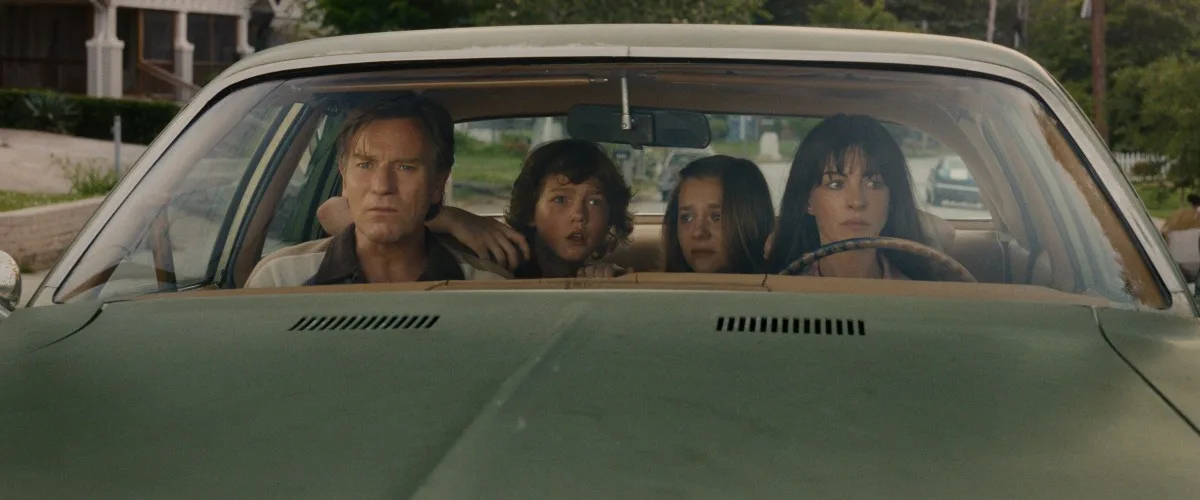

Anne Hathaway and Ewan McGregor’s dinosaur thriller has audiences asking the same question a lot of modern moviegoers ask before they even sit down, whether there is a reason to stay through the credits. ‘The End of Oak Street’ arrives with a premise built for spectacle, a suburban block ripped from reality and dropped into a prehistoric world crawling with dinosaurs, and that kind of setup naturally invites speculation about a franchise tease waiting at the end.
The answer, according to multiple outlets who have already seen the film, is simple and consistent. There is no post-credits scene attached to ‘The End of Oak Street,’ though some dinosaur-themed graphics do appear over the early parts of the credits.
Post-Credits Scene Status for ‘The End of Oak Street’
‘The End of Oak Street’ does not feature a post-credits scene, so audiences can leave the theater once the credits begin rolling without missing any additional footage. The film wraps up its story within its 99-minute runtime, which is notably tight for a modern effects-driven blockbuster.
That absence of a stinger puts the film in familiar company this year. The decision places ‘The End of Oak Street’ in the same camp as several other recent theatrical releases that have skipped the stinger format entirely, including this year’s ‘Supergirl’. Given the movie’s grounded, standalone premise rather than any franchise ambitions, closing things out cleanly rather than teasing a sequel tracks with the film’s overall throwback sensibility.
That framing lines up with how the film positions itself from the start. Directed by David Robert Mitchell, best known for ‘It Follows,’ the film marks his first movie in nearly eight years and leans into an old school, Amblin style sci-fi tone reminiscent of 1980s family adventures. A film built around that kind of nostalgic sincerity has less use for the sequel-baiting habits that have become standard in tentpole releases.
Multiple entertainment outlets independently reached the same conclusion after screenings, which removes much of the ambiguity that sometimes surrounds credits questions ahead of a wide release. Viewers are free to leave the theater right when the movie ends without having to worry about missing anything, according to reporting gathered before and during the film’s opening weekend.
How the Ending Wraps Up the Platt Family Story
The film’s climax and epilogue do most of the emotional heavy lifting instead of a credits tag. The family manages to escape via a wormhole that spits them out just an hour before the catastrophe occurred, which allows them to reunite with a family member they nearly lost and warn the rest of the neighborhood of the impending disaster.
The story then jumps forward to check in on the Platts once the dust has settled. Two years later, the family is shown as close-knit, having learned to appreciate one another after the ordeal. That kind of quiet character resolution, rather than a plot cliffhanger, is very much the point of how Mitchell chose to close the film.
The epilogue also answers a lingering question about how the family processed what happened to them. The film reveals that Anne Hathaway’s Denise Platt wrote a book about the event, titled ‘The End of Oak Street,’ and that her daughter Audrey was able to attend Cornell and study with Carl Sagan. It is a soft, character-driven button rather than a setup for a sequel.
There is also a personal touch tucked into the closing moments that has nothing to do with plot mechanics. The film ends with a dedication to David Robert Mitchell’s father, Robert Allen Mitchell, who died in 2024. It reframes the ending as something closer to a personal statement than a franchise pitch.
The Audio Tease Hidden in the Credits
While there is no visual scene, there is still a reason some viewers may want to stick around once the story wraps. Once the credits finish rolling, anyone who stays is treated to an audio tease pulled straight out of the dinosaur jungle. It is not a scene in the traditional sense, but it is a deliberate choice rather than dead air.
Staying also has a practical benefit for anyone who wants to hear more of the score. Remaining through the credits also means catching more of Michael Giacchino’s score along with the full list of everyone who worked on the film. It is a smaller reward than a full scene, but it is not nothing for fans who care about the film’s craft.
This kind of audio-only closer has become something of a small trend this year rather than an isolated choice. Studios and filmmakers increasingly know audiences are likely to stick around through the credits just in case there is a surprise sequel setup, and 2026 films like ‘Project Hail Mary’ and ‘One Night Only’ have used similar audio teases. Whether that audio cue is meant purely as a tonal button or hints at something more has been left open to interpretation by those who have already heard it.
Cast and Release Details for ‘The End of Oak Street’
The film’s road to the screen included at least one notable cast change before production began. The movie initially starred Oscar Isaac, but he dropped out before filming began, and Ewan McGregor stepped into the role instead. Hathaway and McGregor now lead the film as Denise and Greg Platt, with Maisy Stella and Christian Convery playing their children, Audrey and Brian.
Behind the camera, the project carries a notable production pedigree alongside Mitchell’s writing and directing credit. J.J. Abrams and Hannah Minghella produce the project through Bad Robot, and the film carries an estimated production budget of eighty million dollars. That budget places it comfortably in mid-tier blockbuster territory for an original, non-franchise release.
Release timing also played into the early wave of credits questions, since international audiences got a head start on the conversation. Warner Bros. Pictures released ‘The End of Oak Street’ in theaters and IMAX across North America on August 14, 2026, with international audiences able to see it starting August 12. That staggered rollout meant early reactions, including confirmation about the credits, were already circulating before the film’s full domestic debut.
For a movie that leans so heavily on 1980s adventure nostalgia, skipping the modern post-credits stinger feels like a deliberate part of its identity rather than an oversight, and it will be worth watching whether that old-school approach helps or hurts ‘The End of Oak Street’ as more audiences weigh in on how the Platt family’s story should have closed.