The Pink Lantern Corps and the Complicated Power of DC’s Violet Light

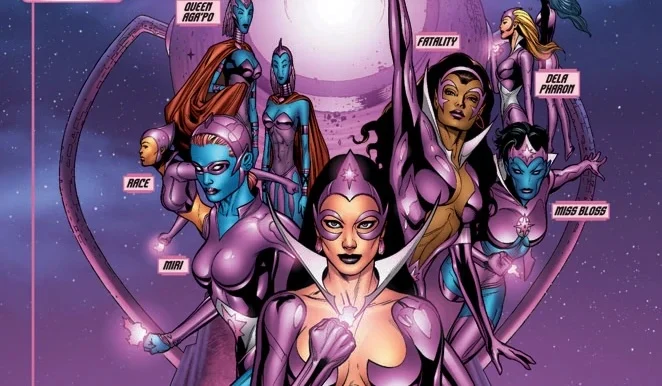

In DC Comics lore, few corners of the expansive Lantern mythology confuse newcomers quite like the group often nicknamed the Pink Lantern Corps. Officially known as the Violet Lantern Corps, and more commonly referred to by fans and by DC itself as the Star Sapphires, this group occupies a strange middle ground between hero and villain that few other factions in the Green Lantern universe can claim. The Violet Lantern Corps is also known as the Pink Lantern Corps or simply the Star Sapphires.
Understanding the Pink Lantern Corps means understanding one of the more emotionally driven concepts in modern superhero storytelling, the idea that love itself can be weaponized. The Star Sapphire Corps stands alongside the Green Lantern Corps, Red Lantern Corps, Orange Lantern Corps, Sinestro Corps, Blue Lantern Corps, Indigo Tribe, Black Lantern Corps, White Lantern Corps and Ultraviolet Corps as one of the organizations built around the Emotional Electromagnetic Spectrum. This piece breaks down where the Pink Lantern Corps came from, how their powers actually work, and why their most famous member remains one of the most conflicted figures in the Green Lantern comics.
The Origins Of The Pink Lantern Corps
The Star Sapphires trace their roots back to the Zamarons, a splinter group with a direct connection to the Guardians of the Universe. The Star Sapphire Corps was founded by the Zamarons, a tribe of female Oans who separated from the Guardians of the Universe and settled on the planet Zamaron. That separation set the Corps apart from the more rigid, rules-based Green Lantern Corps from the very beginning.
In their earliest incarnation, the group was far from the balanced organization it would later become. The original Star Sapphires could be violent and hard to reason with, since the Zamarons did not fully understand love, and as a result the earliest members, like the Zamarons themselves, were all female, with the Zamarons intending for the Star Sapphires to seek revenge on those who broke their hearts. That vengeful streak would eventually soften, but it never fully disappeared from the Corps’ identity.
Recruitment into the group has also taken unconventional forms over the years. Most members were inducted after being approached directly by one of the power rings, though at least one former Yellow Lantern was inducted after being captured by the Star Sapphires and encased in a crystal like structure that replaced his fear and rage with love. That detail alone signals how differently the Star Sapphires operate compared to the Green Lantern Corps, which relies on willing recruits chosen for their courage rather than their emotional vulnerability.
How Violet Light Powers The Pink Lanterns
The Star Sapphires draw their strength from love, but the comics have never treated that emotion as purely wholesome. Star Sapphire rings can be used on members of other Corps, including villains from the feared Sinestro Corps, draining the power from their rings and converting it into violet energy, effectively forcing that being to join the Violet Lanterns without their explicit permission. That forced conversion process is part of why the group has always carried an uneasy moral reputation.
The location of violet light on the emotional spectrum plays directly into that instability. The strange ruthlessness of the Star Sapphires’ agenda comes from violet light sitting at the edge of the emotional spectrum, and a power ring wields more influence over its user the closer that color sits to either end, the same way rage overtakes Red Lantern Corps members and turns them into vengeful monsters. Love, in other words, is treated with the same corrupting potential as unchecked fury.
Because of where the color sits, using the violet ring is not a simple or safe experience for its wearer. Since love sits at the far end of the emotional spectrum, it is known to be a corrupting influence that strips away some of the user’s free will, and the resulting rehabilitation can push a wearer toward extreme or even violent expressions of that love. That tension between healing power and obsessive control has become the defining trait of the Pink Lantern Corps in nearly every major storyline they appear in.
Do you think we'll see the Star Sapphire Corps in 'Lanterns?'
Despite that darker edge, the group has generally sided with the forces of good more often than not. The Star Sapphire Corps is primarily a heroic group that has worked alongside the Green Lantern Corps throughout its existence, though as a unit the Star Sapphires mostly pursue their own separate agenda. That independence is part of what makes them such an unpredictable presence whenever they show up in a crossover event.
Carol Ferris And The Star Sapphire Legacy
No discussion of the Pink Lantern Corps is complete without Carol Ferris, the character most closely tied to the violet ring across decades of publication. Caroline Ferris first appeared as a character in Showcase number 22 in 1959, with her Star Sapphire identity debuting later in Green Lantern volume 2 number 16 in 1962, and both were created by writer John Broome and artist Gil Kane. Her connection to the Green Lantern mythos runs almost as deep as Hal Jordan’s own origin.
Ferris built her identity around Ferris Aircraft long before the Star Sapphire gem entered her life. Carol Ferris was handed the reins of Ferris Aircraft Company by her father Carl, a position that put her in a prime spot to meet and eventually fall in love with Hal Jordan. That professional and romantic entanglement became the emotional engine for decades of Star Sapphire stories.
Her elevation within the Corps was not something she sought out. Carol’s romance with Hal Jordan became complicated after she took over her father’s company and the Zamarons crowned her the new Star Sapphire. Over time, that reluctant role grew into genuine leadership, and Ferris eventually became one of the most powerful figures the Corps has ever produced.
Ferris’ arc across the Star Sapphires has moved her steadily away from villainy. Over time Carol’s personality developed beyond that of a scorned lover as she rose through the Sapphire ranks to eventually become their queen, playing a vital role during the Blackest Night event and shifting toward more of an anti hero than a traditional villain. That evolution has made her one of the more nuanced figures to wear any colored ring in the DC universe.
The Pink Lanterns In ‘Blackest Night’ And DC’s Future
The Star Sapphires’ most consequential moment in modern comics came during the ‘Blackest Night’ crossover, when the entire emotional spectrum was forced into a temporary alliance. During ‘Blackest Night’, the Star Sapphires formed an alliance with the other Lantern Corps to destroy the Black Lantern Corps. That event reshaped how every colored Corps, including the Star Sapphires, was perceived going forward.
The war took a heavy toll on the group in ways that still echo through the comics today. The Star Sapphires fall lower on many power rankings because they were almost entirely destroyed during ‘Blackest Night’, with only Carol’s powers seeming to remain intact afterward, though their abilities largely mirror Green Lantern ring powers and they are immune to the Orange Lanterns. Even prominent allies briefly wore the violet ring during that same conflict.
The reach of the Star Sapphires even extended to characters outside the traditional Lantern cast. Wonder Woman had a history with the Star Sapphires thanks to her brief stint as a Violet Lantern during ‘Blackest Night’, and she later rejoined the group again after releasing a group of dark gods. That crossover appeal has helped keep the Star Sapphires relevant even outside dedicated Green Lantern titles.
DC’s live action expansion of the wider Lantern mythology is also underway, even if the Star Sapphires have not been confirmed for it yet. HBO’s ‘Lanterns’ series, executive produced by James Gunn and Peter Safran with Chris Mundy as showrunner, features Ulrich Thomsen as Sinestro alongside Kyle Chandler and Aaron Pierre as its central Green Lanterns. Whether the violet light of the Star Sapphires ever makes the leap to live action alongside them remains one of the more intriguing open questions for fans following DC’s screen ambitions.
Given how divisive Carol Ferris and her fellow Star Sapphires have been across six decades of comics, it seems fair to ask readers directly whether love as a weapon is a concept the wider DC Universe should finally bring to the screen.