Why Rhaenyra Targaryen Earned The Cruel As Her Nickname In ‘House Of The Dragon’

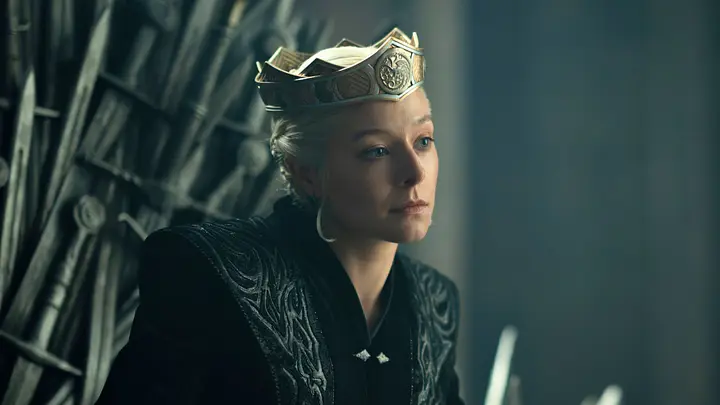

The nickname ‘Rhaenyra the Cruel’ has become one of the most debated labels in ‘House of the Dragon,’ and it did not appear by accident. It surfaces at a specific moment in the story, tied to grief, propaganda, and a political rivalry that has defined the entire series.
Understanding where the name comes from means looking closely at both the show’s second season and the source material it draws from, since the phrase carries weight in both versions of the story.
The Origin Of Rhaenyra The Cruel
The nickname is not a piece of fan invention or a throwaway insult. It originates in George R.R. Martin’s ‘Fire and Blood,’ the historical novel the series is based on, and in that source material Rhaenyra was called the Cruel by her detractors after she occupied King’s Landing. The comparison was pointed and deliberate rather than accidental.
The term references King Maegor I Targaryen, also known as Maegor the Cruel, who is widely regarded as one of the worst and most despicable kings in Westeros history. Branding Rhaenyra with the same word was meant to warn the smallfolk that she posed a similar danger, only made worse in the eyes of her enemies because she was a woman claiming a throne many men believed belonged to them.
In the book, the label carries an even sharper edge. Archmaester Gyldayn, the narrator of ‘Fire and Blood,’ sometimes refers to Rhaenyra as “Maegor with Teats,” which the show softens into the somewhat less dismissive nickname ‘the Cruel.’ That shift reflects a deliberate choice by the series to modernize a phrase that would have read as far more overtly sexist on screen.
How The Funeral Procession Cemented The Name
On screen, the nickname takes shape during the season two episode literally titled ‘Rhaenyra the Cruel.’ During the funeral procession for Prince Jaehaerys, commoners express their condolences to Alicent and Helaena while a herald calls out Rhaenyra’s crimes, dubbing her Rhaenyra the Cruel. It is a calculated piece of political theater rather than a spontaneous reaction from the crowd.
Otto Hightower is the architect behind the moment, proposing the funeral procession so the people of King’s Landing will see what he frames as the depravity of Rhaenyra’s actions, further shoring up support for Aegon. In the small council meeting that precedes it, Otto intends to use Jaehaerys’s death as a propaganda tool against Rhaenyra, exposing the child’s body to the populace to earn their sympathy and shift blame onto her.
Alicent Hightower is suffering from intense guilt over the tragedy, believing it to be punishment for her affair with Ser Criston Cole, while her father Otto is already calculating how the moment can be turned to the Greens’ advantage. Alicent and Helaena are pulled into the spectacle as the gentlest faces of the Greens, which makes the public grief land harder and the blame against Rhaenyra stick more easily.
Showrunner Ryan Condal spoke about the emotional weight of staging that scene. He said the funeral is probably the first time since Rhaenyra’s throne was taken from her that viewers feel true loss and empathy for the Green side, even for Aegon, and he singled out Tom Glynn-Carney’s performance as a standout in the episode.
Otto Hightower’s Role In Branding Rhaenyra
Otto’s fingerprints are all over the propaganda campaign that produces the nickname. As news of Jaehaerys’s death spreads through the Red Keep and King Aegon is left devastated, Otto Hightower suggests using the death to the Greens’ advantage by parading the child’s body through the city so citizens will turn against Queen Rhaenyra.
Do you think Rhaenyra's downward spiral is justified?
Rhys Ifans, who plays Otto, has described the character’s reasoning behind the scheme. He noted that Otto does not actually believe Rhaenyra is capable of the murder, but recognizes her decency as a weakness he can exploit, calling the plan a way of manipulating the population with something like fake news, since even in a cruel society, no one sympathizes with a dead child.
The plan works, at least initially, though it comes at a cost. In a fit of rage after his son’s murder, King Aegon beats the captured assassin Blood to death and then hangs every ratcatcher in the city, a move that squanders much of the goodwill the funeral had won for the Greens. Otto’s plan initially succeeds in showing the people of King’s Landing what he frames as the works of Rhaenyra Targaryen, though not everyone on his side proves as coolheaded as he is.
Rhaenyra’s Response And The Weight Of The Accusation
Rhaenyra does not let the accusation pass quietly. She directly challenges the suggestion that her grief drove her to order the decapitation of a child, confronting Ser Alfred Broome over the implication, while Princess Rhaenys warns him to mind himself. The exchange underscores how quickly suspicion and grief become weapons on both sides of the conflict.
The show gives viewers little concrete reason to doubt that Rhaenyra was innocent of ordering Jaehaerys’s death, a sentiment echoed by her own council, which makes the nickname feel more like a smear than an accurate description at the point it is introduced. That ambiguity is part of what has kept the label under discussion well beyond the episode itself.
The name resurfaces as a larger thematic question heading into ‘House of the Dragon’ season three, where critics have focused heavily on how the character absorbs and eventually embodies the label placed on her. Variety’s Alison Herman identified the characters as what makes the season worth enduring its predetermined devastation, while Empire described the season as more action-packed but still as thoughtful as ever.
Whether Rhaenyra ultimately becomes the ruler her enemies accused her of being, or remains a woman punished for a crime she did not commit, is a question the show keeps returning to. It seems fair to ask which version of that argument viewers find themselves siding with once the smoke from that funeral procession finally clears.