Why Does Vivi Call Zoro Mr. Bushido in One Piece? Explained!



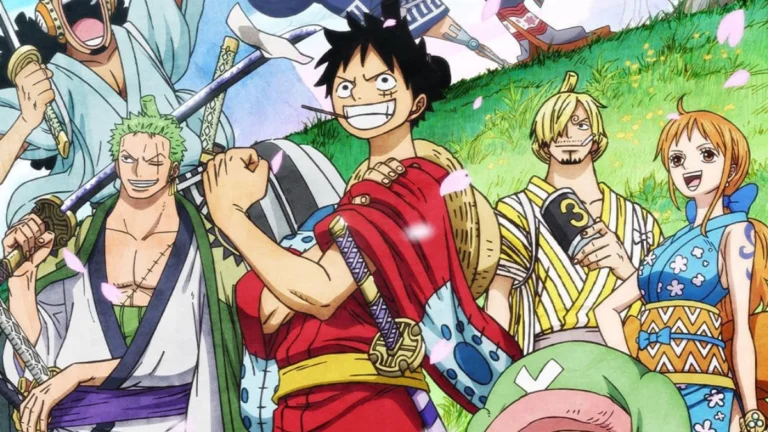
We all know that Roronoa Zoro is one of the most powerful One Piece characters. One of the protagonists of the series, Zoro has demonstrated some fascinating skills over the years and has fought (and defeated) some of the most powerful One Piece villains, mainly through his sword-fighting skills and abilities. He has been given various names and nicknames over the course of the story, but one particular name, Mr. Bushido, has had fans wondering about the story behind it. In this article, we are going to tell you why Vivi calls Zoro Mr. Bushido in One Piece.
Bushidō (Japanese: 武士道) is a Japanese term that literally means “way of the warrior”. It is actually a set of codes and moral values that regulate the attitudes, behavior, and lifestyle of a samurai. Since Zoro uses katana as weapons and is a skilled swordsman, like a true samurai, Vivi referred to him as Mr. Bushido as a reference to the samurai code, effectively calling him a samurai.
The rest of this article is going to be divided into two sections. The first one is going to tell you why Nefertari Vivi calls Zoro Mr. Bushido, while the second will explain what bushidō actually is and how it functioned in Japan. There won’t be any spoilers in this article, as we are going to explain the story behind a well-known fact.
Why Does Vivi Call Zoro Mr. Bushido in One Piece?
The video we have linked above shows you that Nefertari Vivi has, indeed, called Zoro “Mr. Bushido” in One Piece. Now, this was a very symbolic nickname, and if the fans did not know the history behind it, it might have come off as confusing. But, the story behind this name is actually quite simple and it just requires a bit of history.
Namely, bushidō is actually a set of codes and moral values that regulate the attitudes, behavior, and lifestyle of the samurai. Now, everyone knows that the samurai were sword-wielding warriors from medieval Japan who had a very strict warrior code that they adhered to. Although Zoro was not a samurai, his personal moral code as a warrior, as well as the fact that he wielded katanas in battle are relevant enough for him to be labeled as a samurai, at least on a symbolic level.
And that is why Nefertari Vivi called him Mr. Bushido. It was a reference to the samurai moral code, and since Zoro was similar enough to a samurai, the name itself made complete sense. In the next section, we are going to explain what the actual bushidō was so that you can actually see how similar Zoro’s way of life was to the actual bushidō.
What is bushidō?
“Bushidō, then, is the code of moral principles which the samurai were required or instructed to observe … More frequently it is a code unuttered and unwritten … It was an organic growth of decades and centuries of military career. In order to become a samurai this code has to be mastered.”
– Nitobe Inazō, Bushido: The Soul of Japan (1899)
Under bushidō (Japanese: 武士道, literally “Way (dō) of the warrior (Bushi)”), one understands today the code of conduct and the philosophy of the Japanese military nobility, the roots of which go back to the late Japanese Middle Ages. The basic features were borrowed from Shintō, Buddhism, and Confucianism. The term owes its expression and popularity to Inazo Nitobe’s 1899 English-language work Bushido – the Soul of Japan.
In this respect, it is a retrospective interspersed with ideals, which was further interpreted in the 20th century, and also instrumentalized. When Nitobe wrote his work towards the end of the 19th century and chose the name bushidō for it, he was unaware that the term already existed. Related terms include Budō (way of war), Kakun (house code [of the samurai and court families]), Senjinkun (battlefield code), and Yūsoku kojitsu (court and warrior etiquette).
The Kōyō gunkan, published in 1616 and detailing the Takeda clan’s tactics, guiding ideas, and battle experiences, is where the word bushidō first appears. It is also claimed to have a history dating back to Tokugawa-era law. Thus, the term originated at a time when Tokugawa control had brought about the nation’s unification and pacification following the protracted and violent battles of the Sengoku period. Now, with the art of combat taking a back seat in favor of moral and philosophical principles, it was a matter of transforming the warrior position into a state-supporting, disciplined layer of samurai officials. According to Hagakure, a collection of short stories about the life of a Nabeshima clan samurai, decadence is opposed to traditional martial principles.
Bushidō is a further development of the philosophy of Budō, which was tailored to the activities and tasks of a samurai. It mainly deals with the absolute loyalty of the samurai or bushi to his liege lord (daimyō) and the willingness to give his life for him and the values of the bushidō. The samurai were held in high esteem, not least because the warrior class had risen to become the leading social class in the country in several periods of history.
In the feudal schools of the Edo period, the sons of the samurai families acquired, in addition to their training in martial arts, training in classical literature, philosophy, history, calligraphy, Confucianism, etc., which was indispensable for their future work of literature and war.
Among the virtues, according to Nitobe, seven played an important role in the self-image of many samurai. Violations of these virtues, especially public ones involving the loss of “face” (mentsu), were considered dishonorable. In serious cases, sometimes by order of the feudal lord, ritual suicide (seppuku) took place as a sign of remorse and atonement. They are:
- Righteousness (義, gi)
- Heroic Courage (勇, yū)
- Benevolence, Compassion (仁, jin)
- Respect (礼, rei)
- Honesty (誠, makoto)
- Honour (名誉, meiyo)
- Duty and Loyalty (忠義, chūgi)
The bushidō in the current understanding is an idealizing construction developed in historical retrospect. The historical reality also shows all human traits in the Japanese warrior class, i.e. in addition to legality, loyalty, a sense of honor, also betrayal, underhandedness, bribery, assassination, change of party, etc. Bushidō was never presented in writing or religiously as a manifesto for the samurai, but summed up from Japanese culture, influenced by different religions and philosophies and the respective circumstances of the time.
It was more of a way of thinking affecting everyday life, which spread particularly during the Edo period, i.e. during the long period of peace under the Tokugawa shogunate. The bushidō philosophy influenced some martial arts performed with samurai weapons, as well as unarmed disciplines (for example, some styles of jiujitsu and karate). This philosophy was in turn shaped by Zen.