Netflix’s ‘Unabomber’ Traces Ted Kaczynski’s First Bomb and the Attack That Started a Seventeen Year Manhunt

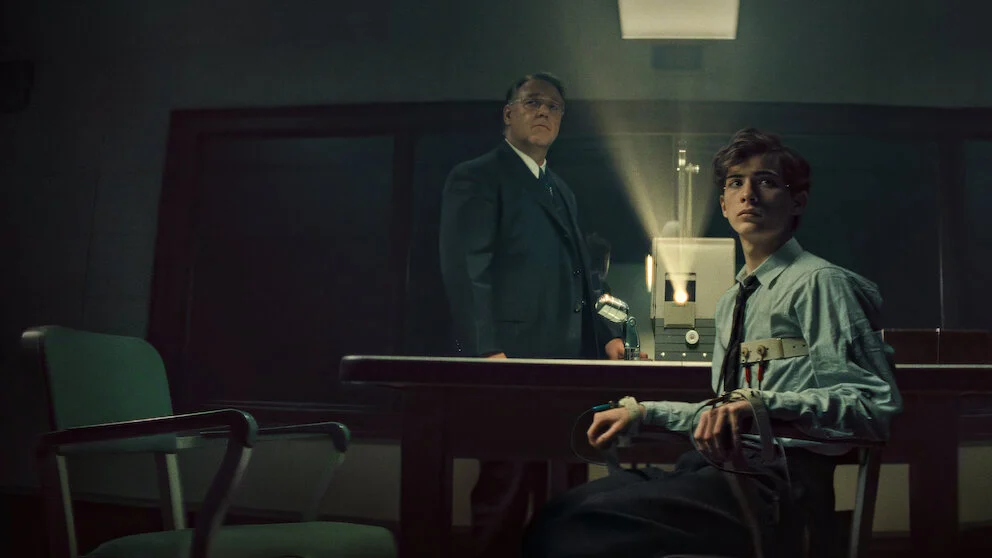

Netflix’s true crime drama ‘Unabomber’ arrived on the platform on September 25, 2026, with a runtime of roughly one hour and forty minutes classified as a drama, thriller and film based on real life. The film stars Jacob Tremblay as a young Ted Kaczynski, with Russell Crowe and Shailene Woodley in supporting roles, and it has renewed public curiosity about how the real bombing campaign actually began.
Much of that curiosity centers on two specific and often confused facts, the identity of Kaczynski’s first bomb and the identity of his first victim. Those two answers are not the same thing, and the Netflix film’s own structure plays with that distinction in a way worth unpacking.
The Unabomber’s First Bomb Set Off a Seventeen Year Campaign
According to the FBI’s own case history, Theodore Kaczynski came to the bureau’s attention in 1978 when his first, primitive homemade bomb exploded at a Chicago university. The bureau’s timeline specifies that on May 25, 1978, a passerby found a package in a parking lot at the University of Illinois Chicago Circle Campus, and the package was returned to the person listed on the return address, Northwestern University professor Buckley Crist Jr, who did not recognize it and called campus security.
That package, once brought back to Northwestern, detonated when opened. Cornell’s law archive on the case confirms the device was a mail parcel wrapped in a brown paper bag, addressed with the return information of a Northwestern professor, that exploded after being returned to campus, causing minor damage. The Washington Post’s own timeline of the case similarly lists the incident as occurring on May 25 with the package exploding the following day and injuring security guard Terry Marker.
A second device followed less than a year later. Cornell’s records note that on May 9, 1979, a pipe bomb was placed in a room at Northwestern University and a graduate student who picked it up was injured when it exploded. Later that same year, the campaign escalated further when a bomb detonated inside the cargo hold of an American Airlines flight traveling from Chicago to Washington, filling the cabin with smoke and forcing an emergency landing, according to both the FBI and Cornell timelines.
Identifying the First Unabomber Victim Is More Complicated Than It Seems
The phrase first victim is where most confusion sets in, because the person injured in 1978 was not killed, and Kaczynski’s campaign continued for years before it claimed a life. Cornell’s chronology states plainly that the Northwestern security guard suffered only minor injuries, and that it was not until December 11, 1985, that the Unabomber claimed his first fatality, when Hugh Scrutton, who ran a computer rental store in a Sacramento strip mall, was killed after apparently bending over to pick up a package in the parking lot.
Biography’s reporting on the case adds important context for how the campaign unfolded between those two dates, noting that Kaczynski killed three people and injured 23 others in total across his 1978 to 1995 bombing campaign. That same reporting confirms Kaczynski’s targets skewed heavily toward one profession, since he mostly targeted people connected with universities, airlines and modern science and engineering businesses.
Kaczynski’s other two fatalities came later still. Time’s coverage of the film lists the three people ultimately killed across the sixteen attacks linked to the case as Hugh Scrutton, Thomas Mosser and Gilbert Murray, spanning nearly two decades between the first device and the bomber’s eventual capture.
How ‘Unabomber’ Chooses to Open Its Story
Rather than starting at the beginning of the timeline, Netflix’s film opens near its end. One recap of the movie notes that ‘Unabomber’ opens with Thomas J Mosser finding a mysterious package in his mail, and opening it triggers a bomb explosion that instantly takes his life, before the story splits between two timelines.
From that opening, the film moves backward and forward at once, following Kaczynski’s time attending Harvard University alongside his prolonged manhunt decades later. Rotten Tomatoes describes this structure as tracking Kaczynski’s transformation from a sixteen year old Harvard prodigy into the infamous Unabomber, while FBI agent Joanne Miller’s manhunt brings to light the chilling consequences of ambition and isolation.
Critical response to that choice has been mixed. RogerEbert dot com’s review argues the film covers twenty years in which Kaczynski, under the Unabomber alias, terrorized America by making the act of opening the mail frightening through a series of homemade bombs aimed mainly at tech workers, scientists and thinkers, while High On Films called the finished product an adequate, frequently compelling character study that in no way feels comprehensive.
The True Story Behind Ted Kaczynski’s Radicalization
The film’s decision to dwell on Harvard rather than the bombings themselves was intentional, according to director Janus Metz. In an interview with TIME, Metz said the production decided to explore Kaczynski’s time at Harvard because it stood out as a formative and fragile period in his life, and that the goal was to understand who this young man was before his descent into a darker and deadlier path.
That period included Kaczynski’s real involvement in a controversial Harvard psychological study. Multiple outlets note the film dramatizes his participation in experiments overseen by professor Henry Murray, played by Crowe, though Netflix frames the entire project as a drama inspired by true events rather than a documentary, meaning individual scenes and relationships have been shaped for the story.
The broader manhunt behind the film is well documented in its own right. Yahoo’s retelling of Kaczynski’s biography notes he was born in Chicago in 1942, skipped two grades, entered Harvard at sixteen, later earned a doctorate in mathematics from the University of Michigan in 1967, and became an assistant professor at the University of California, Berkeley before retreating to a cabin outside Lincoln, Montana in 1971, the same cabin from which he would mail his devices for the next two decades.
For viewers who came to ‘Unabomber’ already familiar with the FBI’s case files, the film’s choice to begin with Mosser’s death rather than the 1978 Northwestern bombing raises an obvious question about which parts of Kaczynski’s twenty year campaign deserved center stage, and which victims the film risks leaving in the background.