Top 10 Greatest Fictional Armies

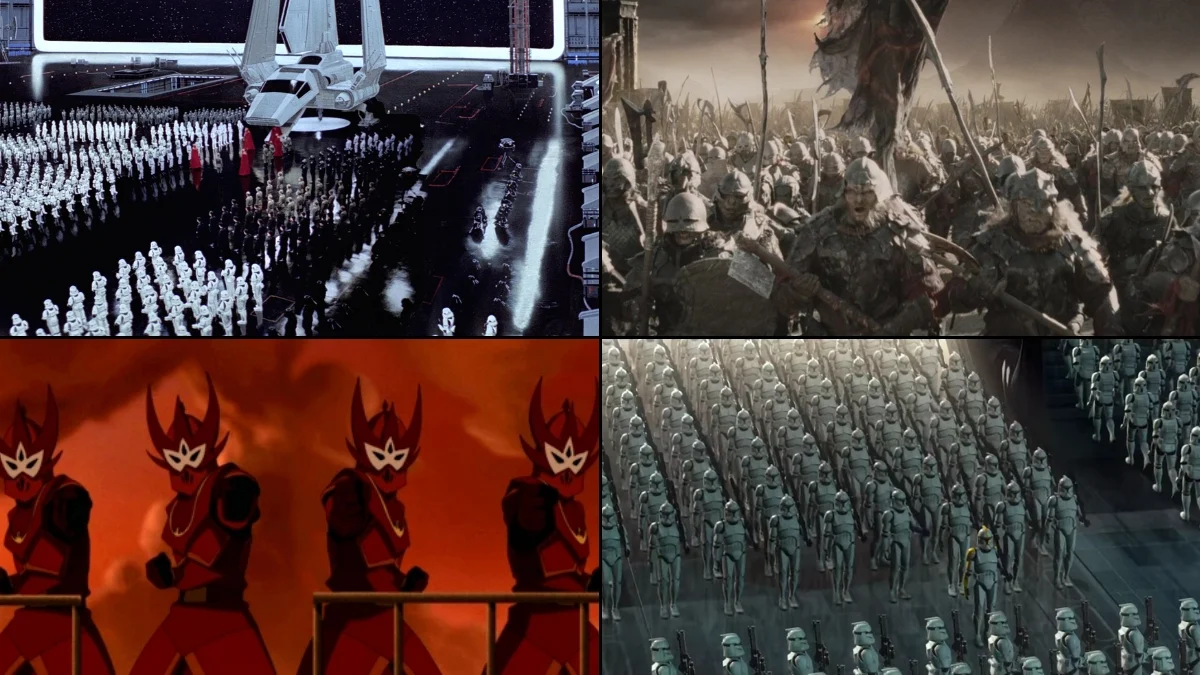

Across books, games, and screens, imaginary militaries shape entire worlds—conquering galaxies, defending fragile kingdoms, and rewriting maps with sheer logistics. These forces are built with clear doctrines, distinctive equipment, and training systems that make their capabilities easy to compare, from interstellar navies to elite infantry drilled from childhood.
Below are ten standout fictional armies. Each has a defined chain of command, recruitment or production pipelines, and battlefield records readers can point to—whether in sprawling space operas like ‘Star Wars’ or grounded fantasy epics like ‘The Lord of the Rings’ and ‘Game of Thrones’.
The Galactic Empire’s Imperial Military
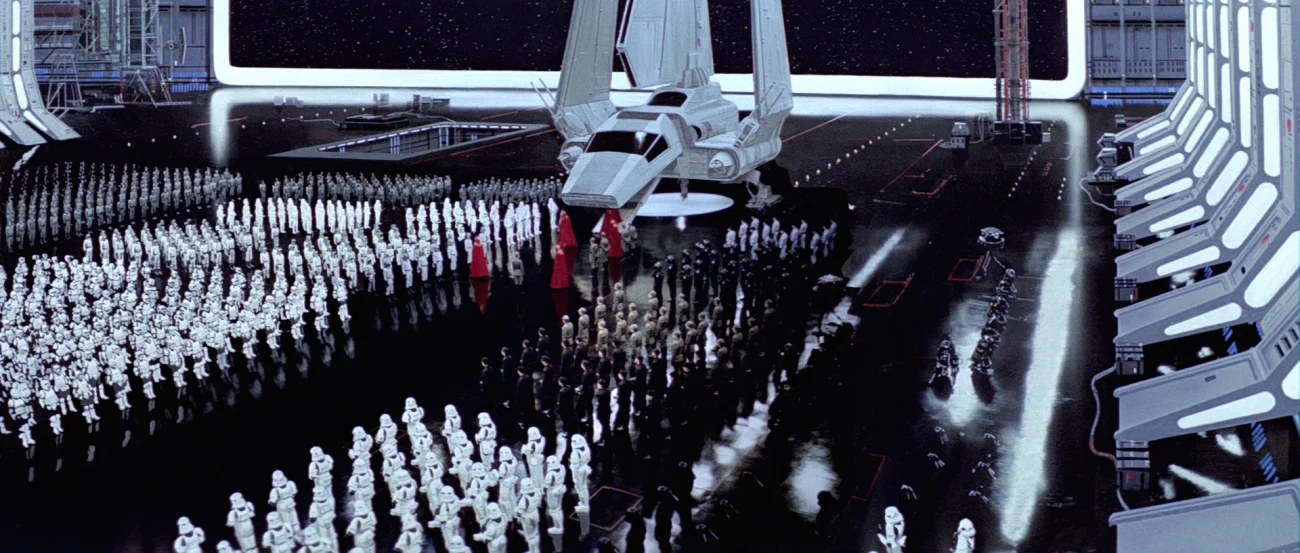
Formed from the transition of the Galactic Republic, the Galactic Empire’s Imperial Military in ‘Star Wars’ combines the Imperial Navy and Imperial Army under centralized command from Coruscant. The Navy fields Star Destroyers, TIE-series starfighters, and superweapons such as the Death Star, while the ground branches deploy stormtrooper legions supported by walkers like the AT-AT and AT-ST. Sector Moffs oversee regional fleets and garrisons, integrating local planetary forces into the broader Imperial order of battle.
Operational doctrine emphasizes overwhelming presence and rapid suppression. Hyperlane control, orbital blockades, and garrison bases enable quick response to insurrection, and the Compnor and ISB apparatuses align military operations with political security. Standardized matériel and mass production allow the Empire to sustain long campaigns across multiple sectors simultaneously.
The Clone Army of the Galactic Republic
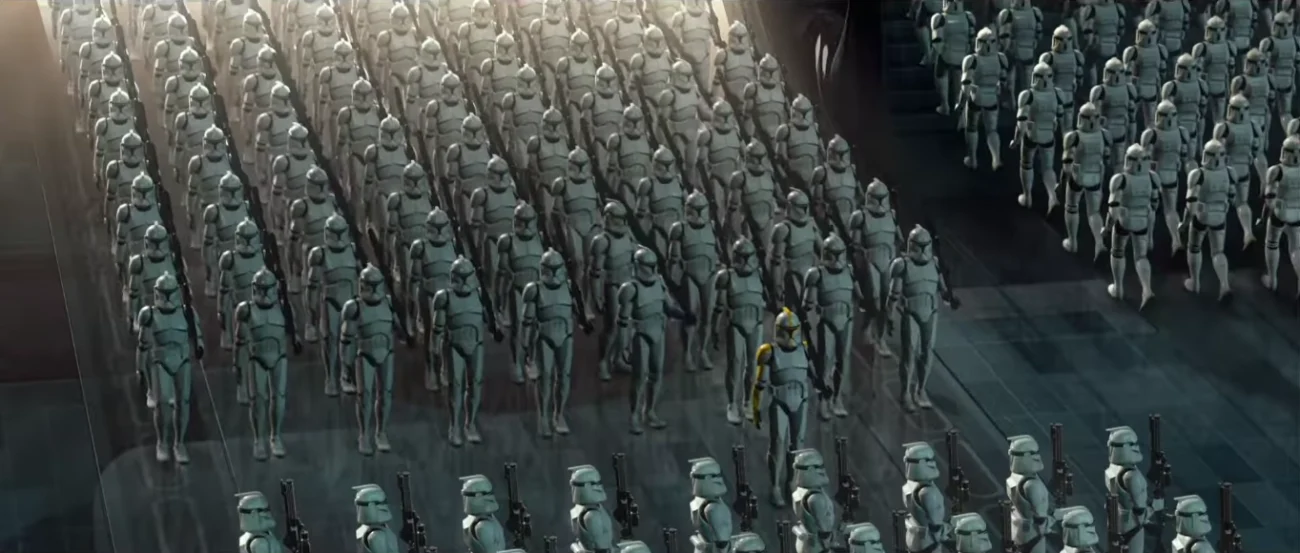
Engineered on Kamino with Jango Fett’s genetic template, the Grand Army of the Republic in ‘Star Wars’ was commissioned under the Republic’s emergency powers. Unit organization follows a clear structure—from squads and platoons up to legions commanded by Jedi Generals and Clone Marshals—while equipment includes DC-series blasters, Phase I/II armor, and armored vehicles such as the AT-TE and LAAT/i gunships. Strategic mobility comes from Venator-class carriers and Acclamator transports attached to the Republic Navy.
Clones undergo accelerated growth and standardized training, producing interoperable units with shared tactics and communications protocols. Specialized variants—ARC troopers, clone commandos, and reconnaissance units—extend mission profiles from conventional assaults to sabotage and special operations. The army’s campaign history spans major theaters like the Outer Rim Sieges, fought across planetary surfaces and in combined-arms coordination with naval task forces.
Federation Starfleet
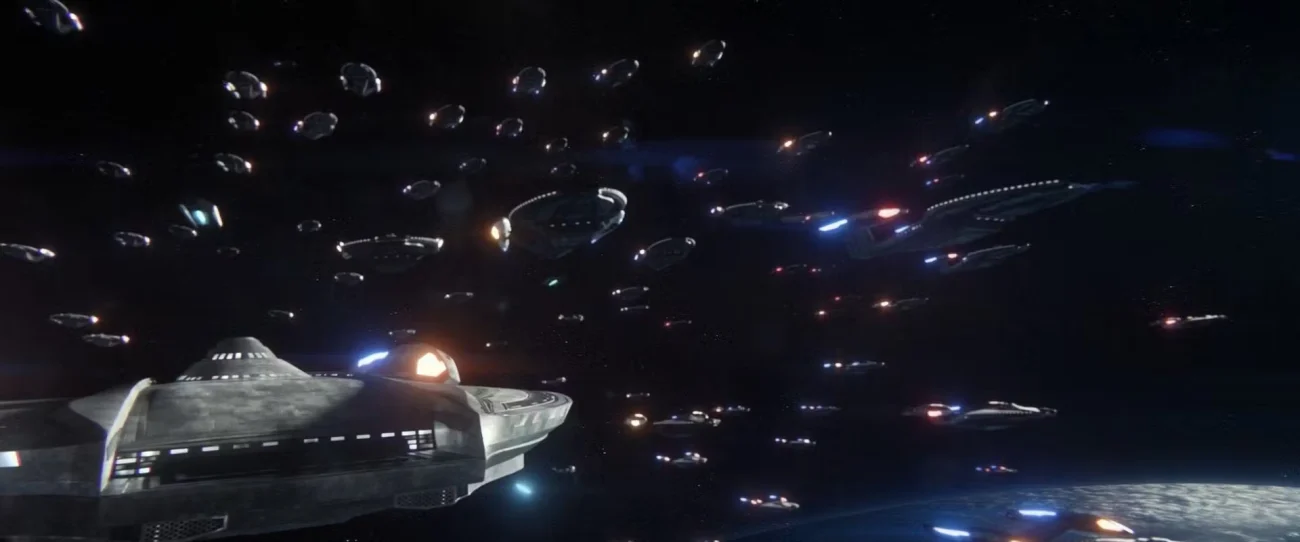
Starfleet in ‘Star Trek’ serves as the United Federation of Planets’ exploratory and defense arm, combining scientific mandates with security obligations. Starships such as Constitution-, Galaxy-, and Sovereign-class vessels integrate warp propulsion, deflector shields, and phaser/torpedo systems under a unified command structure headquartered at Starfleet Command. Academy training covers astrophysics, engineering, command, and the General Orders that govern first contact and engagement rules.
Operationally, Starfleet maintains sector patrols, starbase networks, and rapid-response task groups to safeguard Federation space and trade routes. During conflicts, fleet formations and planetary defense grids coordinate with allied worlds, while specialized divisions—Intelligence, Corps of Engineers, and Medical—provide reconnaissance, infrastructure, and casualty care. Diplomatic protocols and treaty frameworks guide deployments along borders with powers like the Klingon Empire and the Romulan Star Empire.
United Nations Space Command (UNSC) Armed Forces
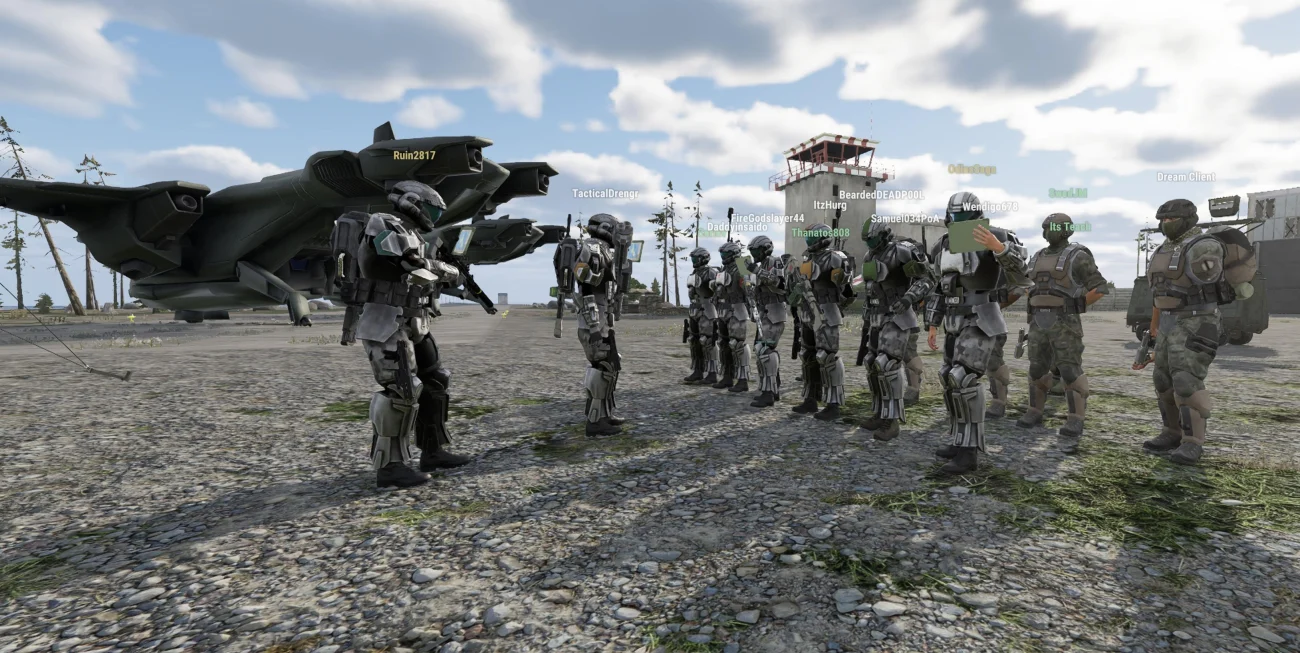
In ‘Halo’, the UNSC Armed Forces unify terrestrial and colonial militaries under a joint command comprising Navy, Marine Corps, Army, and Air Force components. Fleet assets include frigates, destroyers, and carriers equipped with MAC guns and Archer missiles, while ground forces field MA5-series rifles, M808 Scorpions, and M12 Warthogs. Orbital Drop Shock Troopers (ODST) and the SPARTAN programs provide special operations and augmented supersoldier capabilities.
The UNSC sustains long-range operations through slipspace-capable logistics ships, orbital shipyards, and rally points across human space. Combined-arms doctrine integrates orbital fire, close air support, and mechanized infantry in planetary defense and counteroffensive roles. During the Human–Covenant War, command-and-control networks adapted to contested communications, employing AI leadership aids and compartmentalized battle groups to retain operational tempo.
The Covenant
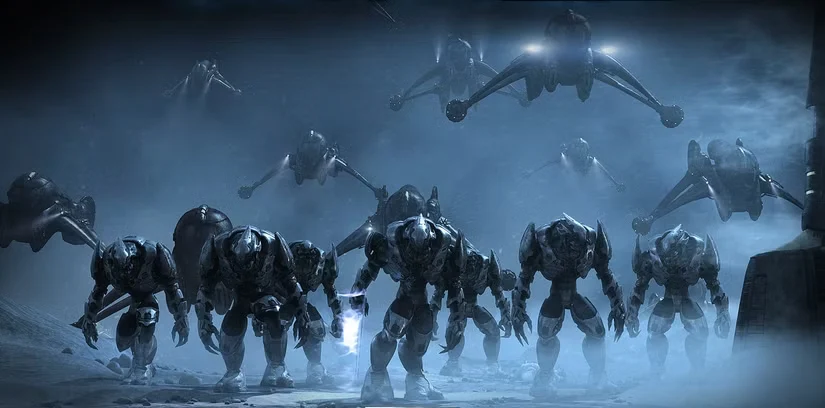
Also from ‘Halo’, the Covenant is a theocratic military alliance of multiple species with a unified command ideology centered on Forerunner worship. Its fleets deploy energy-shielded warships, plasma-based weaponry, and Seraph and Banshee strike craft, while ground forces mix Sangheili heavy infantry, Kig-Yar marksmen, Unggoy massed infantry, and Mgalekgolo bonded-pair units. Vehicle strength includes Wraith artillery and Ghost and Revenant skimmers.
Recruitment and logistics draw on subject species’ homeworlds, with High Charity acting as a mobile capital and staging hub. Battlefield doctrine leverages orbital plasma bombardment to achieve rapid planetary suppression, followed by combined detachments securing strategic sites. Energy shielding, active camouflage, and integrated air-ground coordination give Covenant task forces durability and mobility in both void and atmospheric engagements.
Astra Militarum (Imperial Guard)
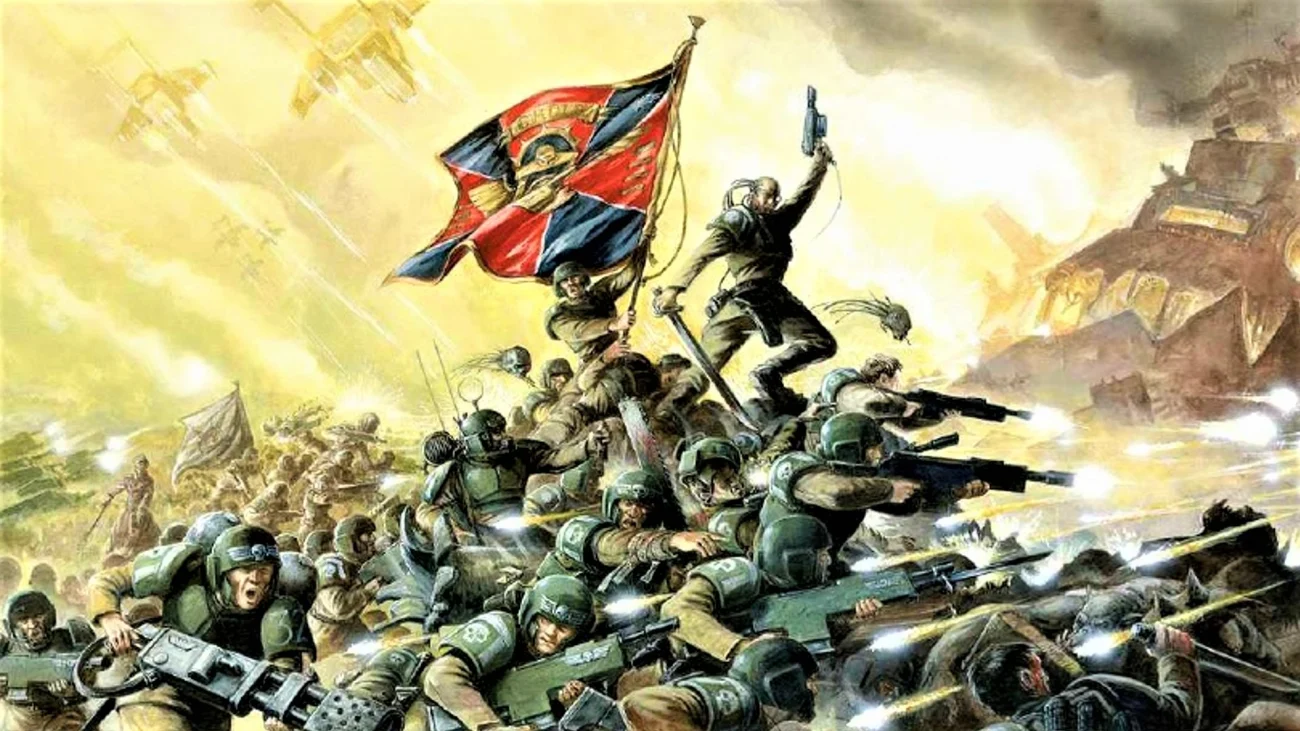
In ‘Warhammer 40,000’, the Astra Militarum serves as the Imperium of Man’s primary ground force, mustering countless regiments from billions-strong hive worlds and frontier planets. Organization varies by founding world, producing infantry, armor, artillery, and airborne regiments equipped with lasguns, Leman Russ battle tanks, Basilisk artillery, and Valkyrie transports. Command structures integrate Departmento Munitorum logistics with regimental and theater-level leadership.
Strategically, the Guard fights campaign-scale wars across multiple fronts, supported by void-borne troopships and naval escorts. Fortification, siegecraft, and massed armor assaults are standard, with attached psykers, advisors, and Commissars providing battlefield control and discipline. Regimental traditions—such as the Cadian, Catachan, and Vostroyan lineages—shape doctrine and specializations while remaining interoperable under Imperial High Command.
The Army of Mordor
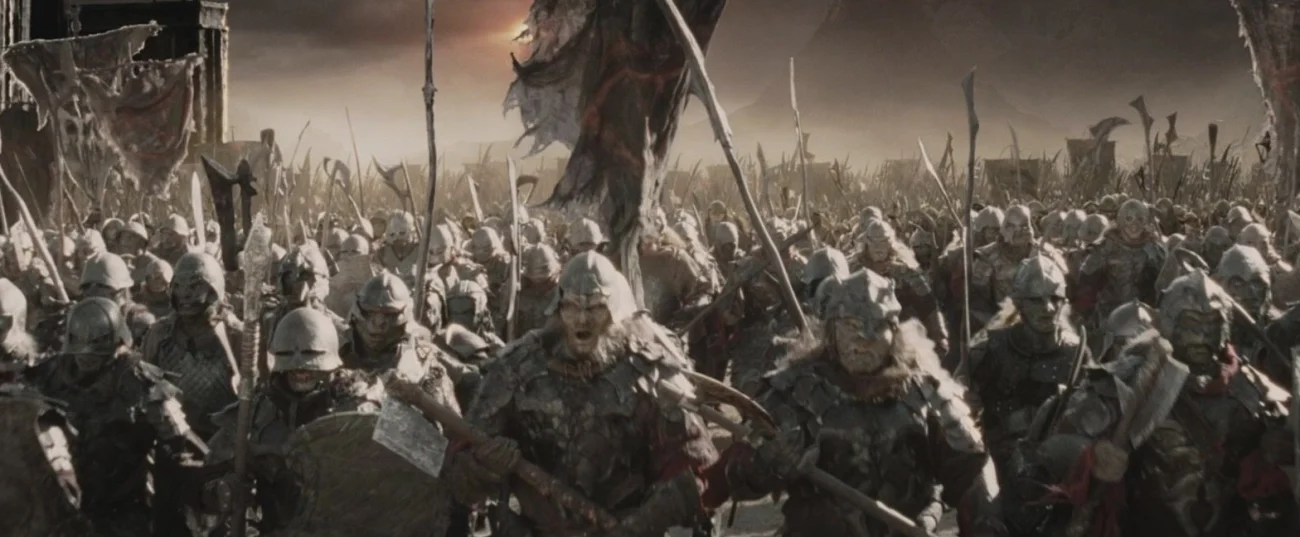
Sauron’s forces in ‘The Lord of the Rings’ consolidate orcs, Easterlings, Haradrim, trolls, and siege beasts under command from Barad-dûr. Industrial output from regions like Gorgoroth supplies weapons, armor, and siege engines, while the Black Gate and fortified passes regulate troop movements into allied or contested territories. Command and communication rely on Nazgûl oversight, signal beacons, and centralized orders from the Dark Tower.
Campaign operations emphasize massed infantry assaults, terror tactics, and siege warfare against strongholds such as Minas Tirith. Logistics flow through Mordor’s internal road network and staging areas like the Morannon, enabling rapid concentration of forces. Auxiliary contingents provide cavalry and exotic assets—oliphaunts and armored beasts—that expand tactical options during open-field engagements.
The Unsullied
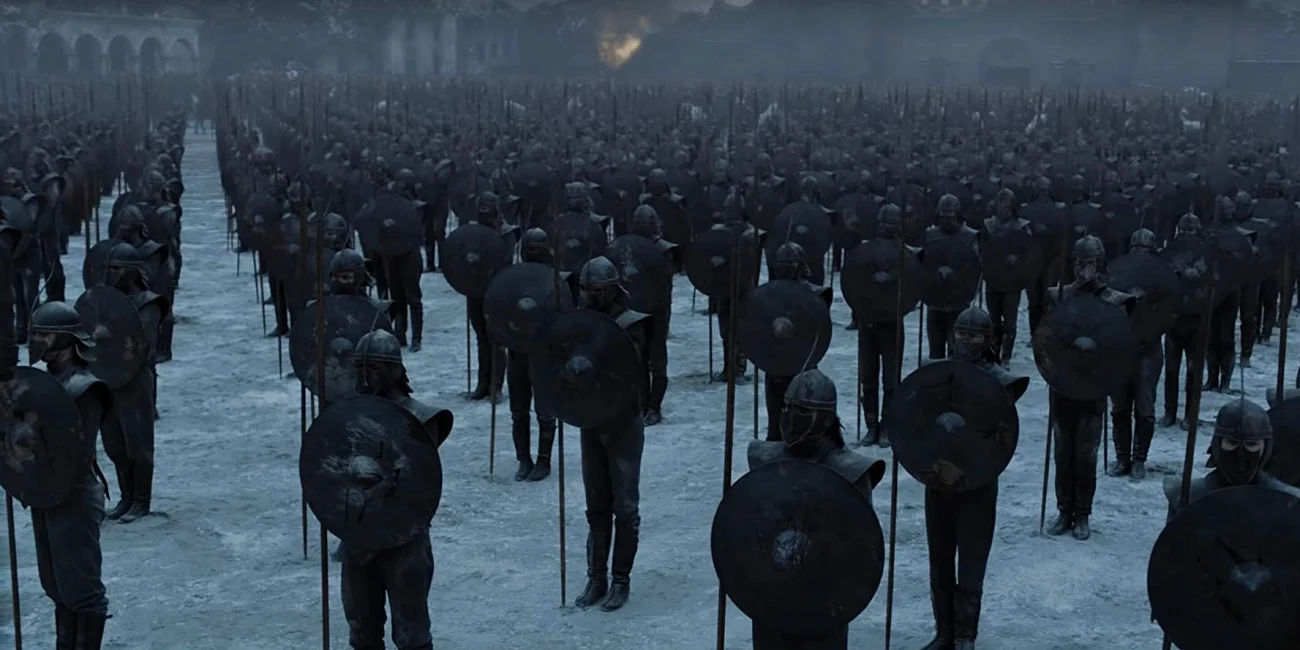
In ‘Game of Thrones’, the Unsullied are slave-soldier infantry trained in Astapor from childhood under a rigorous regimen that enforces close-order discipline and shield-and-spear tactics. Standard equipment includes thrusting spears, short swords, and round shields, with formations optimized for holding lines, urban clearance, and anti-cavalry responses. Command follows appointed officers and signalers who maintain cohesion during maneuver.
After their emancipation, the Unsullied function as a professional standing force financed through royal and city treasuries and supported by fleet logistics when deployed overseas. Their battlefield role emphasizes steady advances, unit integrity, and coordinated action with allied cavalry and siege assets. Garrisons and camp protocols maintain readiness, sanitation, and centralized rationing to sustain long campaigns.
The Fire Nation Military
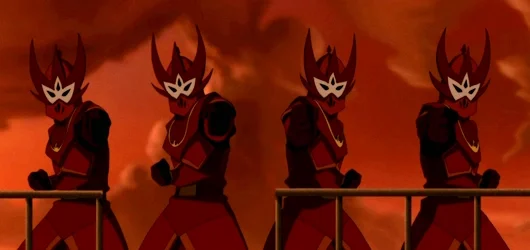
The Fire Nation’s armed forces in ‘Avatar: The Last Airbender’ span a blue-water navy, expeditionary marines, and specialized units leveraging firebending. Capital ships, ironclads, and later airships project power across seas and coastal regions, while ground troops deploy armored tanks, artillery, and mechanized drills for sieges. Officer academies and war ministries coordinate training, procurement, and long-term campaign plans.
Strategy centers on maritime supremacy, blockades, and amphibious operations to control archipelagos and river mouths. Intelligence services track enemy movements and benders, while engineers field technology like coal-fired propulsion and industrial foundries to scale production. Airship fleets extend reconnaissance ranges and enable vertical envelopment, integrating with ground units for rapid encirclement and urban operations.
Mobile Infantry
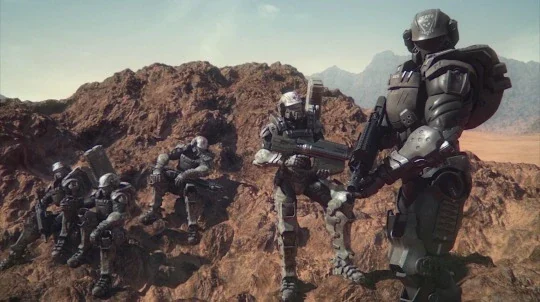
In ‘Starship Troopers’, the Mobile Infantry is a rapid-deployment force organized into battalions equipped for orbital insertion and high-mobility ground combat. Depending on the adaptation, equipment ranges from powered exoskeletons with jump jets and onboard sensors to conventional armor and ballistic weapons, supported by dropships and fleet carriers. Training emphasizes small-unit tactics, marksmanship, and coordination with aerospace assets for close support.
Operational doctrine relies on drop operations behind enemy lines, reconnaissance in force, and search-and-destroy missions against insectoid adversaries. Logistics integrate with fleet task groups for resupply, medical evacuation, and unit rotation, while communications and targeting systems enable fire support deconfliction during fast-moving engagements. Command structures link company- and platoon-level leaders with shipboard operations centers for synchronized campaigns.
Share which fictional army you’d add to the list—and why—in the comments!