What ‘La Bola Negra’ Is Based On and Why It Is Not a Simple Adaptation

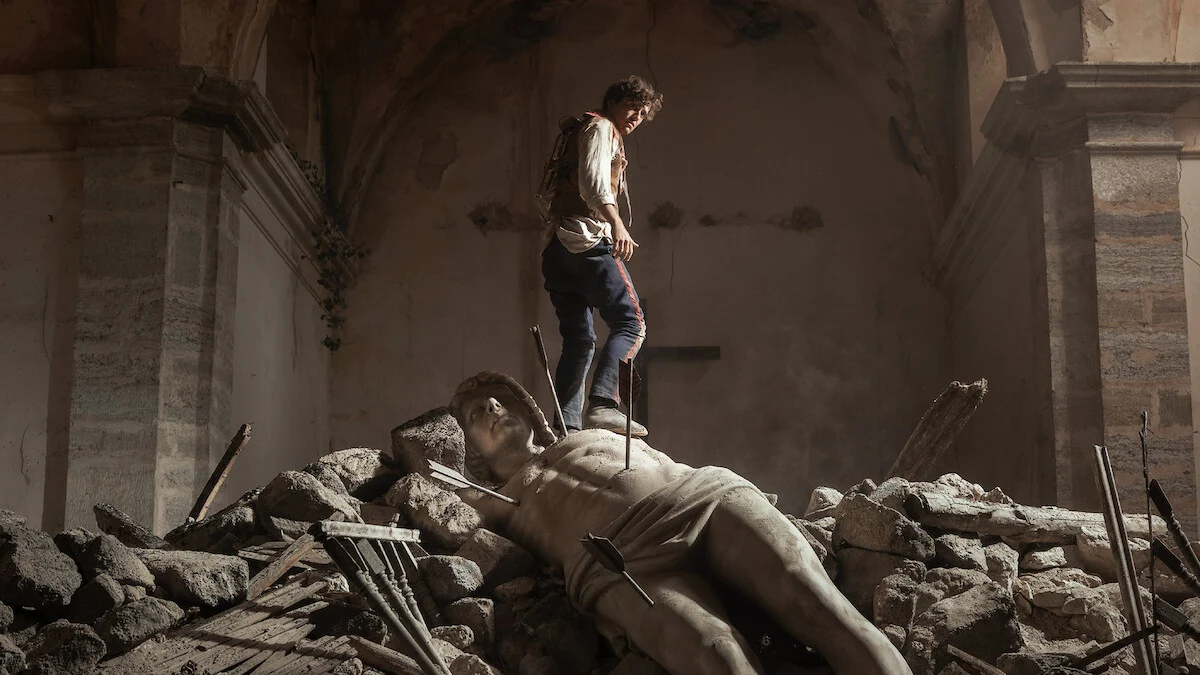

‘La Bola Negra’ arrives as one of the most discussed Spanish films of the year, a project that marks the return of Javier Calvo and Javier Ambrossi to cinema after several years of success in series. The film follows three men across three eras, with their lives linked by sexuality and desire, pain and inheritance. Its ambitions are large, and so is its cast.
For readers wondering where the story comes from, the answer is more layered than a simple adaptation. This guide covers what ‘La Bola Negra’ is based on, how its three timelines fit together, who appears on screen and where audiences can watch it.
What ‘La Bola Negra’ Is Based On
The film takes its title and starting point from an unfinished work by Federico García Lorca. The poet wrote only four pages before he was murdered in 1936, and the title alludes to the rejection of a young gay man trying to join a social club in Granada. That tiny fragment is the seed for a much larger story.
A second source sits beside it. The film also draws on ‘La piedra oscura’ by Alberto Conejero, a play that won the National Prize for Dramatic Literature and five Max Awards. Conejero is credited alongside the directors as a co-writer.
It would be a mistake to call the result a straightforward adaptation. Only a few pages and an incomplete outline existed when García Lorca was assassinated, so the film works as an expansion of the work and an exploration of its themes. A costume house involved in the production described it in similar terms, saying it is far from a conventional adaptation and explores what it has meant to be queer at three different moments in history.
The writing process was grounded in research. Ambrossi has said the creative process began with documentation and historical research that was then mixed with the literary work of Conejero.
The Story Across Three Eras
The narrative moves between republican Spain in 1932, the civil war in 1937 and Spain today in 2017. Each period centers on a young man whose emotional and political entanglements are revealed slowly. The structure lets the film treat memory as a character in its own right.
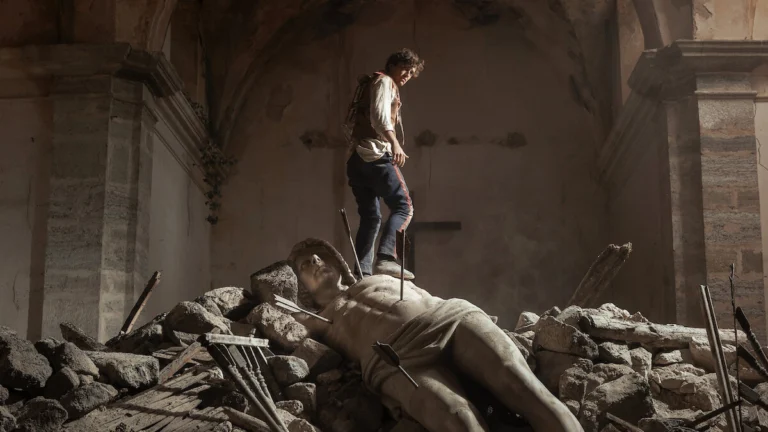
The earliest thread is the most direct echo of the source material. In Granada in 1932, a young man is refused membership in an exclusive social club because he is gay. The second thread is darker, as a young Nationalist soldier in 1937 has his sexuality awakened while guarding a queer Republican prisoner.
The modern storyline gives the film its emotional bridge. One reviewer wrote that the film blends fictional and historical characters with the terror of the civil conflict and the more peaceful modern period, when being queer is no longer considered a threat. Another noted that opening up the past helps unravel the mystery of Lorca, the unfinished work and the actions of a grandfather.
The same review described the film as at its heart a story about living and fulfilment. That reading suggests the film is less interested in tragedy for its own sake than in what survives it.
The Cast Behind ‘La Bola Negra’
The ensemble is led by Guitarricadelafuente, Miguel Bernardeau, Carlos González, Milo Quifes and Lola Dueñas, alongside Penélope Cruz and Glenn Close. The mix of rising Spanish talent and internationally known names gives the film unusual reach for a Spanish language drama. Milo Quifes appears as the young Carlos in the earliest timeline.
Supporting roles broaden the picture. Cruz plays Nené Romero, Close plays Isabelle Durand, Dueñas plays Teresa, Antonio de la Torre plays Vicente and Natalia de Molina plays Valentina. Albert Pla, Lorenzo Zurzolo and Julio Torres are among the other names listed.
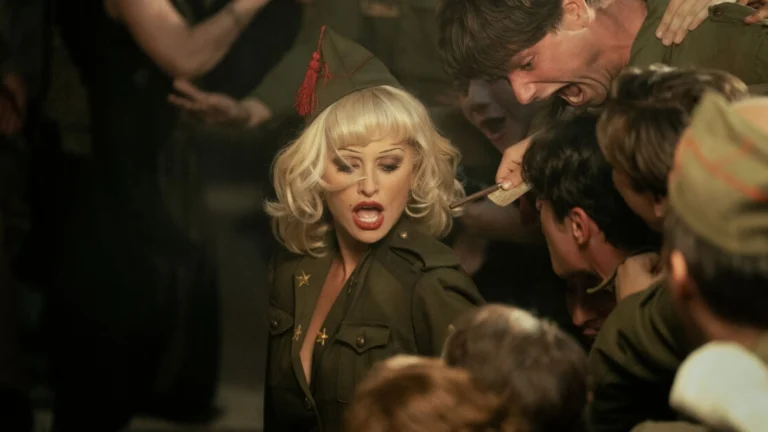
Cruz drew particular attention in early reviews. One critic singled out a showstopping scene in which she plays a cupletista entertaining the troops and opening the mind of a young soldier to life beyond the war. Musical elements run through the film more broadly, and one Cannes review said they remind viewers that love and passion should never be forgotten, even when buried under war or time.
Release Details and Early Reception
The film made its mark early on the festival circuit. It was nominated for the Palme d’Or at Cannes and won the award for best director, which Calvo and Ambrossi shared with Pawel Pawlikowski for ‘Fatherland’. One outlet also reported that it is Spain’s entry for the Oscars.
The production behind it is substantial. It is a co-production of Movistar Plus+ and Suma Content Films, with El Deseo and Le Pacte also involved, and its budget was around 15 million euros. Goodfellas handles international sales.
Audiences have a few ways in. The film runs 155 minutes, opens in some theaters on October 16 and reaches digital release on December 2 as a Netflix release. In Australia, it screens exclusively in cinemas from October 15 before arriving on Netflix on December 2. UK and Irish viewers have a later date, as the film is scheduled for cinemas on November 6 after beginning its run at the London Film Festival on October 8.
Critical response so far has been warm. One reviewer called it one of the most beautiful, memorable and thought provoking films of the year, while another described it as a truly ambitious project inspired by historical truth while remaining fictional and highly personal. For a film built from four pages of an unfinished manuscript, does ‘La Bola Negra’ succeed in giving Lorca’s lost story the ending it never had, and which of its three timelines stayed with you longest?