Netflix’s ‘Facing El Chapo’ Turns a Real Traffic Stop Into a Tense True Crime Ending Worth Explaining

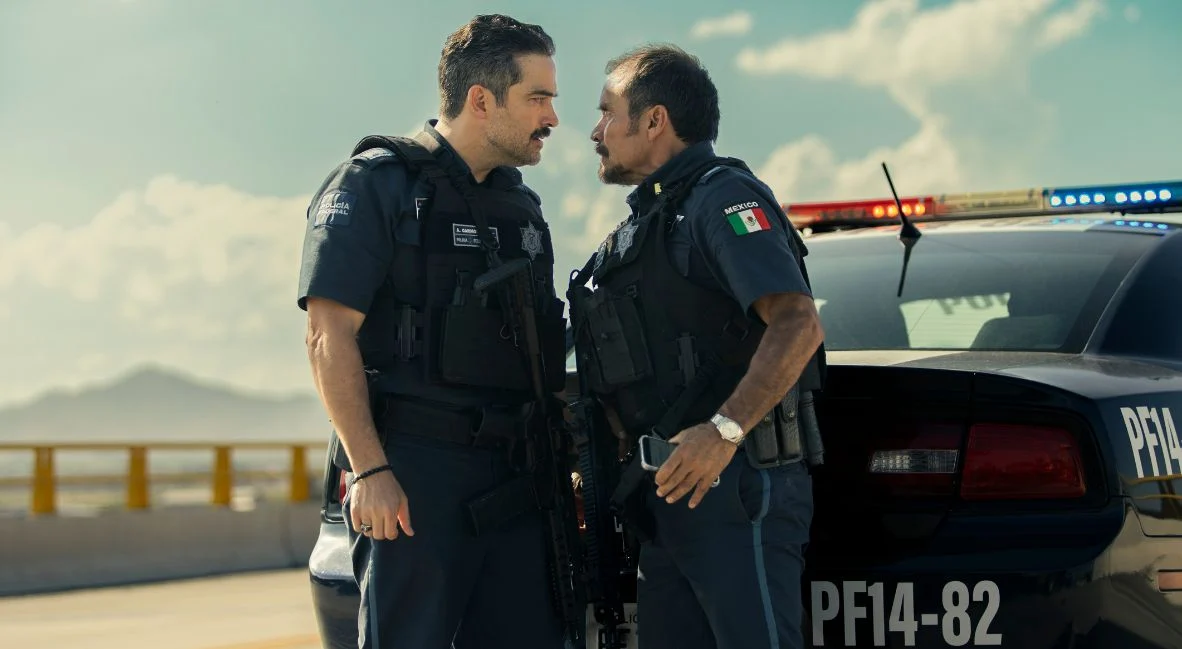

Netflix has released another chapter in its long run of Mexican cartel storytelling, but this time the camera does not linger on the kingpin. ‘Facing El Chapo’ is a 91 minute Mexican crime action thriller inspired by the true events surrounding the recapture of Joaquín “El Chapo” Guzmán, and it arrived worldwide on Netflix on August 21, 2026. The film reframes a story audiences already know from multiple angles by putting two ordinary federal officers at the center of the action.
Rather than focusing on El Chapo himself, the movie tells its story from the perspective of the two federal police officers whose routine patrol placed them face to face with the world’s most wanted fugitive on the day of his final capture. That choice has shaped how critics and fans alike are talking about the film, and it also raises questions about how closely the ending mirrors what actually happened outside Los Mochis in January 2016.
The True Story Behind Facing El Chapo
‘Facing El Chapo,’ also known as ‘La Captura,’ follows two Federal police officers, Arturo Carmona and Hector Rosales, who become unlikely partners tasked with patrolling the Los Mochis-San Miguel highway. What begins as an uneventful morning marking the end of their night shift quickly turns into an intense showdown when they intercept a stolen vehicle, only to find the most feared drug lord in Mexico inside. The film is directed by Chava Cartas and written by Bernardo Esquinca and Héctor de Mauleón.
The production is based on two accounts by Mexican journalist Héctor de Mauleón published in El Universal, and the screenplay draws on those chronicles rather than a single dramatized retelling. It stars Alfonso Herrera as federal officer Arturo Carmona and Noé Hernández as Héctor Rosales, two patrol officers whose shift in Los Mochis, Sinaloa, begins with what appears to be a routine traffic stop involving a stolen vehicle.
The real world timeline behind the movie stretches back to the summer before the arrest. The story is inspired by the real events of January 8, 2016, when Mexican Marines and federal authorities recaptured El Chapo in Los Mochis after an early morning raid known as Operation Black Swan. A shootout at the safe house left several people dead, but Guzmán and another cartel figure escaped through a sewer tunnel before their stolen car was stopped by police a short while later.
Herrera has spoken about why the project appealed to him beyond its action premise. In a statement shared to promote the film’s premiere, Herrera called the film an opportunity to remember Mexican heroes, men and women who far from the spotlight do their jobs with courage, integrity and a profound sense of duty, according to the Latin Times.
Inside the Ending of Facing El Chapo
The film builds its entire back half around a single question, whether the two officers will hold their prisoner or lose him. At the end of ‘Facing El Chapo,’ the notorious cartel leader is captured because Carmona and Rosales are honest cops. They refuse the bribe of a life changing amount, fight off gang members, and refuse to give in to El Chapo’s demands.
That resolution stays close to the historical record even as the movie compresses and dramatizes individual moments. Acting on the advice of their superiors, the two officers drove El Chapo and his lieutenant to the outskirts of town before eventually taking shelter in room 51 of a motel situated on the Los Mochis-San Miguel highway. That detail is integrated into the film as a direct nod to the true story, even as other elements were creatively altered for the screen.
Reinforcements arriving to close out the standoff form the true climax of both the film and the real event. While the movie gives a personal arc to both officers during their time in the motel, in real life they were soon joined by reinforcements from the Federal police, followed by the Navy and the state police. The two officers then reportedly showed El Chapo and his associate the presentation order issued against them before formally handing the pair over to authorities.
What happened after that handoff extends well beyond the film’s closing scene. On January 19, 2017, El Chapo was extradited to the United States, and he was found guilty on ten counts the following month. He was sentenced to life in prison plus 30 years that July, and he remains incarcerated at ADX Florence.
The Real Officers Behind Arturo Carmona and Hector Rosales
Unlike El Chapo himself, the two officers at the center of the story have largely stayed out of the public eye. Arturo Carmona and Hector Rosales are fictionalized recreations of the two Federal highway officers who actually stopped Guzmán and his associate, Jorge Iván Gastélum Ávila, known as El Cholo. Not much is known about the real life officers given their classified identities and current whereabouts.
One detail that did surface publicly came directly from one of the two men involved. One of the two officers provided a first person account of the capture on the Federal police’s own blog, describing feeling as if he was facing certain death before deciding to drive in the opposite direction and finding a motel he recognized. The officer also recalled being offered numerous rewards by El Chapo in exchange for being set free, including ownership of companies and 50 million dollars.
Their story did not end at the motel door. Both officers were reportedly decorated and promoted in a private ceremony held at the National Security Commission toward the end of January 2016. That quiet recognition stands in contrast to the international spectacle that followed Guzmán’s capture, and it is part of what the film seems most interested in honoring.
How the Motel Standoff Really Unfolded
The choice of hideout was not random and reporting from the time captured just how unusual it was. The police wanted a discreet refuge to await reinforcements, so the world’s most notorious drug lord found himself handcuffed inside room 51 of the Doux motel, a pay by the hour establishment decorated in pink and purple hues. News of the capture reached Mexico City quickly, with the interior minister leaving a diplomatic gathering to take the call confirming Guzmán had been taken.
The threat the officers faced while waiting was very real, not just a dramatic device invented for the film. Officials anticipated the arrival of roughly 30 trucks and numerous gunmen attempting to rescue El Chapo from police custody, and that threat was relayed directly to the two officers on scene. They had already observed trucks blocking the road at a distance before deciding to move their detainees to the nearby motel to wait for help.
Backup eventually arrived in stages rather than all at once, which the film mirrors in its pacing. The Federal Police arrived on scene first, followed soon after by a navy convoy and the state police, before El Chapo and his associate were transported to Mexico City through the Los Mochis airport. That layered response is part of why critics have described the film’s tone as procedural rather than explosive, since the tension comes from waiting and uncertainty more than gunfire.
Reviews of the film have been split on whether that restraint works in its favor. One review noted that once the film settles into its central standoff it becomes a genuinely nervy piece of filmmaking, with small moments like a phone call or a knock at the wrong door carrying more weight than typical shootout set pieces. Other critics have argued the opposite, suggesting the reverence for the real officers occasionally comes at the cost of dramatic tension.
For a story so many people already know the outcome of, ‘Facing El Chapo’ seems less interested in surprise than in honoring the two men who lived through it, and that raises an obvious question for anyone who just watched Carmona and Rosales hold the line in room 51, whether the film’s quieter, more procedural approach to that night actually serves the real officers better than a flashier version of the same story would have.