Netflix’s ‘Unabomber’ Revisits Ted Kaczynski’s Capture, And Here’s How It Actually Happened


Ted Kaczynski’s story has been retold in documentaries and dramatizations for years, but the question of how he was finally caught still draws curious viewers back to the case. Netflix’s new film puts that manhunt front and center while also digging into the years before Kaczynski became a household name.
The movie, titled ‘Unabomber,’ premiered on Netflix on September 25, 2026, and runs roughly 100 minutes as a drama built around real events. For anyone who has typed some version of “did they catch the Unabomber” into a search bar, the film offers a dramatized answer rooted in one of the most notorious manhunts in American history.
How Ted Kaczynski Was Finally Caught in Real Life
The real answer to how the Unabomber was caught has nothing to do with forensic breakthroughs or a lucky break at a crime scene. Ted Kaczynski sent 16 handcrafted bombs across the country between 1978 and 1995, killing three people and wounding 23, and despite an accurate psychological profile and an extensive forensic investigation, the FBI could not close in on him.
The break came when Kaczynski himself demanded that newspapers publish his lengthy manifesto. The Washington Post agreed to print the roughly 35,000 word document in 1995, and Kaczynski’s brother David and David’s wife recognized the writing style and philosophy as Ted’s own. That recognition, not a forensic clue, is what ultimately unraveled the case.
David Kaczynski tipped off federal investigators in February 1996 through an intermediary, a family friend and Washington lawyer, after finding striking similarities between the manifesto and writings his brother had produced decades earlier. Kaczynski was arrested on April 3, 1996, at his cabin in Montana and later received a life sentence without the possibility of parole.
It was an agonizing decision for David Kaczynski, who understood the stakes involved. He was the target of the FBI’s largest manhunt at the time, and it was his own younger brother who ultimately tipped the FBI off to his identity. That family dynamic, more than any piece of physical evidence, is what closed the case.
Inside Netflix’s Unabomber Dramatization
Netflix frames the film as a character study rather than a strict procedural. The official synopsis describes a drama inspired by true events, following Ted Kaczynski’s path from Harvard prodigy and test subject to the Unabomber as the FBI hunts him down. That framing sets up a film less interested in beat by beat plotting and more focused on psychology.
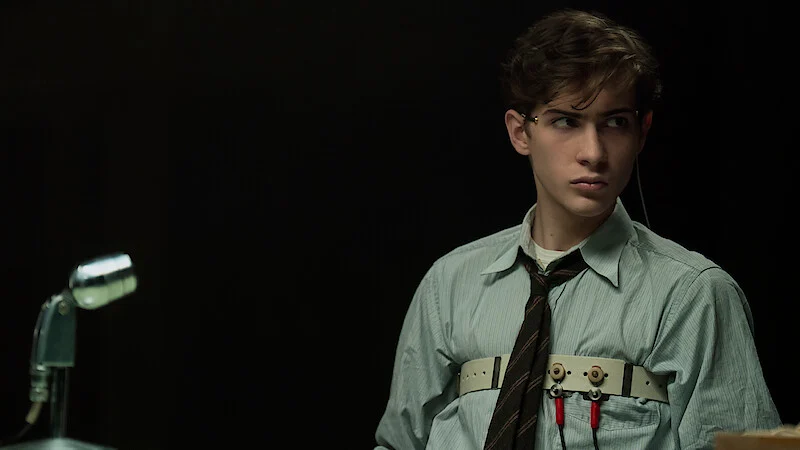
The film moves between two timelines, connecting Kaczynski’s years as a young Harvard student with the FBI investigation that would come decades later. It also explores his time as a subject in controversial psychological experiments led by Harvard professor Henry Murray, a real chapter of his history that the film dramatizes rather than documents in strict factual detail.
Netflix has been careful to note the film takes creative license. Because Netflix describes it as a drama inspired by true events, some characters, events and relationships have been shaped for the story rather than presented as a literal record. That distinction matters for viewers expecting a documentary style retelling.
The film does include a factual anchor at its close, with end credit images and information from the real arrest, along with the voice of the real Ted Kaczynski. That choice bridges the dramatized narrative with the documented history audiences are ultimately searching for.
Cast Bringing Kaczynski’s Story to the Screen
The project leans on a recognizable trio at its center. Jacob Tremblay stars as Ted Kaczynski, alongside Russell Crowe and Shailene Woodley in major roles. Crowe plays Professor Henry Murray, while Woodley plays FBI agent Joanne Miller, who leads the manhunt that brings Kaczynski’s story full circle.
The supporting cast rounds out the film’s two timelines with additional depth. Annabelle Wallis, Alexander Ludwig, Steven Ogg and Marc Menchaca all appear in key roles across the film. Together with the three leads, they populate both the Harvard sections and the later investigation scenes.
Behind the camera, the film comes from a director with experience in based on real events storytelling. Janus Metz directed ‘Unabomber,’ with Sam Chalsen and Nelson Greaves writing the screenplay. Metz previously directed ‘Borg vs McEnroe,’ another film built around a true story.
Tremblay’s casting has drawn particular attention given his history with true story projects. One reviewer noted his continued growth as an actor, pointing to earlier work in true events dramas as evidence of his range heading into this adult led role.
Critical Reception of Netflix’s True Crime Drama
Reviews for ‘Unabomber’ have been mixed since its release. Variety called the film a hokey retread of the Kaczynski case, arguing that Tremblay does not fully convince as the teenage Kaczynski and that the film alternates a semi interesting psychological origin story with a by the numbers procedural. Variety’s full critique digs deeper into where the film falls short, and readers curious about that take can find the complete review at Variety.
Other outlets landed on a more measured verdict. High On Films described the film as an adequate, frequently compelling character study that in no way feels comprehensive, noting that Kaczynski’s psychology gets more attention than the manhunt itself. That review pointed out how familiar the broader Kaczynski story already is across documentaries and docudramas.
Critics have also raised questions about how the film handles Kaczynski’s mental health. One assessment noted the question of the killer’s mental health remains a matter of clinical dispute, and that ‘Unabomber’ misleads where the historical record does not. That criticism gets at the tension between dramatization and documented fact that runs through the entire project.
The character of FBI agent Joanne Miller has also drawn scrutiny for its accuracy. One review suggested her character is likely built on multiple agents who worked the real case, noting that end credit footage of the actual arrest does not show a woman present among the agents. It is a small detail, but one that underscores how much of the film sits in the space between fact and dramatization.
Nearly three decades after Ted Kaczynski’s arrest, ‘Unabomber’ arrives as another attempt to make sense of a case that still resists easy explanation, and given how differently critics have responded to its portrait of Kaczynski, Murray and the agents who tracked him, it feels worth asking viewers who have seen it whether the film’s dual timeline actually deepens their understanding of how the manhunt ended.